
Retro bathroom
By Anna Grace | 10 June 2026
How to Nail Retro Style Bathroom Without Living in a Time Capsule
Pink tile got a bad reputation it never deserved. For decades, homeowners ripped out those blush-colored 1950s bathrooms like they were removing something shameful, and now plot twist designers charge a fortune to recreate the exact same look. The retro bathroom is officially back, and honestly, it never should have left.
Here’s the thing about vintage bathroom design it has personality. Modern bathrooms often feel like showroom clones gray tile, floating vanity, one sad succulent. A retro bathroom, on the other hand, tells you something about the person who owns it. It has color. It has curves. It occasionally has a toilet in a shade called “Ming Green,” and I respect that deeply.
So whether you inherited an original mid-century bathroom and want to lean into it, or you’re starting from a beige box and dreaming of checkerboard floors, this guide covers what actually works and what turns “charming vintage” into “grandma’s house that smells faintly of soap.
Pick Your Decade Before You Pick Your Tile
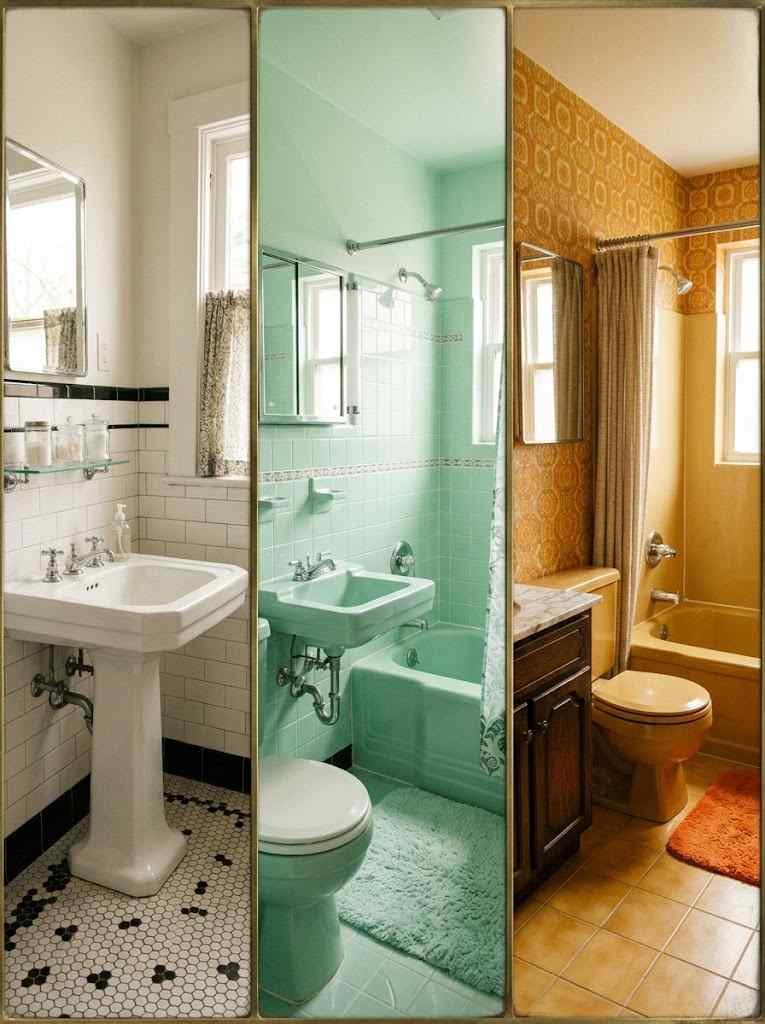
“Retro” covers about 60 years of design history, and mixing eras randomly is where most retro bathroom makeovers go sideways. A clawfoot tub next to an avocado-green vanity next to chrome globe lights isn’t eclectic it’s confused. Choose one era as your anchor, then borrow lightly from the others.
The 1920s–1930s look runs on black and white. Think hexagon mosaic floors, subway tile with dark grout, pedestal sinks, and cross-handle faucets. It’s the safest retro style because it reads as “classic” rather than “themed.” If you’re nervous about committing, start here.
The 1950s bathroom is the loud one, and IMO the most fun. Pastel everything pink, mint, powder blue paired with gleaming chrome and boomerang-patterned laminate. Mamie Eisenhower made pink bathrooms a national obsession, and roughly five million of them got built. The survivors are now genuinely collectible.
The 1960s–1970s vibe brings in warmer, earthier tones: harvest gold, burnt orange, olive green, plus wood-grain vanities and funky geometric wallpaper. This era scares people the most, but done with restraint, it’s the one that photographs like a dream.
Which one pulls at you? Whatever your answer, write it down and let it veto every purchase you make from here on. That discipline is the difference between a designed space and a flea market.
One more trick for choosing your era: look at your house first. A 1955 ranch practically begs for a pastel mid-century bathroom, while a 1920s bungalow will fight you on it. Architecture and bathroom style don’t have to match perfectly, but when they rhyme, the whole thing feels inevitable instead of installed.
And if your home is a 2004 build with zero historical character? Congratulations you’re free. New-construction homes are blank slates, so pick the decade that makes you happiest and commit without guilt. The only rule that follows you everywhere is the anchor rule: one era leads, the others whisper.
A cheap way to test your choice before spending a dime: build a folder of 15–20 photos of real bathrooms from your chosen era, not designer recreations. Old real estate listings and archive photos show you what these rooms actually looked like proportions, tile heights, where color went and where it didn’t. Recreations exaggerate; originals educate.
Tile Is Where the Magic (and the Money) Lives
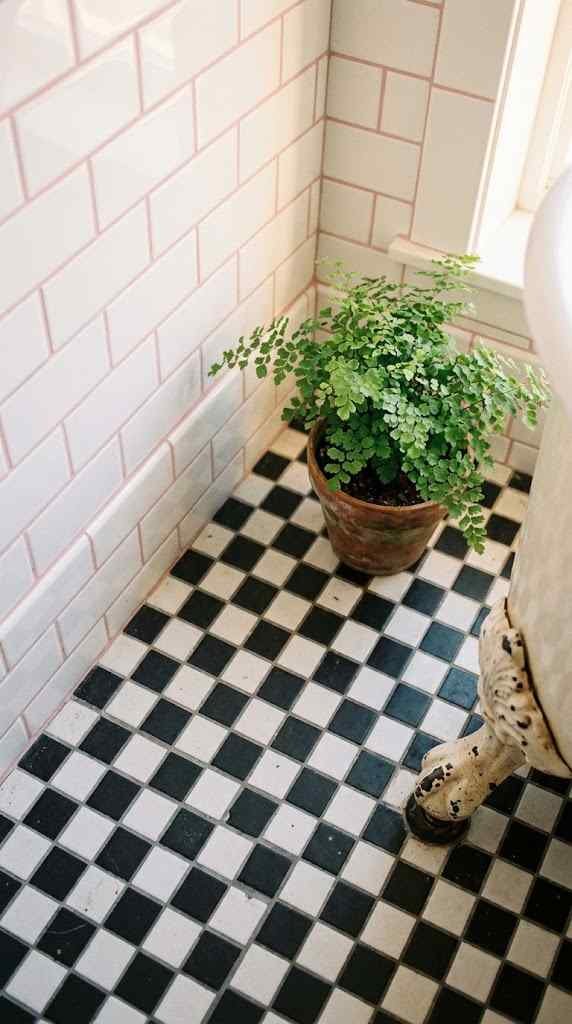
If you only splurge on one element of a vintage bathroom, make it the tile. Tile does more heavy lifting for retro style than any fixture, paint color, or accessory and it’s the thing you can’t easily swap later.
A few combinations that never miss:
● Checkerboard floors in black and white, or go bolder with black and pink. Instant personality, works with almost every era.
● Penny tile or hex tile in white with a colored border. This is the 1930s move, and it makes even a tiny bathroom feel intentional.
● Penny tile or hex tile in white with a colored border. This is the 1930s move, and it makes even a tiny bathroom feel intentional.
● Colored grout. Sounds minor, saves money. White subway tile with pink or green grout gives you 80% of the retro effect for a fraction of the cost of colored tile.
One opinion I’ll defend forever: if your house came with original vintage tile in good condition, do not rip it out. That tile was set in a mortar bed by someone who knew what they were doing, and it has already outlived three renovation trends. Refresh the grout, deep clean it, and design around it. Future you (and future buyers, weirdly enough) will thank you.
Can’t afford a full retile? Peel-and-stick retro floor tiles have gotten shockingly good. They’re not forever, but they’re a legitimate way to test-drive a checkerboard floor before committing to the real thing.
While we’re on tile, a quick word about scale. Small bathrooms handle small tile beautifully penny rounds, hexagons, 1-inch squares because the tight pattern makes the room feel detailed rather than cramped. Save the big-format tile for the modern bathroom down the hall; oversized slabs in a vintage space look like someone hit the zoom button on your floor.
Grout lines matter more than most people think, too. Vintage installations used narrower grout lines than today’s standard, so ask your installer for the tightest spacing your tile allows. It’s a subtle cue, but your eye registers it as “authentic” without knowing why.
Budget reality check: reproduction retro tile ranges from surprisingly affordable to eye-watering, and the difference usually comes down to color. Standard white and black cost pennies; that perfect Mamie pink or Ming green carries a premium because fewer factories run those glazes. If the colored tile blows your budget, remember the hierarchy colored grout first, colored border tile second, full colored walls only if the numbers work.
Fixtures and Hardware: Curves Over Corners
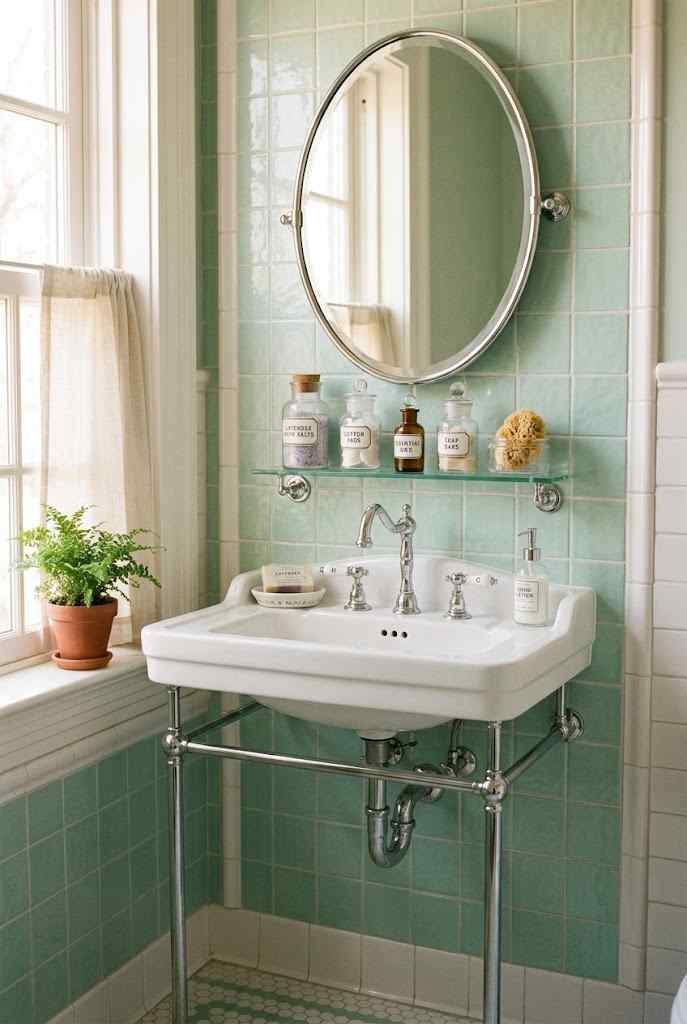
Modern bathroom fixtures are all sharp edges and right angles. Retro fixtures curve. That single distinction will guide you through a hundred small decisions.
Start with the sink. A pedestal sink or a console sink with chrome legs instantly signals vintage, and both free up visual space in small bathrooms which most retro bathrooms are, since houses from these eras rarely had the sprawling primary baths we build now. If you need storage, a vanity with rounded edges and a bit of leg detail keeps the look without sacrificing your under-sink stash of towels and mystery products.
For the tub, a clawfoot obviously wins the drama award, but a standard alcove tub with a curved apron front is far more period-accurate for mid-century homes. Add a curtain instead of a glass panel. Glass shower doors are wonderful inventions that belong in a different bathroom.
Hardware details that punch above their weight:
Cross-handle faucets in polished chrome (not brushed nickel chrome was the metal of every retro era)
A chrome towel bar or ring with rounded post mounts
Cup handles or glass knobs on any cabinetry
A toilet with rounded tank edges yes, toilet shape matters, and yes, I know how that sounds 🙂
Skip anything matte black. It’s a beautiful finish that screams 2019, and in ten years it’ll date your bathroom the way brass dated the 1980s
Where do you actually find this stuff? Three places, in order of effort. Reproduction manufacturers sell brand-new fixtures with vintage shapes and modern internals the easy button. Architectural salvage yards stock genuine old sinks, tubs, and hardware, often at prices that embarrass the reproduction market, though you’ll need a plumber comfortable with older fittings. And estate sales in mid-century neighborhoods occasionally cough up an entire matched bathroom set for the price of hauling it away.
One caution on genuine vintage plumbing: original faucets and valves from the 1950s use parts that stopped being manufactured decades ago. A gorgeous old faucet that drips forever isn’t charming, it’s a water bill. The smart compromise most renovators land on is vintage-look everything on the outside, current-code everything behind the wall.
Also, weigh a cast iron tub before you fall in love with it. Those clawfoots run 300 to 400 pounds empty, and second-floor bathrooms in older homes sometimes need joist reinforcement to hold one filled with water and a human. Ask a contractor first, cry later.
Color: The Part Everyone Chickens Out On
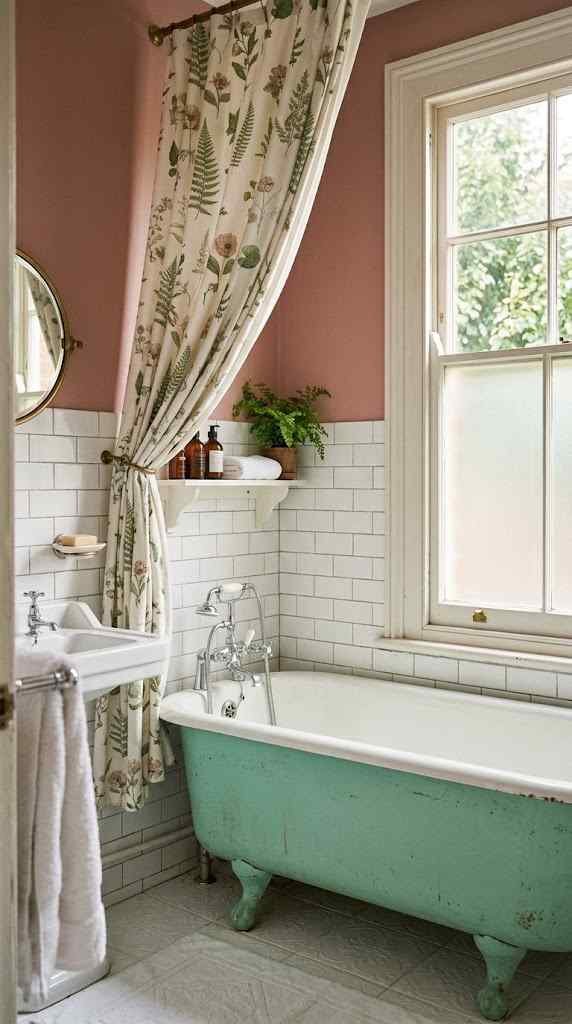
Here’s where I have to be blunt with you. A retro bathroom in all white is just… a bathroom. Color is not optional in vintage design it’s the entire point.
Now, “color” doesn’t have to mean a floor-to-ceiling pink explosion (though if that’s your dream, live it loudly). There are levels to this:
Level one: paint. The walls above your tile are free real estate. Soft mint, dusty rose, buttery yellow, or a moody teal will transform white fixtures into something that looks curated. Paint costs almost nothing and reverses in an afternoon, so there’s genuinely no excuse to stay beige here.
Level two: a colored fixture. One pink sink. One green tub. Companies now reproduce vintage-colored fixtures because demand came roaring back, and salvage yards sell originals for less than you’d expect. A single colored fixture against neutral tile is the modern-retro sweet spot.
Level three: full commitment. Colored tile, colored fixtures, patterned wallpaper, the works. This is the bathroom people will talk about at your parties. It’s also the one you should only build if you truly love it, because you’re designing for yourself, not for resale and honestly? That’s how it should be.
Wallpaper deserves a special mention. Bold botanical prints, flamingos, atomic starbursts a powder room wrapped in gutsy vintage wallpaper is the highest joy-per-square-foot move in all of home design. FYI, modern vinyl wallpapers handle bathroom humidity just fine, so the old “wallpaper peels in bathrooms” warning mostly doesn’t apply anymore.
If picking the actual shade paralyzes you, steal from history instead of guessing. Every era had documented palettes paint companies published them, and archives of those chip cards live online. Mid-century pink wasn’t hot pink; it leaned dusty and warm. Seventies green wasn’t lime; it sat closer to olive with brown underneath. Getting the undertone right is what separates “authentic retro bathroom” from “party store aesthetic.”
Test paint the way stubborn people don’t two coats on a poster board, then move that board around the room for three days. Bathroom light changes drastically between morning and night, and a mint that looks serene at noon can read radioactive under evening bulbs.
And a small permission slip for the commitment-phobic: color doesn’t have to be permanent to count. A pastel wall, a patterned shower curtain, and colored towels build a convincingly vintage palette that a future you or a future buyer can dismantle in a weekend. Reversible boldness is still boldness.
The Finishing Layer: Lighting, Mirrors, and Stuff That Makes It Feel Real
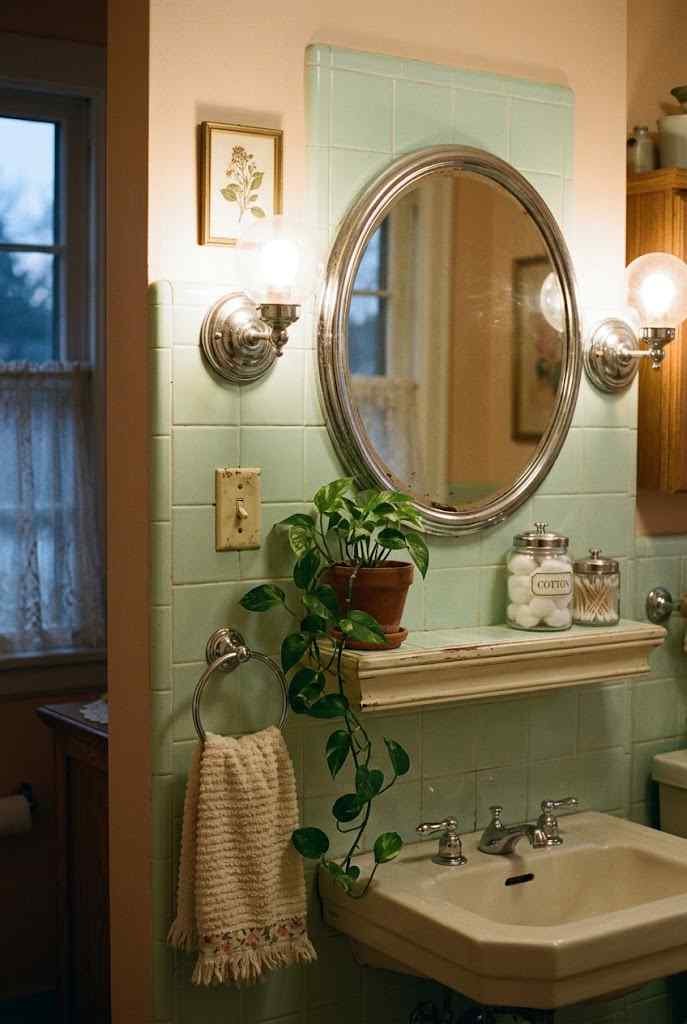
You can get every big decision right and still end up with a bathroom that feels like a set. The fix lives in the small stuff.
Lighting first. Swap the builder-grade vanity bar for globe sconces, a schoolhouse flush mount, or Hollywood-style bulbs around the mirror. Warm bulbs only cool white LED light makes pastel tile look like a hospital, and nobody’s skin tone has ever survived it.
Then the mirror. Round, oval, or arched anything but a frameless rectangle. A chrome-framed round mirror over a pedestal sink is practically a retro bathroom starter kit on its own.
Finally, the lived-in layer: a fluffy bath mat in a real color, a chenille or waffle-weave shower curtain, glass apothecary jars for cotton balls, maybe a small framed print that has no business being in a bathroom but somehow works. My grandmother kept a ceramic fish on her bathroom wall for forty years, and I spent most of my childhood convinced that fish was load-bearing. That’s the energy you want objects with a little history, or at least the look of it.
Thrift stores and estate sales are your friends here. A $6 vintage soap dish carries more charm than anything in a big-box “farmhouse” aisle.
Don’t forget the switch plates. It sounds absurd until you see a perfect retro bathroom with a glossy plastic rocker switch glowing on the wall like a barcode on an oil painting. Chrome or ceramic toggle-style plates cost a few dollars and quietly finish the room. Same logic applies to the exhaust fan cover, the door hinges, and the doorknob the eye catches whatever breaks character.
Plants earn their spot here too, and they’re more period-accurate than people assume. Ferns ruled 1970s bathrooms, and a trailing pothos on a tiled ledge softens all that hard, shiny surface area. Bathrooms with decent light grow humidity-loving plants better than any other room in the house, so this one’s practically cheating.
The final test I use: stand in the doorway and squint. If anything jumps out as obviously new a plastic soap pump, a phone charger, a neon-packaged shampoo give it a home inside a cabinet or decant it into glass. Retro bathrooms fall apart in the clutter, not the construction.
FAQ’s
Are retro bathrooms still in style?
Yes ! retro bathroom design is trending, with colored fixtures and checkerboard tile leading.
Does a pink or colored bathroom hurt resale value?
Not anymore; well-executed vintage bathrooms attract buyers who value character over neutral finishes.
What’s the cheapest way to get a retro bathroom look?
Paint pastel walls, add colored grout, swap in chrome hardware and a round mirror.
Should I keep original vintage tile or replace it?
Keep it if it’s sound refresh the grout and design your bathroom around it.
Which finish works best for retro bathroom fixtures?
Polished chrome suits every retro era avoid matte black and brushed nickel finishes.
CONCLUSION
A retro bathroom works best when the charm is visible and the technology isn’t. Keep the checkerboard floor and the pink sink but put modern waterproofing behind the tile, a quiet exhaust fan in the ceiling, and water-efficient guts inside that curvy vintage-looking toilet. Nostalgia is for the surfaces, not the plumbing.
The bigger lesson hiding in all of this? Bathrooms spent twenty years trying to look like spas, and we collectively got bored. Retro design endures because it was never trying to be neutral. It picked a color, committed, and didn’t apologize.
So here’s my nudge stop treating your bathroom like a future listing photo and start treating it like a room you actually live in. The pink tile people were right all along we just took seventy years to admit it.