
rustic fall porch
By Anna Grace | 2 september 2026
Rustic Fall Porch Ideas That Actually Survive Wind, Rain, and Nosy Squirrels
Every October, my street turns into a pumpkin arms race. One neighbor stacks hay bales like she’s prepping for a barn dance, another goes full corn-stalk-and-string-lights, and I’m standing there with a single gourd wondering where I went wrong. That’s basically how I stumbled into obsessing over rustic fall porch design not because I’m naturally crafty, but because I got tired of losing to a guy with a wheelbarrow full of mums.
A rustic fall porch isn’t about spending a fortune at the garden center. It’s about layering texture, warm color, and a few well-placed natural elements so your entryway feels like it belongs on a farmhouse property, even if your “land” is a 6×10 concrete slab. Below, I’m breaking down exactly how to pull off that cozy, lived-in, autumn-farmhouse vibe without it looking staged or, worse, like a craft store threw up on your steps.
Start With a Rustic Color Palette (Not Just Orange Everything)
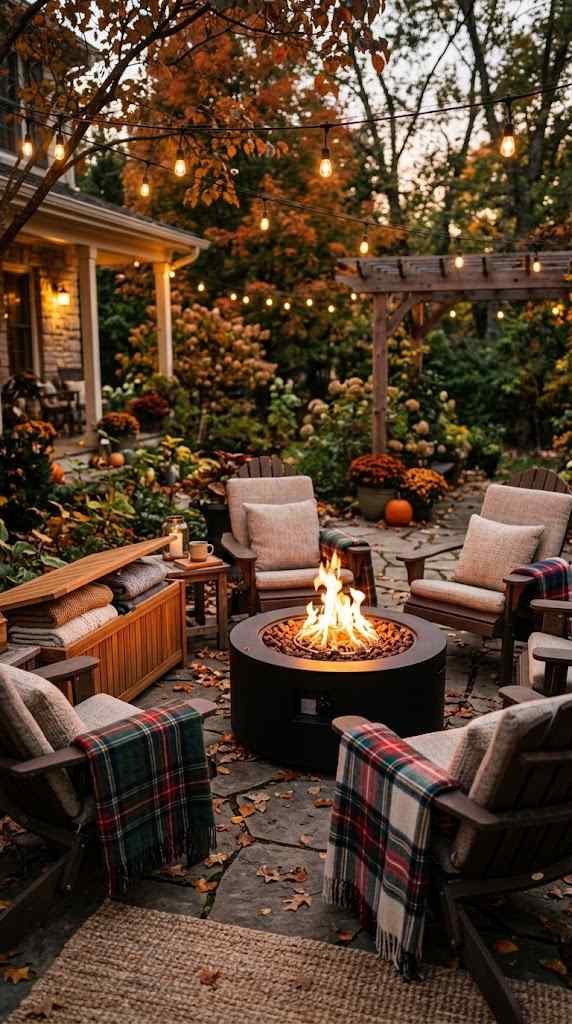
People hear “fall porch” and immediately reach for orange. But orange overload is how you end up looking like a Halloween store clearance aisle instead of a cozy homestead.
Real rustic fall style leans on muted, earthy tones: burnt sienna, deep mustard, sage green, warm cream, and charcoal brown. Think of it as the color story of a wheat field at golden hour, not a traffic cone convention. Mixing in neutrals like cream and gray keeps the orange from overwhelming the space.
A few ways to build the palette on your porch:
- Swap bright orange pumpkins for heirloom varieties in muted white, blue-gray, or speckled tan
- Use burlap or woven jute ribbon instead of shiny satin bows
- Choose mums in burgundy or dusty gold rather than neon orange
- Add black or bronze metal accents (lanterns, hooks, planters) to ground the warmer tones
There’s also a seasonal timing trick most people miss. Early October calls for warmer, lighter tones think dusty gold and cream because the surrounding landscape hasn’t fully turned yet, so a porch that’s too dark can look out of step with what’s actually happening outside. By late October and into November, you can shift toward deeper charcoal, rust, and near-black accents since the trees have caught up and everything outside looks moodier anyway.
One more thing worth mentioning: paint chips are your friend here. Grab a handful of earthy tones from the hardware store and hold them up against your door color before buying a single pumpkin. It sounds excessive, but a mismatched palette against a bright red or navy front door is one of the fastest ways to make an otherwise nice display look accidental instead of intentional.
IMO, this is the single biggest upgrade most porches need. You don’t need more stuff you need better color coordination between the stuff you already have.
Layer Natural Textures Like You Mean It
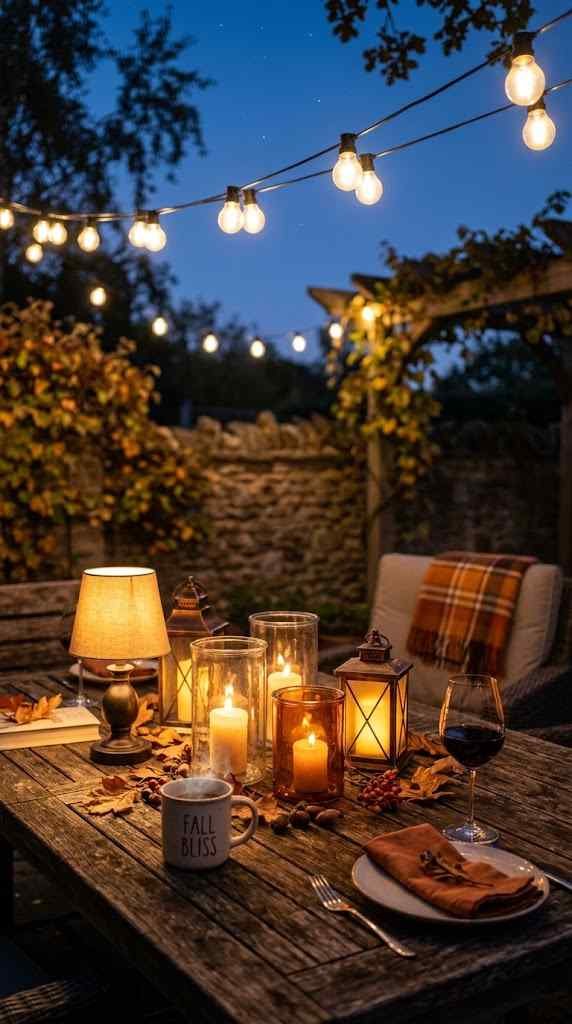
Rustic design lives and dies on texture. A porch with ten different smooth, matching items looks like a display shelf. A porch with wood, straw, metal, and fabric mixed together looks like it has a story.
Start with your base layer that’s usually hay bales, stacked wood rounds, or a wooden crate turned on its side. These give you height variation, which matters more than people realize. Flat, single-level porch displays photograph fine but feel boring in person because your eye has nowhere interesting to travel.
From there, build up:
- Base layer: hay bale, wood crate, or stacked logs for structure and height
- Middle layer: pumpkins, gourds, and dried corn stalks nestled into or against the base
- Accent layer: woven baskets, plaid throw blankets, or a vintage lantern
- Soft touches: burlap runners, dried wheat bundles, or a jute doormat
Do you actually need hay bales? Not necessarily they’re heavy, they shed, and if you live somewhere humid they can get moldy fast. I learned that one the hard way after a bale basically composted itself on my steps during a rainy October. A big woven basket filled with firewood or dried corn stalks gives you similar visual weight without the mess.
Texture also has a practical side people tend to overlook it hides imperfections. A porch floor with a few scuffs or a railing that’s seen better days gets visually softened once you’ve got baskets, blankets, and stacked wood drawing the eye around instead of straight down at the flaws. It’s basically the design equivalent of a well-placed rug.
Don’t feel locked into buying everything new, either. Thrift stores and estate sales are goldmines for galvanized buckets, wire baskets, and weathered wood crates that already have the worn-in look rustic decor is chasing. A brand-new crate from a craft store often looks too clean, and you end up wanting to bang it against the driveway just to rough it up a little. Save yourself the trouble and buy something that’s already lived a life.
Pick Fall Porch Decor That Works With Your Architecture
This is the part most guides skip, and it’s honestly the part that makes or breaks the whole look. Rustic decor on a sleek modern porch can feel like a costume rather than a style. Rustic decor on a farmhouse, craftsman, or cottage-style home just feels right.
If your home leans modern or minimalist, don’t fight it soften the rustic elements instead. Skip the hay bale and corn stalks, and lean on a few high-quality pieces: a single oversized pumpkin, a wood-slice welcome sign, and a neutral wreath with dried florals. Fewer, better-chosen pieces beat a cluttered display every time, especially on smaller or contemporary porches.
If your home already has farmhouse bones board-and-batten siding, a wraparound porch, exposed wood beams you have more room to go bigger. Layer in multiple textures, mix pumpkin sizes generously, and don’t be afraid of a wheelbarrow display or a full mum-and-cornstalk corner.
Here’s a quick way to match decor intensity to your home style:
| Home Style | Recommended Approach |
|---|---|
| Modern/minimalist | 1-3 statement pieces, neutral tones, clean lines |
| Craftsman/cottage | Moderate layering, mixed textures, warm woods |
| Farmhouse | Full layering, bold height variation, abundant natural elements |
| Suburban traditional | Balanced mix wreath, planters, one focal display |
Scale matters just as much as style. A tiny pumpkin display on a wide, deep porch reads as sparse and forgotten, while an oversized display crammed onto a narrow stoop feels like it’s spilling into the driveway. Walk out to your curb, look back at your porch, and gauge how much visual “weight” the space can actually hold before you start buying decor.
It also helps to think about sightlines from inside your home, not just from the street. If you’ve got a window near your front door, whatever you place there is something you’ll see dozens of times a day for two straight months. Put the pieces you love most the ones with real texture or a bit of personality somewhere you’ll actually notice them, rather than burying your favorite find behind a pile of gourds.
Don’t Forget Lighting, It’s Doing More Work Than You Think
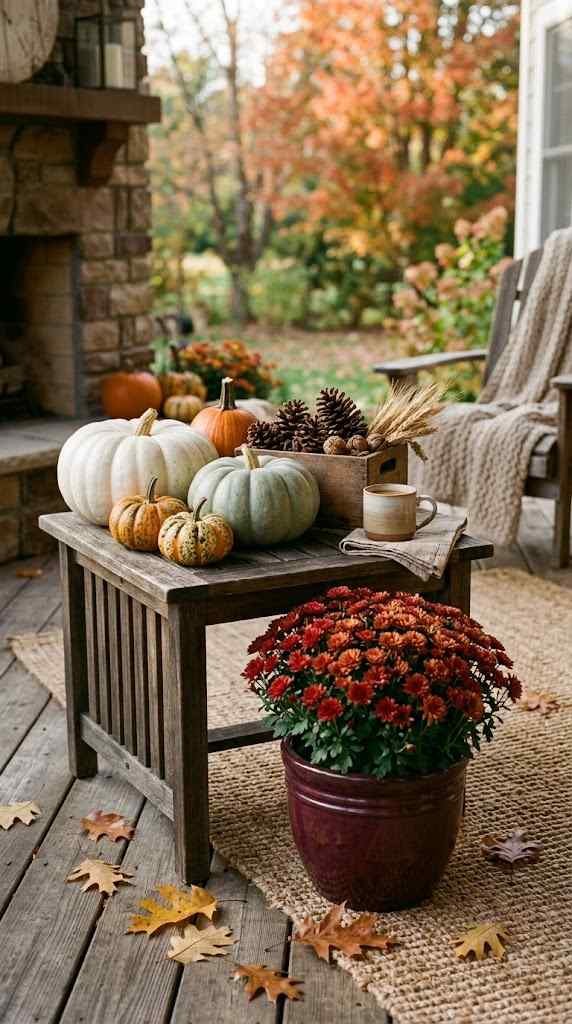
A rustic fall porch that looks amazing at noon and disappears at 6pm is only doing half the job. Warm lighting is what makes a porch feel inviting once the sun sets earlier and earlier through October.
String lights are the obvious choice, but skip the bright white ones they read as more “backyard party” than “cozy autumn evening.” Warm amber or vintage Edison-style bulbs match the rustic aesthetic way better and cast that golden-hour glow all night.
Battery-operated lanterns are another great option, especially tucked into a display of pumpkins or set on a stack of wood rounds. They’re safer than candles (no fire risk if a gust of wind knocks one over), and most now come with flickering “flame” settings that genuinely fool people from a few feet away. My mother-in-law still insists mine are real candles, and I haven’t corrected her because, frankly, her confusion is the whole point.
A few lighting combos that consistently work:
- String lights along the porch railing or roofline, paired with 2-3 flameless lanterns at ground level
- A single oversized lantern as a focal point near the front door
- Small LED fairy lights woven into a dried wheat or wildflower bundle for subtle glow
Timing your lights matters more than people expect, too. A cheap outdoor timer or smart plug means your porch lights flip on right as the sun starts dipping, instead of you scrambling to plug them in after realizing it’s already dark and your porch looks abandoned. Small fix, but it makes the whole display feel considered rather than thrown together.
Color temperature deserves a mention as well. Most warm bulbs list a Kelvin rating, and anything in the 2200K–2700K range is what gives that genuine candlelit, amber glow rustic porches are known for. Once you cross into 3000K territory, things start looking a little too crisp and modern, which can clash with all that burlap and wood you just spent an afternoon arranging.
Keep It Weather-Ready So It Doesn’t Fall Apart by Week Two
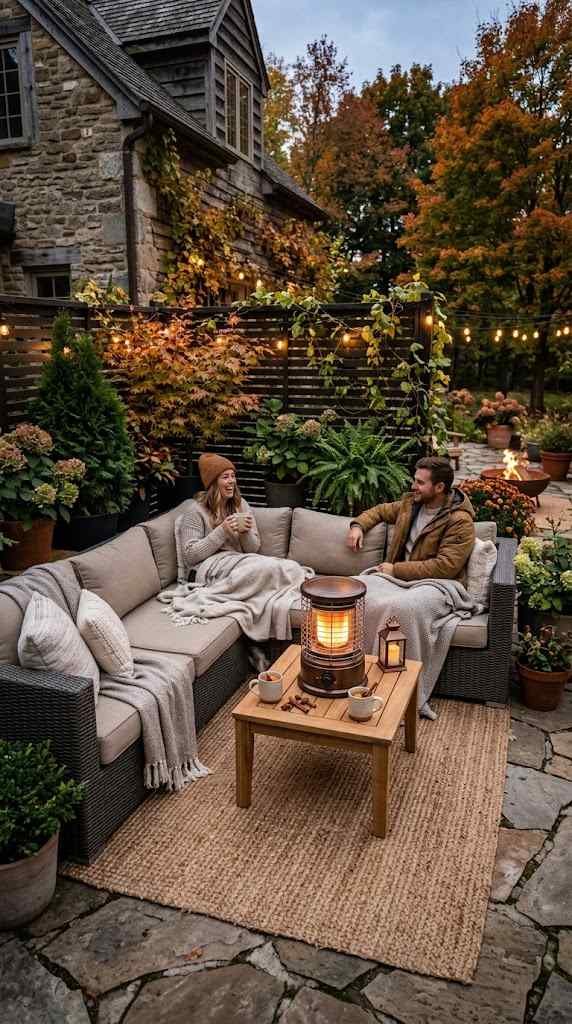
Nobody talks about this enough, and it’s honestly the reason so many rustic porches look great on day one and sad by day fourteen. Fall weather is unpredictable rain, wind, sudden cold snaps and natural materials don’t always hold up.
A few practical fixes that save you a re-decorating headache mid-season:
- Seal real pumpkins with a thin coat of mod podge or clear spray sealant to slow rotting
- Anchor lightweight items (corn stalks, wreaths, banners) with zip ties or floral wire so wind doesn’t relocate them
- Choose faux pumpkins for anything near ground level or in direct rain exposure they last the whole season and honestly look convincing from a few feet away now
- Store extra hay or straw in a dry spot and swap it out if it gets soggy, rather than letting it sit and mold
Is it a little annoying to think about porch decor durability? Sure. But redoing your whole display in mid-November because everything wilted or rotted is way more annoying, and I say that from painful experience.
Wind is the other silent porch-wrecker nobody warns you about. A gust can send a lightweight wreath tumbling into the yard or scatter a dried corn stalk arrangement across three neighbors’ lawns before you’ve even had your coffee. Command hooks rated for outdoor use, paired with a bit of floral wire, keep everything anchored without drilling holes into trim you’ll need to patch later.
Temperature swings cause their own headaches, especially for anyone in a region where fall weather can’t decide what it wants to be. A sunny 70-degree afternoon followed by an overnight frost speeds up decay on real pumpkins and gourds significantly faster than steady cool weather does. Checking your display every few days squeezing pumpkins gently for soft spots, swapping out anything that’s turned keeps the whole porch looking fresh instead of letting one rotten piece quietly drag the vibe down for everyone walking past.
FAQ’s
How do I make a small porch look rustic without it feeling cluttered?
Choose 1-3 statement pieces, stick to a muted color palette, and skip bulky items like hay bales.
Are real pumpkins or faux pumpkins better for a rustic fall porch?
Faux pumpkins last the whole season and resist rot; real pumpkins offer authentic texture but need sealing.
What colors work best for a rustic fall porch besides orange?
Burnt sienna, mustard, sage green, cream, and charcoal create a warmer, less overwhelming autumn palette.
How do I keep hay bales or straw from rotting on my porch?
Store extras in a dry area, keep bales off wet ground, and swap them if they get soggy.
What lighting works best for a cozy rustic fall porch at night?
Warm amber string lights paired with flameless lanterns create inviting golden-hour glow after dark.
CONCLUSION
A rustic fall porch really comes down to four things: a grounded color palette, layered natural texture, decor that matches your home’s actual style, and lighting that carries the look into the evening. You don’t need a truckload of hay bales or a Pinterest-perfect budget to pull it off you need intention. Pick a few solid pieces, layer them with some thought, and let the natural materials do the heavy lifting. Your porch doesn’t have to win the neighborhood pumpkin arms race. It just has to feel like somewhere you’d actually want to sit with a warm drink and watch the leaves fall. 🍂