
shabby chic bathroom
By Anna Grace | 13 June 2026
How to Design a Shabby Chic Bathroom Without Turning It Into a Flea Market
My grandmother’s bathroom had a clawfoot tub with chipped white paint, a mirror so old the silver backing had gone cloudy at the corners, and a mason jar full of lavender on the windowsill. For years, I thought it just needed a renovation. Turns out, she was decades ahead of the trend that whole aesthetic now has a name, a Pinterest following of millions, and a price tag at boutique home stores that would make her laugh out loud.
That’s the funny thing about a shabby chic bathroom. The look celebrates wear, age, and softness things most bathroom design actively fights against. And when you get it right, it feels less like a room and more like a warm exhale at the end of the day.
So how do you actually pull it off without your bathroom looking like a flea market exploded in it? Here’s the full breakdown.
What Makes a Bathroom “Shabby Chic” Anyway?
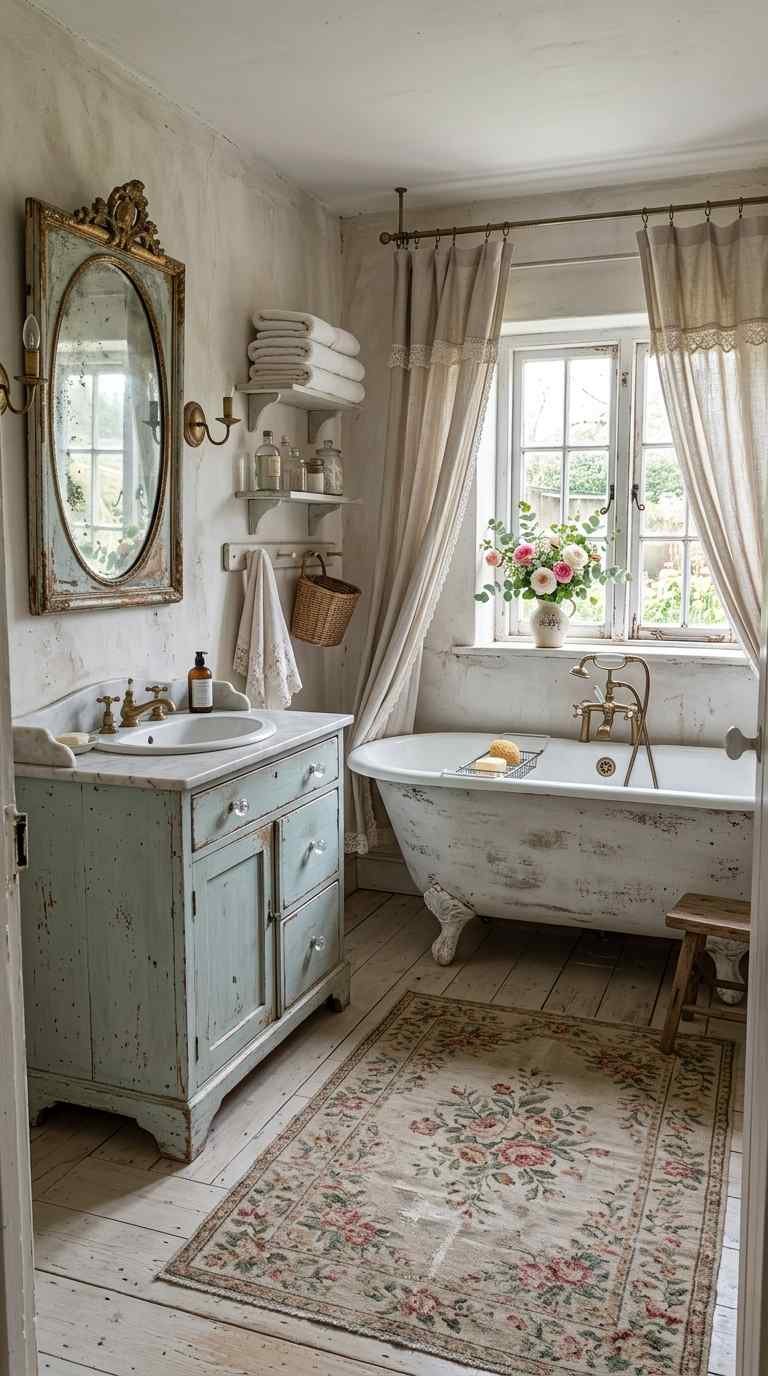
Shabby chic sits in a sweet spot between vintage, cottage, and French country style. The core idea is simple: beauty through gentle imperfection. Distressed paint, faded florals, weathered wood, and soft whites all work together to create a space that feels collected over time rather than bought in a single weekend.
A few signatures define the style:
Distressed or whitewashed furniture think vanities that look lovingly worn, not damaged
● A soft, muted palette whites, creams, dusty pinks, sage greens, pale blues
● Vintage or vintage-style fixtures clawfoot tubs, cross-handle taps, oval mirrors
● Romantic textures ruffled shower curtains, lace, linen, chenille
● Floral touches on wallpaper, ceramics, or fresh from the garden
Notice what’s not on that list? Clutter. This is where people go wrong. Shabby chic is soft and layered, but it still breathes. If your countertop looks like an antique shop’s overflow bin, you’ve drifted from charming into chaotic.
Worth knowing where the name came from, too. British designer Rachel Ashwell coined “shabby chic” back in the late ’80s, building an entire brand around slipcovered sofas and flea-market finds. The bathroom version borrows her philosophy directly: nothing should look brand new, and nothing should look precious.
That mindset changes how you shop. Instead of asking “is this perfect?”, you start asking “does this have character?” A hairline crack in a ceramic soap dish stops being a flaw and becomes a feature. Once that switch flips in your brain, decorating gets cheaper and honestly a lot more fun.
One more distinction that trips people up: shabby chic is not the same as farmhouse. Farmhouse leans rustic and masculine barn wood, black metal, sliding doors. Shabby chic stays soft, feminine, and romantic. You can borrow a little from each, but know which team you’re playing for.
Start With the Palette (Because Paint Is Cheap and Forgiving)
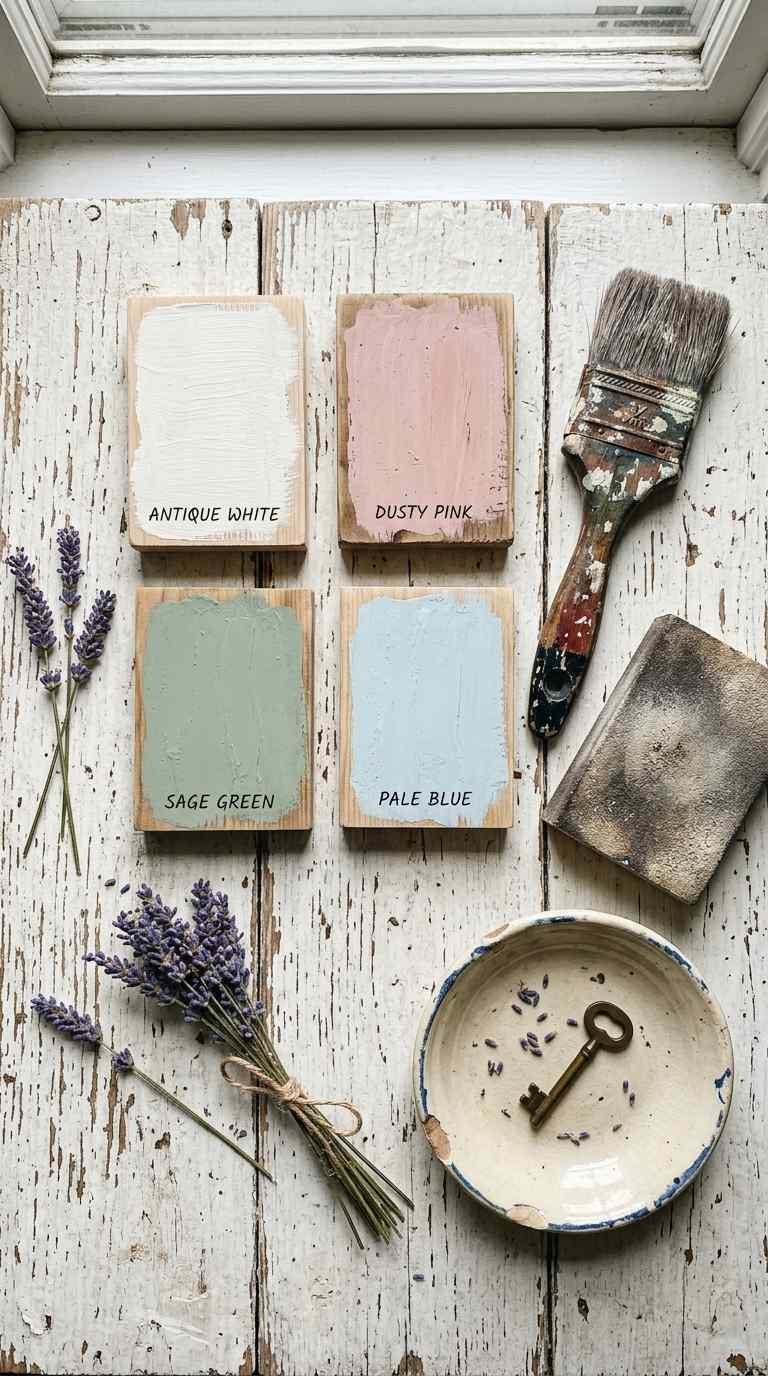
Before you buy a single ruffled towel, sort out your colors. A shabby chic bathroom lives or dies on its palette, and the good news is that this style is remarkably forgiving to work with.
White is your anchor but not sterile, gallery-wall white. Reach for warmer shades: antique white, ivory, soft chalk tones. From there, layer in one or two accent colors. Dusty rose and sage are the classic pairing. Pale powder blue with cream reads a little more French coastal. Lavender gray feels calm and slightly moody, if that’s your speed.
Want my honest opinion? Skip pure gray entirely. It photographed beautifully in 2018 and now makes every room feel like a dentist’s waiting area. Warm neutrals age better, in bathrooms and in life.
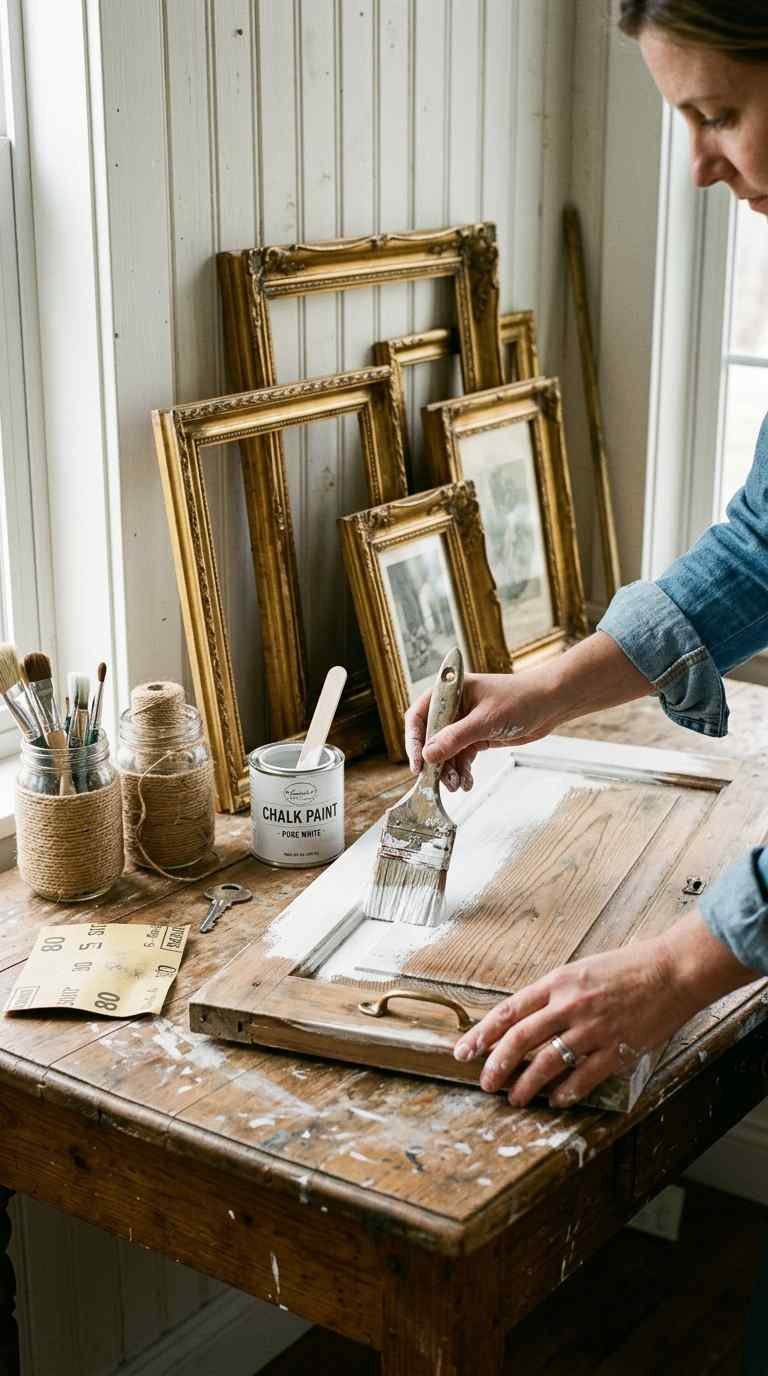
One trick that pays off enormously: paint your existing vanity instead of replacing it. A coat of chalk paint, a light sanding along the edges to expose the wood, and a wax finish will transform a dated builder-grade cabinet into the centerpiece of the room. It costs maybe thirty dollars and an afternoon. Compare that to a new vanity, and the math gets very persuasive very fast.
If you’re nervous about committing to color, test it where it costs nothing to fail. Paint the inside of a cabinet door, live with it for a week, and see how it looks in morning light versus evening light. Bathroom lighting distorts color more than any other room in the house, and a dusty pink that looks dreamy at noon can turn oddly medicinal under nighttime bulbs.
Walls aren’t your only canvas either. A pale sage ceiling yes, the ceiling makes a small bathroom feel like the inside of a jewelry box. Beadboard or wainscoting painted in your accent shade adds instant cottage bones to even the blandest builder bathroom.
And whatever palette you land on, repeat each color at least three times around the room. A single pink towel looks like laundry. Pink towels, pink roses, and a pink-tinged print on the wall? Now it looks like a decision.
Fixtures and Furniture, Where the Magic (and the Money) Lives
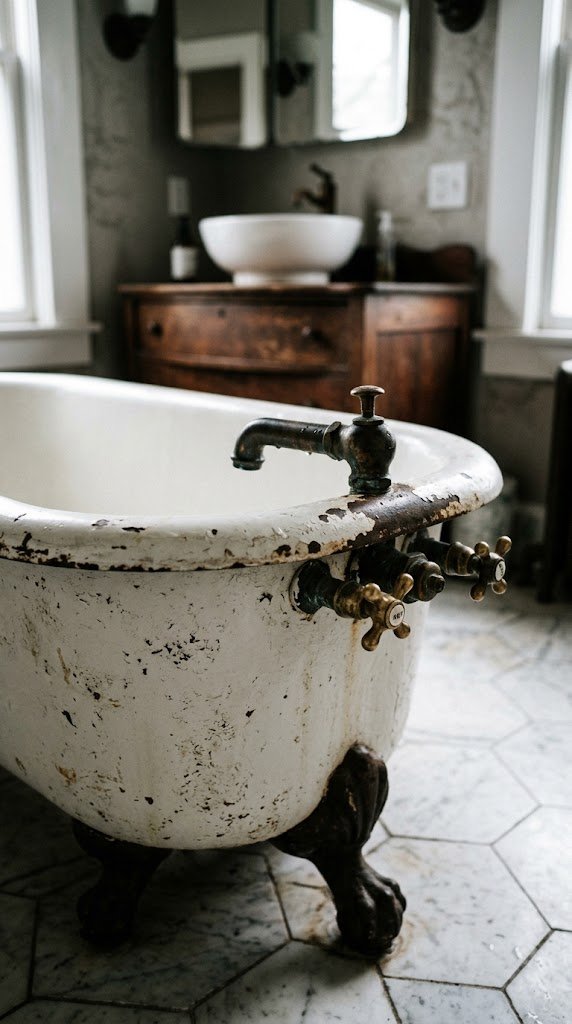
Here’s where you decide how deep you want to go. You can shabby-chic a bathroom on almost any budget, but the fixtures determine whether it whispers vintage or sings it.
The tub question
If you have the space and the plumbing budget, a clawfoot tub is the crown jewel of shabby chic bathroom design. Nothing else says “I take long baths and read actual paper books” quite like it. Can’t swing a real cast-iron one? Acrylic reproductions cost a fraction of the price and look convincing once they’re in place. FYI, secondhand clawfoot tubs show up constantly on local marketplaces people rip them out during modern renos and practically give them away. Their loss 🙂
Vanities with a past life
The best shabby chic vanities weren’t born as vanities at all. A repurposed dresser or antique washstand with a vessel sink dropped in has more character than anything you’ll find in a big-box showroom. Look for curved legs, carved details, and solid wood you can paint. Just seal it properly romance fades quickly when your dresser swells from steam damage.
Hardware and taps
Swap chrome for aged brass, brushed nickel, or ceramic cross-handle faucets. It’s a small change that shifts the whole room’s era. Mismatched vintage knobs on cabinet doors? Even better. Perfection is the enemy here.
A quick word on mirrors, since they’re technically furniture’s flat cousin. An oversized vintage frame leaning slightly forward on its wall mount does something subtle and wonderful it reflects more of the room and softens harsh angles. Hunt for frames with gesso detailing or carved florals, then don’t restore them too much. That flaking gold is doing its job.
Open shelving also earns its keep in this style. A single reclaimed wood shelf above the toilet, styled with a stack of towels and one apothecary jar, gives you storage that doubles as a vignette. Skip the floating glass shelves; they belong to a different, shinier universe.
If your budget allows exactly one splurge, spend it on the faucet. You touch it a dozen times a day, and a genuine unlacquered brass tap develops a living patina that no factory finish can imitate. It ages alongside you, which feels very on-brand for this whole aesthetic.
Textiles, Accessories, and the Art of Restraint
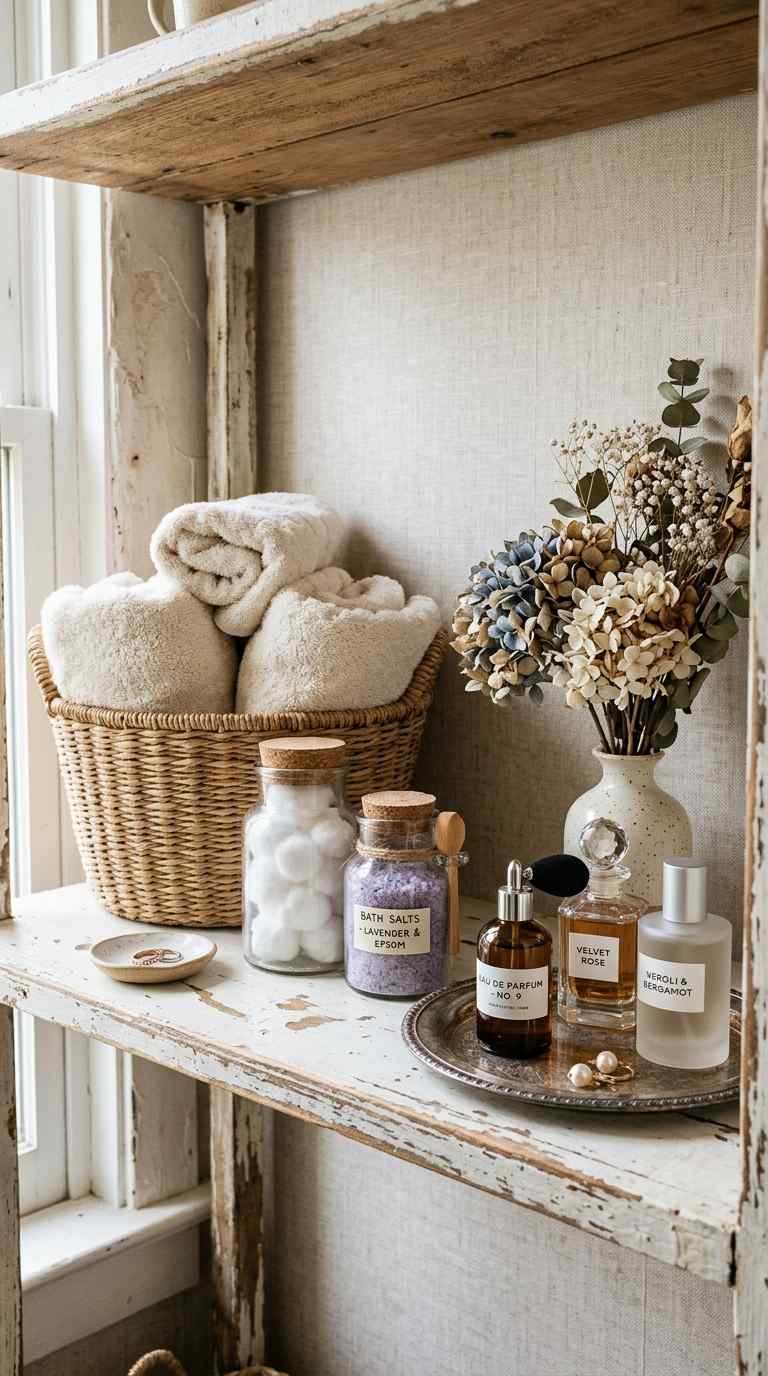
Textiles do the emotional heavy lifting in this style. A ruffled or lace-trimmed shower curtain instantly softens all the hard tile surfaces bathrooms are stuck with. Layer a faded floral or rose-print bath mat over the floor. Stack fluffy white towels loosely in a wicker basket instead of folding them into rigid hotel rectangles the slight rumple is the point.
For accessories, less genuinely is more. Choose pieces that earn their spot:
● One statement mirror ornate, gilded or whitewashed, ideally with some age to it
● Glass apothecary jars for cotton balls and bath salts
● A small vase of fresh or dried flowers roses, hydrangeas, or lavender
● A vintage-style wall sconce or two with soft, warm bulbs
● One piece of aged art a botanical print, an old landscape, anything with a story
Ever noticed how the most inviting bathrooms in magazines have maybe five visible objects? That’s not an accident. Every extra trinket dilutes the ones that matter.
Lighting deserves a special mention. Harsh overhead lighting will murder this aesthetic instantly. Warm bulbs, a small chandelier if you’re feeling bold, or wall sconces flanking the mirror will keep everything glowing and gentle. I switched my own bathroom bulbs from cool white to warm amber last year and the difference was so dramatic I briefly considered a career in lighting design. Briefly.
Seasonal swaps keep the room from going stale without adding permanent clutter. Lavender and linen in summer, eucalyptus and chunkier knits when it cools down. Because the base palette stays neutral, these little rotations feel dramatic while costing almost nothing.
Scent counts as an accessory here too, and I’ll defend that position. A shabby chic bathroom should smell like something rose, lavender, fresh cotton. A single quality candle or a dish of dried petals finishes the room in a way your eyes can’t measure but your brain absolutely notices.
Also, embrace the trays. One vintage silver or ceramic tray corrals your perfume bottles and hand soap into an intentional cluster instead of countertop debris. Same objects, entirely different effect. Trays are basically cheating, and I fully endorse cheating.
Budget-Friendly Ways to Get the Look This Weekend
You don’t need a renovation loan to create a shabby chic bathroom. Some of the most effective changes cost almost nothing
● Chalk paint an existing cabinet or shelf and distress the edges with sandpaper
● Hunt thrift stores and estate sales for mirrors, frames, jars, and small furniture this style practically requires secondhand shopping, which is half the fun
● Swap your shower curtain for a ruffled white or faded floral one (under $30 in most places)
● Add peel-and-stick floral wallpaper to one wall if you’re renting or commitment-shy
● Frame free vintage botanical prints public domain archives online are full of them
● Replace cabinet knobs with mismatched ceramic or glass onesare full of them
The thrifting piece matters more than people expect. Genuine age can’t be faked convincingly at scale, and a $4 cloudy mirror from a charity shop will outperform a $90 “distressed-look” one from a chain store every single time. IMO the hunt is also the best part you end up with a bathroom full of small stories instead of receipts.
One warning while you’re bargain-hunting: check anything upholstered or unsealed for moisture tolerance. Bathrooms are humid little ecosystems, and that gorgeous velvet stool will grow things you don’t want to name if it sits next to a steamy shower. Stick to wood, metal, glass, and ceramic for anything permanent.
Don’t overlook what you already own. That plain wooden picture frame in the closet? Chalk paint and sandpaper turn it shabby chic in twenty minutes. The boring glass jar from last month’s pasta sauce? Soak the label off, tie twine around the neck, and it’s suddenly holding cotton swabs like it was born for the job.
Fabric remnant bins are another goldmine most people walk right past. Half a meter of faded floral cotton becomes a café curtain for the bathroom window or a skirt to hide the ugly pipes under a pedestal sink. Basic hemming skills required; sewing machine optional.
And set yourself a rule for the thrifting trips: one in, one out. For every vintage treasure you carry home, something else leaves the bathroom. It keeps the collected look from quietly becoming the hoarded look, which happens faster than any of us like to admit.
Mistakes That Turn Charming Into Cluttered
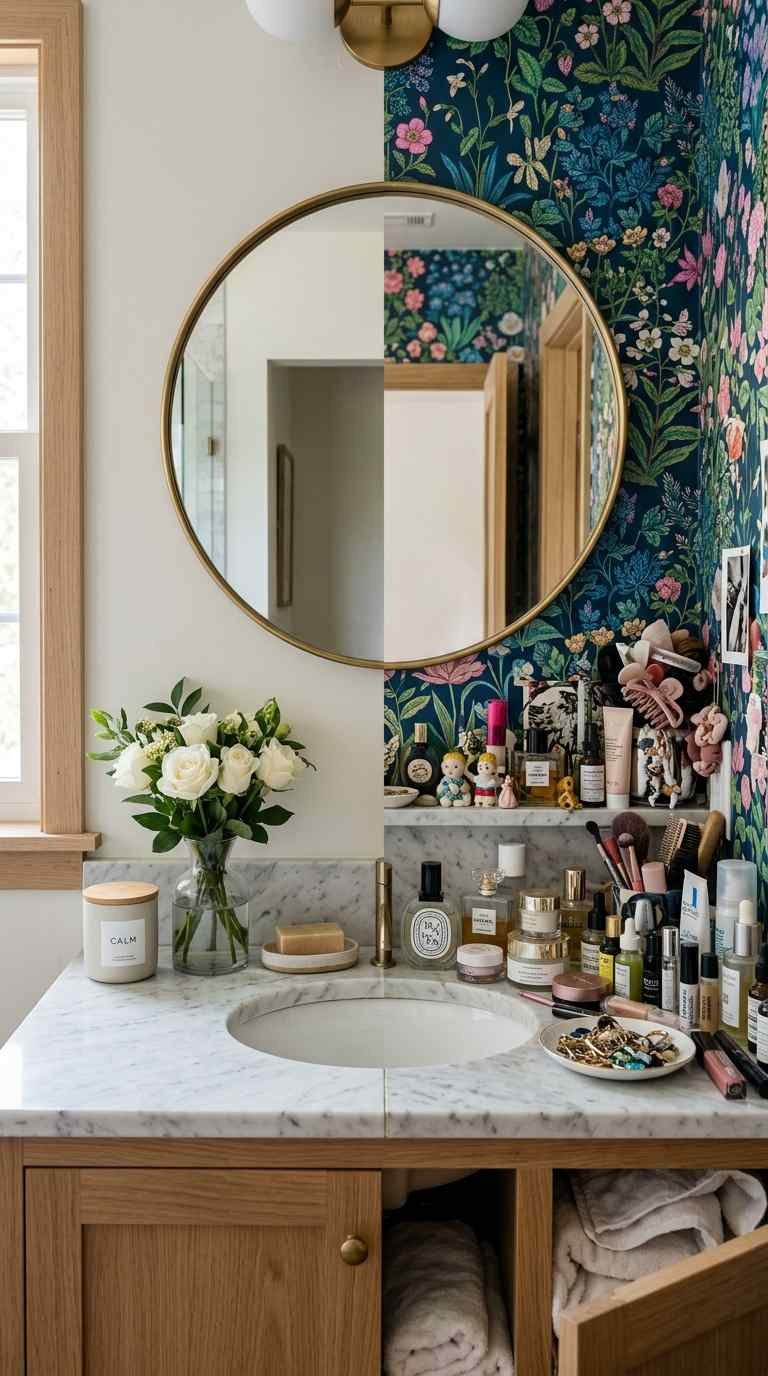
A quick honesty check, because this style has failure modes. The line between “romantic vintage retreat” and “haunted doll museum” is thinner than you’d think :/
Watch for these traps:
● Too many patterns competing. Pick one hero floral and let everything else stay quiet.
● Fake distressing overdone. If every single surface looks sandblasted, it reads costume, not character.
● Ignoring function. You still need storage, ventilation, and lighting you can actually see in. Pretty doesn’t excuse impractical.
● All shabby, no chic. Balance the worn pieces with crisp elements fresh white towels, a clean modern toilet, sparkling glass. The contrast is what makes it work.
Another quiet mistake: forgetting the ceiling fan or extractor. All those lovely painted wood pieces and vintage textiles need dry air to survive. Run the fan during every shower, crack a window when you can, and re-wax painted furniture once a year. Maintenance isn’t glamorous, but neither is repainting a swollen vanity door.
Also resist theming too hard. A few roses are romantic; roses on the curtain, the wallpaper, the towels, the soap, and the bath mat is a rose-flavored fever dream. Let one or two motifs carry the room and give everything else permission to be plain.
The golden rule: if a piece looks worn because it was loved, keep it. If it looks worn because it was neglected, skip it. Your gut knows the differenc
FAQ’s
Is shabby chic bathroom style still is in trend?
Yes, it remains popular, especially blended with cottagecore and vintage-inspired interior trends.
What colors work best in a shabby chic bathroom?
Warm whites, dusty pink, sage green, and pale blue create the softest look.
Can I create a shabby chic bathroom on a small budget?
Absolutely! chalk paint, thrifted mirrors, and ruffled curtains transform bathrooms for under $100.
How do I protect vintage wood furniture from bathroom humidity?
Seal painted pieces with wax, run the extractor fan, and re-wax yearly.
What’s the difference between shabby chic and farmhouse bathrooms?
Shabby chic feels soft, romantic, and feminine; farmhouse leans rustic with darker, masculine elements.
CONCLUSION
A shabby chic bathroom rewards patience more than budget. Start with paint and textiles, hunt slowly for the vintage pieces that make you stop mid-scroll, and resist the urge to finish the whole room in one frantic weekend. The best versions of this style look like they took years to assemble because the good ones did.
My grandmother never called her bathroom anything but “the washroom,” and she’d be baffled that her chipped tub is now aspirational. But maybe that’s the real lesson buried in this trend: the rooms we remember aren’t the flawless ones. They’re the ones that felt like somebody actually lived there.
So which corner of your bathroom are you painting first?