
shoe storage ideas
By Anna Grace | 23 July 2026
Shoe Storage Ideas That Actually Solve the Clutter Problem
My hallway used to look like a shoe store exploded in it. Sneakers by the door, boots under the bench, that one lonely flip-flop nobody claims ownership of. If this sounds familiar, you’re not alone shoe clutter is one of those problems that sneaks up on you one pair at a time until suddenly you own eleven pairs of “just in case” shoes and zero places to put them.
What most people don’t realize is that shoe clutter rarely stays the same size. It grows. A pair of running shoes becomes two when the old ones wear out but don’t get tossed. A “just for weekends” pair of boots turns into three because apparently boots multiply when you’re not looking. Left unchecked, that pile by the door becomes a tripping hazard, a source of low-grade household stress, and if we’re being real a spot you avoid photographing when friends come over. Fixing this isn’t about owning fewer shoes (though that helps). It’s about giving every pair a designated home so your entryway stops functioning as a shoe graveyard.
The good news? Shoe storage doesn’t require a walk-in closet or a Pinterest-perfect mudroom. It requires a system that fits your space, your habits, and how many shoes you’re actually working with. Below are five approaches that solve this problem for different homes, different budgets, and different levels of shoe obsession.
Vertical Shoe Racks: The Small-Space MVP
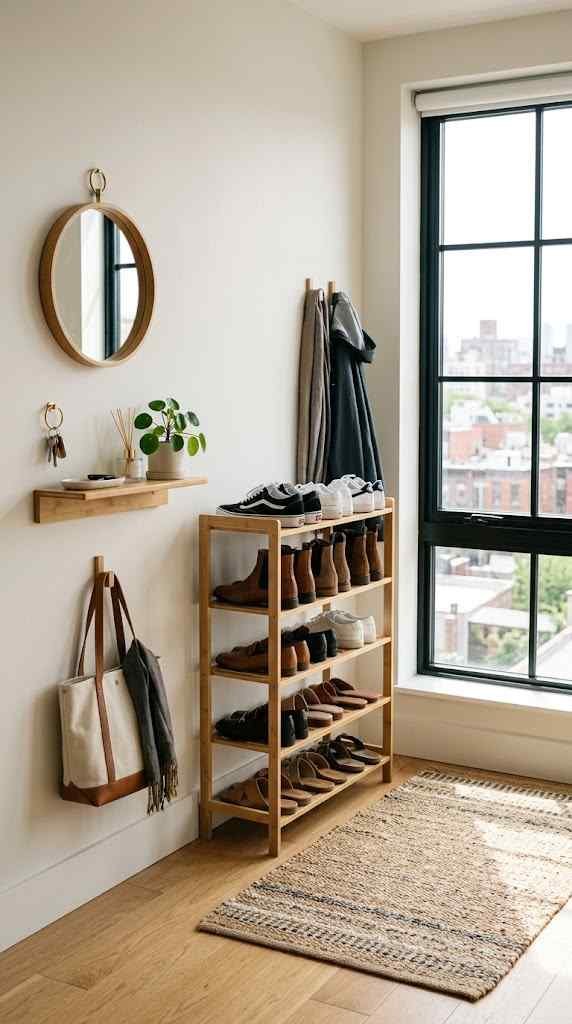
If your entryway is more “closet-sized nook” than actual room, vertical storage is your best friend. Instead of spreading shoes across the floor, you’re stacking them upward, which means you’re using square footage you already have instead of begging for more.
A tiered shoe rack tucked against a wall can hold 12-20 pairs in a footprint smaller than a bath mat. The key is picking a rack with adjustable shelves, since boots and sneakers rarely play nice on the same shelf height. Some racks even fold flat when you’re not using them, which is clutch if you’re renting and can’t commit to permanent furniture.
Here’s what to look for when shopping:
● Adjustable or removable shelves for mixed shoe heights
● A slanted design so shoes don’t slide forward and block the walkway
● Materials that won’t rust if you live somewhere humid
● Weight capacity that matches your actual shoe collection, not just today’s collection
I switched to a vertical rack in my apartment last year, and honestly, it freed up enough floor space that my cat finally has room to dramatically flop in the sun by the door. Small win, but I’ll take it.
Wire racks tend to be the budget-friendly option, and they’re lightweight enough to move around when you rearrange furniture. Wood or bamboo racks cost more but blend into your decor better if your entryway doubles as a place guests actually see. Corner shoe racks are worth a look too they slot into that awkward triangular gap most rooms have and instantly turn dead space into functional storage. If you’ve got serious ceiling height to spare, stackable cube racks let you add more tiers as your shoe collection grows, so you’re not stuck rebuying furniture every time you fall in love with a new sneaker drop. One thing I’d add: test the rack’s stability before loading it up. A wobbly rack with fifteen pairs stacked on it is a disaster waiting to happen, especially if you’ve got kids or pets running through the hallway.
Under-Bed Storage for the Shoes You Don’t Wear Every Day
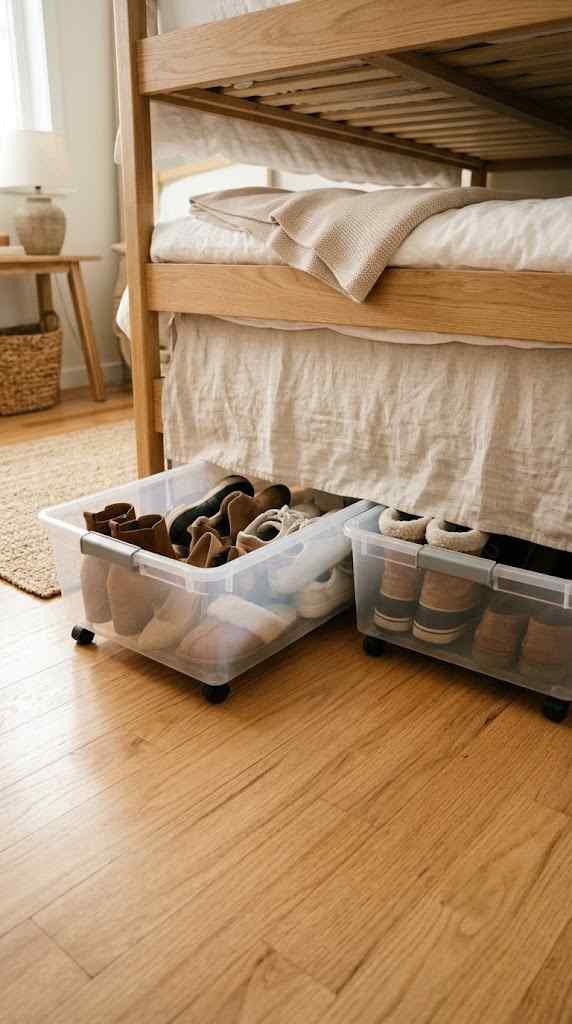
Why does nobody talk about the real estate hiding under their bed? It’s basically free square footage that most people use for dust bunnies and one missing sock. Under-bed shoe storage bins solve two problems at once: they keep off-season shoes accessible without cluttering your main closet, and they’re completely invisible once the bed skirt drops back down.
Clear plastic bins work well because you can actually see what’s inside without digging through six containers first. Fabric bins with zip tops are quieter and often cheaper, though they don’t offer the same visibility. Either way, this method is ideal for:
● Seasonal shoes (snow boots in summer, sandals in winter)
● Special-occasion pairs you wear twice a year
● Backup sneakers you’re saving for when your current pair dies
One thing worth mentioning: under-bed storage only works if you actually remember what’s down there. Label the bins or you’ll forget you own three pairs of the exact same black flats. Ask me how I know.
Not every bed frame gives you the same amount of clearance, so measure the gap before ordering bins — nothing’s more annoying than a container that’s an inch too tall to slide under. Low-profile bins with wheels make retrieval way easier, especially if you’re not thrilled about lying on the floor to fish out your winter boots every November. If you’re storing shoes you actually wear on rotation, consider splitting bins by category instead of just shoving everything in together — one bin for boots, one for sandals, one for sneakers you’re rotating out. It keeps you from unpacking the entire under-bed situation just to find a single pair. And if your bedroom floor is carpeted rather than hardwood, look for bins with a
Over-the-Door Organizers: The Renter’s Secret Weapon
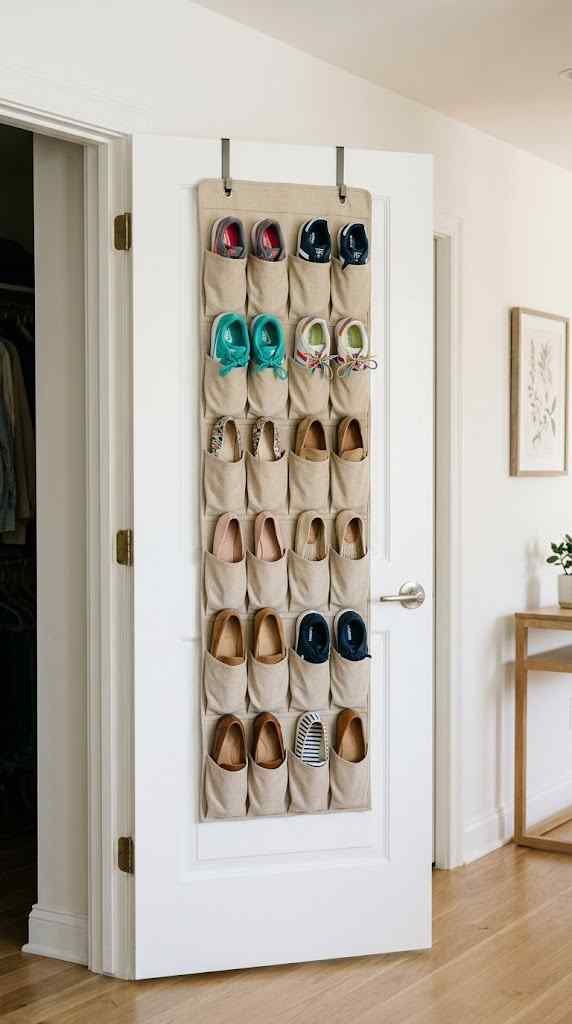
Can’t drill into walls? Don’t own a garage? Over-the-door shoe organizers are basically designed for exactly this situation. They hang on any standard door closet, bedroom, even the back of a pantry door if you’re desperate and instantly give you 12 to 36 pockets of storage without touching a single screw.
These work especially well for kids’ shoes, since the pockets are shallow enough that little sneakers don’t get lost or buried. They’re also great for shoes you wear constantly and want grab-and-go access to, rather than shoes you’re archiving for later
A few practical tips before you buy one:
● Measure your door thickness first; some organizers don’t fit oversized or extra-thin doors
● Canvas versions tend to hold shape better over time than thin vinyl
● Heavier shoes (think work boots) can strain lower pockets, so keep those on top rows
FYI, these organizers aren’t just for shoes. Plenty of people repurpose them for cleaning supplies, hair tools, or kids’ art supplies once the shoe chaos gets under control. Multi-tasking storage is underrated.
Pocket depth matters more than people expect. Shallow pockets are great for flats and kids’ sneakers but will practically eject anything bulkier the moment the door swings shut. If you’re storing taller shoes, look for organizers with adjustable straps or expandable pockets instead of the flat, fixed kind. Placement matters too — hanging one on a frequently used door (like a coat closet) keeps shoes accessible, while a guest room or spare closet door works better for shoes you’re storing long-term. Cleaning is simple: most fabric organizers are machine washable, though you’ll want to double-check the label before tossing one in with a full load. One perk nobody mentions enough is that these organizers make inventory painfully obvious — when you can see all 24 pockets at a glance, you notice duplicate pairs fast.
Built-In Closet Systems for Serious Shoe Collections
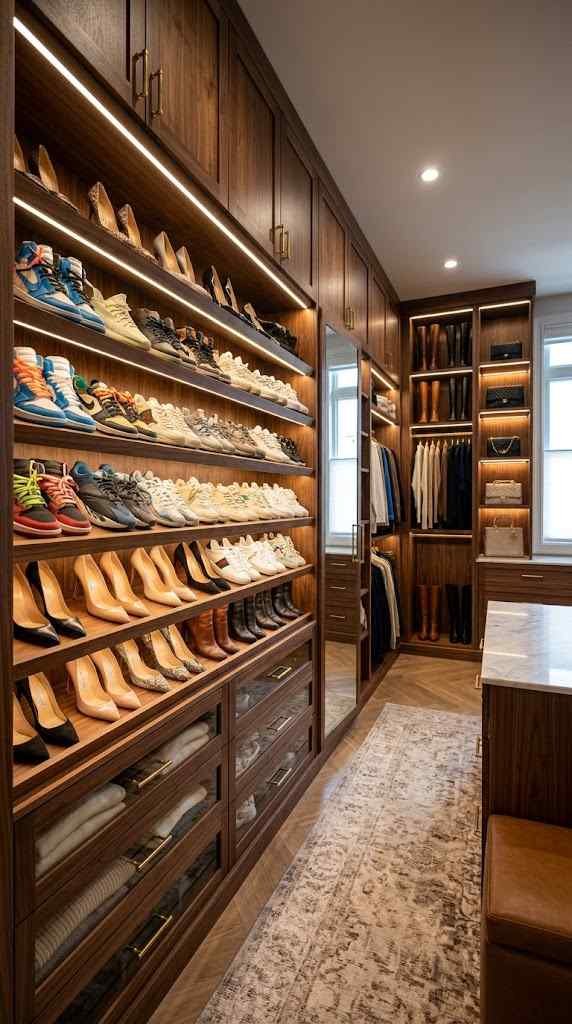
If you’ve got more than 20 pairs and vertical racks just aren’t cutting it, it might be time to consider a built-in closet system. This is the bigger investment option, but it’s also the most customizable you’re designing shelving, cubbies, and drawers around your exact collection instead of forcing your shoes into a generic rack.
Custom shoe closets typically include a mix of:
● Open cubbies for everyday sneakers and flats
● Angled shelves for boots and heels
● Drawers with dividers for smaller items like slippers or kids’ shoes
● Glass-front cabinets if you’re storing collector sneakers you actually want to display
Is this overkill for someone with a modest shoe collection? Probably. But if you’re the kind of person who treats sneaker drops like a competitive sport, a built-in system pays for itself in sanity alone. IMO, this is also where good lighting matters more than people expect a well-lit closet makes it way easier to spot the right pair instead of hauling everything out to find one boot.
Cost varies wildly depending on materials and whether you go custom or semi-custom. Wire shelving kits from a hardware store might run you a couple hundred dollars for a full closet, while a professionally designed wood system with soft-close drawers can climb into the thousands. If budget’s tight, a hybrid approach works well: keep the closet’s existing shelving but add drawer organizers, shoe trees, or slide-out trays to maximize what’s already there. Hiring a professional installer makes sense if you’re modifying closet framing or adding electrical for lighting, but plenty of these systems are genuinely DIY-friendly with a drill and a free Saturday. It’s also worth noting that a well-organized shoe closet can be a small selling point if you ever list your home buyers notice thoughtful storage, even in a room as specific as a shoe closet.
Multi-Purpose Furniture: Storage Bench, Shoe Cabinet, and Seat All in One
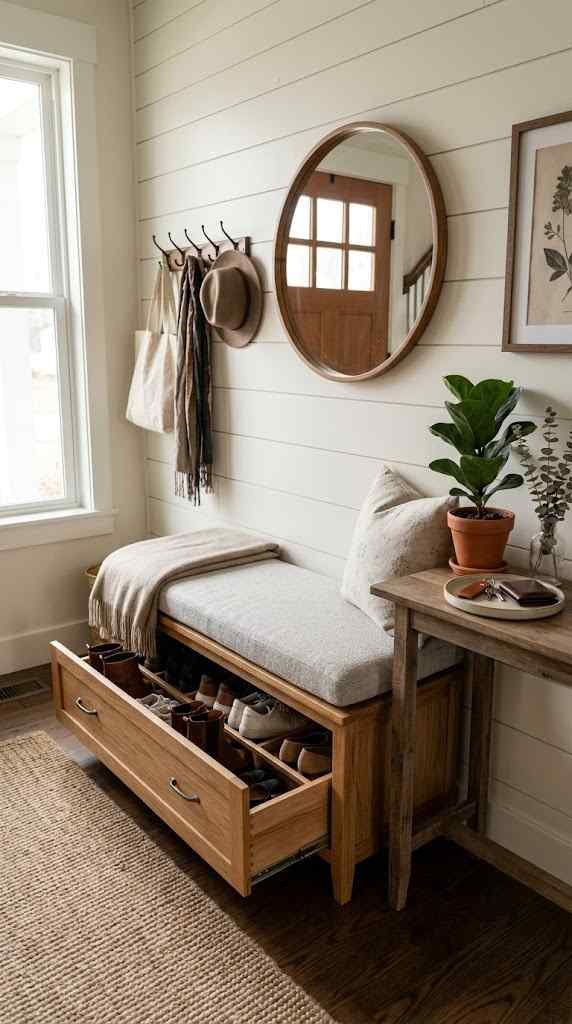
Sometimes the smartest shoe storage idea is the one that doesn’t look like shoe storage at all. Entryway benches with hidden storage compartments let you sit down to put your shoes on while also hiding the shoes themselves underneath. It’s efficient, it looks intentional, and guests walking in won’t immediately clock your footwear situation.
Shoe cabinets work similarly but lean more vertical, often featuring flip-down or slide-out drawers that keep shoes hidden behind closed doors. This is the best option if your entryway doubles as a first impression for guests, since everything stays tucked away and tidy.
A couple of practical notes if you’re shopping for one:
● Measure your entryway width before buying these pieces can eat up more space than expected
● Look for slatted or vented designs if you’re storing shoes that tend to get damp or smelly
● Choose a finish that matches your existing furniture so it doesn’t look like an afterthought
What’s the point of a beautiful entryway if it’s ruined by a pile of sneakers the second you walk in? Multi-purpose furniture solves the visual clutter problem while still being functional, which is honestly the whole goal here.
Cushion tops turn a storage bench into genuine seating, which matters if you’re tying shoelaces every morning while half-asleep and in a rush. Look for removable, washable cushion covers since entryways collect dirt fast, no matter how careful your household tries to be. Cabinet-style options come in a few door variations flip-down fronts save space in tight hallways, while swing-open doors give easier access if you’ve got the clearance. Weight capacity is worth double-checking before you buy, especially if you’re combining bench seating with underneath storage; a bench that groans under a hundred pounds isn’t going to last through years of daily use. Matching the piece to your existing furniture finish sounds like a minor detail, but a mismatched cabinet in an otherwise cohesive entryway tends to stick out more than clutter ever did.
FAQ’s
What furniture offers thaWhat’s the best shoe storage idea for a small apartment with no closet space?e best hidden storage for small spaces?
Vertical shoe racks work best since they use wall space upward instead of spreading pairs across limited floor area.
How many pairs of shoes should a shoe rack hold before I need a bigger system?
Once you exceed 20 pairs, a built-in closet system usually organizes shoes better than standalone racks can.
Is under-bed shoe storage bad for shoes long-term?
No, as long as bins are labeled and shoes are clean and dry before storing to prevent moisture damage.
Can over-the-door organizers hold heavy shoes like boots?
Yes, but place heavier pairs in upper pockets to avoid straining the lower rows over time.
What shoe storage idea works best for keeping an entryway guest-ready?
Multi-purpose furniture like storage benches or shoe cabinets hides shoes completely while still functioning as seating.
CONCLUSION
There’s no single “correct” shoe storage idea there’s only the one that matches your space, your habits, and how many shoes you genuinely own versus how many you think you own. A studio apartment renter needs something completely different from a family of five with a mudroom. Start with an honest inventory of your shoes, be realistic about your space constraints, and pick the method (or combination of methods) that keeps things accessible without turning your entryway into an obstacle course.
Most homes end up using a combination of two or three of these methods rather than relying on just one, and that’s completely normal. Vertical racks handle daily rotation, under-bed bins catch the seasonal overflow, and a bench by the door keeps things looking pulled together for guests. Revisit your system every few months, especially after a season change, since shoe collections shift more than people expect. What works for your closet in January might need adjusting by summer once the sandals come out and the boots go into hibernation.
Your future self, tripping over nothing because there’s nothing to trip over, will thank you.