
Small Balcony
By Anna Grace | 21 july 2026
Transform Your Tiny Balcony Into a Personal Oasis
Your balcony’s probably wasted right now. A dumping ground for that folding chair you never use, maybe a dead plant or two, cobwebs enjoying more square footage than you are. But here’s the thing even the smallest outdoor space has serious potential to become your favorite room. No, seriously. I’ve watched people entirely transform 4×6 balconies into spaces they actually use every single day. It’s not some miracle; it just takes intentional choices and a little creativity.
Small balcony ideas don’t require major construction, huge budgets, or any DIY experience. They require perspective. You’ve got a slice of outdoors attached to your home direct sunlight (maybe), fresh air, and the ability to step outside without leaving your apartment. That’s rarer than you think, and we treat it like storage.
So let’s fix that.
Plants That Actually Work in Tight Spaces
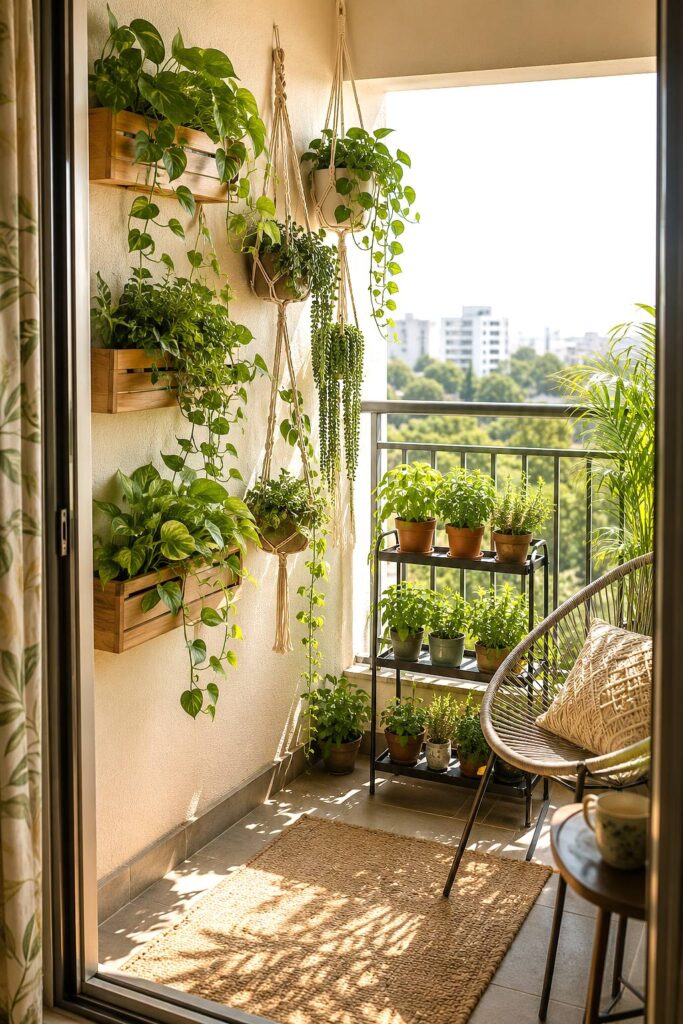
Vertical gardening is your secret weapon here. Forget planting in traditional pots scattered across your tiny floor. You mount plants on walls, hang them from railings, and stack them upward. This approach gives you way more greenery without eating up square footage.
Wall-mounted planters, hanging baskets, and tiered shelving transform your balcony from empty to lush. Go vertical, and suddenly your small space feels bigger while actually looking fuller. The visual trick alone drawing the eye upward makes the area feel less cramped.
Pick low-maintenance plants if you’re realistic about watering schedules. Pothos, snake plants, and sedums handle neglect better than, say, orchids. If you’re in a hot, dry climate, succulents become your best friend. They want sunlight, minimal water, and honestly seem offended when you fuss over them too much. String of pearls, jade plants, and aloe varieties thrive in containers on balconies with full sun exposure. These plants store water in their leaves, so you can go weeks without watering perfect if you travel or have an inconsistent schedule.
Herbs take up minimal space and serve an actual purpose. Basil, thyme, parsley, mint, and oregano live happily in small pots on a balcony railing or shelf. You snip them for cooking, they keep producing, and you’ve just solved the problem of never having fresh herbs when you need them 🙂 Pro tip: grouping herb pots together on a small tiered shelf creates a mini culinary garden that looks intentional and feels functional. Herbs also attract pollinators and smell amazing when brushed against in the breeze.
For shadier balconies that don’t get six hours of direct sun, ferns, hostas, and begonias actually prefer less intense light. They add texture and greenery without requiring constant sunlight. Leafy vines like climbing ivy or philodendrons create living walls when trellised, adding depth and privacy simultaneously.
One more thing about plants they soften hard edges. A concrete balcony surrounded by greenery doesn’t feel industrial anymore. It feels like you’ve got a hidden garden, even if it’s just 20 square feet. The psychological benefit alone being surrounded by living things reduces stress and makes you want to spend time outdoors. Studies show that people with plants around them experience lower cortisol levels and increased feelings of calm.
Container size matters more than you’d think. Larger containers hold soil that retains moisture longer, meaning less frequent watering. Even on a tiny balcony, using three large pots instead of ten small ones looks cleaner and requires less maintenance. Terracotta breathes and looks beautiful, but plastic retains moisture better in hot climates. Fabric grow bags are surprisingly attractive now and offer excellent drainage. Your choice depends on your climate and aesthetic preference.
Furniture That Doesn’t Swallow Your Space
This is where most people mess up. They buy a full-size lounge chair, add a coffee table, and wonder why their balcony feels suffocating.
Right-sizing your furniture means choosing pieces that serve you without dominating the area. A single low-profile chair or a compact bench seats you without taking over. Folding chairs or stackable stools disappear when you don’t need them. Why waste precious space on furniture that sits empty half the year? The goal isn’t to furnish a balcony it’s to create a functional outdoor living zone that doesn’t feel cramped.
Cushions and throws make basic furniture feel way more inviting. A simple wooden bench becomes a hangout spot the second you add a thick cushion and a soft throw blanket. Your brain recognizes comfort, and suddenly you want to spend time out there. Look for outdoor-grade cushions that resist moisture and UV damage they last longer and maintain their color even in intense sun or rain.
Wall-mounted or hanging tables solve the space problem brilliantly. A small floating desk or ledge-style table gives you a surface for coffee, books, or a laptop without requiring floor footprint. Some people install a small bistro table that folds against the wall two chairs, one table, completely collapsible when needed. Alternatively, a narrow console table tucked against the building wall provides surface space without protruding into the open balcony area. This works especially well if you’re using your balcony as a work-from-home extension.
Railing-mounted tables are genius for tiny spaces. They clamp directly to your balcony railing, creating a small dining or working surface that doesn’t touch the floor at all. You get a table without losing ground space. These typically cost $50–$150 and install in minutes without permanent damage.
The real move is choosing quality over quantity. One well-chosen, comfortable seat beats three pieces that don’t fit together or feel cramped. Your balcony doesn’t need to be a furniture showroom; it needs to be a place you actually want to spend time. Consider a meditation cushion or a durable outdoor ottoman if a full chair feels excessive. Ottomans double as footrests, storage (some models are hollow), or extra seating when friends visit.
Modular outdoor furniture designed for small spaces comes in sections you can arrange based on your balcony’s layout. L-shaped corner pieces, individual cushioned cubes, and sectional components let you customize without committing to one rigid setup. If you move apartments regularly, this flexibility saves money and stress.
Storage benches solve the furniture-plus-function problem. You sit on a cushioned top while storing pillows, gardening supplies, or seasonal items inside. This eliminates the need for a separate storage solution while providing seating. IMO, every small balcony needs at least one piece that earns its space by serving double duty.
Lighting Creates the Atmosphere
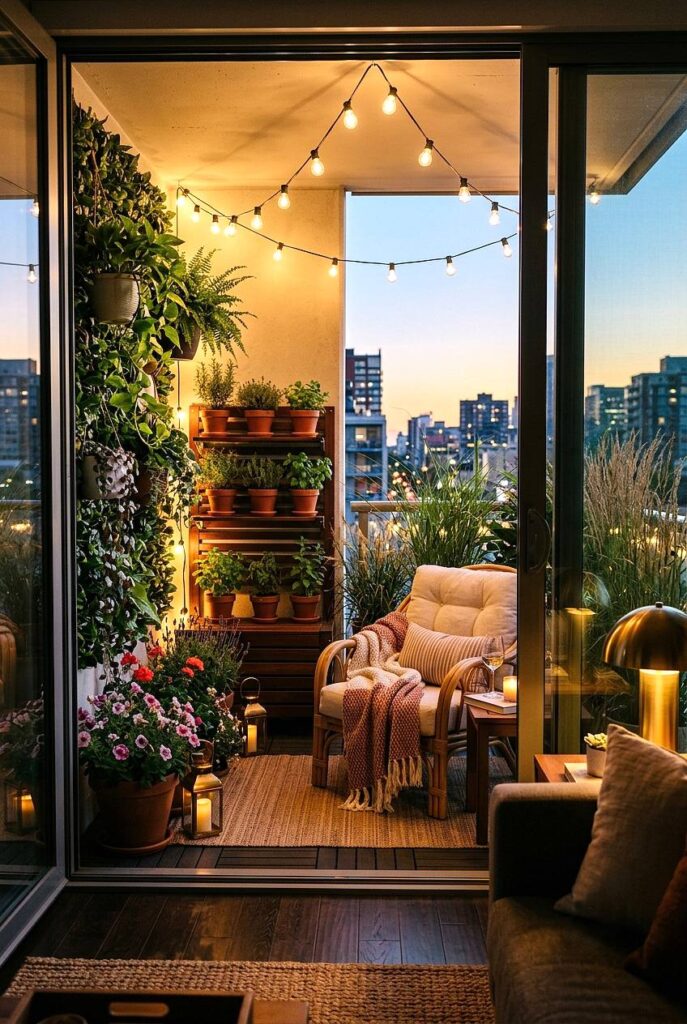
Sunlight during the day is great, but what about evening? String lights, solar lanterns, and wall-mounted fixtures completely transform how your small balcony feels once the sun dips.
Warm lighting think soft amber or warm white (2700K color temperature) makes small spaces feel cozy instead of cold. Harsh overhead lights or bright white LEDs make compact areas feel clinical. You’re going for retreat vibes, not interrogation room. Warm light also photographs beautifully if you’re posting balcony pictures online, which is a bonus.
String lights are the most popular choice, and honestly, they work. They’re affordable, easy to hang, and they look intentional without requiring any skill. Solar options mean no cord-running or electrical work. Just hang them and let the sun charge them during the day. Edison-style bulbs with visible filaments cost slightly more but look substantially better than generic clear bulbs. If you go solar, position the panels to catch morning or afternoon sun they charge more effectively than all-day shade.
Lanterns with real or battery candles add romance and work especially well if you’ve got a railing to hang them from. LED versions are safer than anything flame-based on a balcony, anyway. Moroccan-style pierced lanterns cast intricate shadow patterns on your walls and railings, creating visual interest even before dark. These run $20–$60 depending on size and materials.
Wall-mounted light fixtures save space compared to freestanding lamps. Install a simple sconce pointing downward to illuminate seating areas, or upward to create ambient glow. If your building allows it, these offer permanent, reliable lighting without requiring daily charging like solar options.
Uplighting shining lights upward toward the ceiling or sky creates the illusion of more height and space. It’s the opposite of what most people do (downlighting), and it fundamentally changes how spacious your balcony feels. Directional lights hidden behind plants create a layered lighting design that looks professional and inviting.
Here’s a pro tip nobody mentions: ambient lighting actually makes spaces feel bigger. A well-lit balcony appears more spacious than one sitting in half-darkness. Light bounces around, and suddenly it doesn’t feel so cramped. Layered lighting string lights plus lanterns plus a wall sconce costs more upfront but creates a sophisticated, multidimensional environment that invites longer stays.
Battery-powered LED light strips stick to railings or planters and offer customizable brightness levels. Some even offer color-changing options if you’re feeling playful. These cost $15–$40 and require zero installation beyond peeling backing and sticking.
Timing matters too. Consider lights on timers or smart bulbs you control from your phone. Coming home to an illuminated balcony creates immediate coziness. Setting lights to gradually dim as night deepens saves battery life on solar units and creates a natural wind-down effect.
Weather Protection and Privacy Solutions
Rain happens. Wind happens. And maybe your neighbor’s directly across from you, which kills the whole privacy thing.
A retractable awning or shade cloth handles sun and rain without permanently altering your balcony’s look. You deploy it when you need it; it disappears when you don’t. Some of these cost way less than you’d expect and install in an afternoon. A manual retractable awning runs $150–$400 depending on size, while motorized versions jump to $500–$1,500. If you’re renting, look for tension-rod systems that require zero drilling they clamp between floor and ceiling.
Shade cloth comes in various densities (30%, 50%, 70% coverage). Higher percentages block more sun but reduce light penetration proportionally. A 50% shade cloth hits the sweet spot for most situations it cools the space noticeably while still allowing filtered light for plants and reading. These attach to frame structures or railing systems and cost $30–$150 depending on quality and size.
Privacy screens or decorative panels create a psychological boundary between you and the outside world. You don’t need a full enclosure even partial coverage makes your balcony feel like yours rather than a semi-public walkway. Bamboo screens, slatted wood panels, or even tall planters positioned strategically do the job. Outdoor fabric privacy screens come in patterns and colors, offering both function and aesthetic appeal. They’re lightweight, affordable ($40–$150), and don’t block light like solid barriers.
Lattice panels dressed with climbing vines create living privacy walls that improve with time. Clematis, climbing jasmine, or lightweight ivy grow relatively quickly and provide both screening and greenery. This takes a season or two to establish but creates stunning results and improves your space’s ecosystem.
Wind can actually kill small-balcony enjoyment faster than anything else. You’re up high, exposed. Windbreaks (strategically placed plants, panels, or furniture arrangements) calm things down and make your space actually usable on breezy days. Tall, dense plants like ornamental grasses or bamboo absorb wind without blocking views. Panels positioned at angles deflect rather than completely block wind, maintaining air circulation while reducing gusts.
Privacy combined with wind protection creates a microclimate that feels entirely different from your balcony’s unprotected state. You’re not just adding features; you’re fundamentally improving the lived experience of the space. Neighbors can’t look in, weather impacts are reduced, and suddenly your small balcony feels like a sheltered retreat.
Sound reduction comes as a bonus benefit. Dense plantings and fabric screens absorb noise from traffic, neighbors, and street activity. If you live on a busy street, this transforms your balcony from noisy to peaceful potentially the most valuable upgrade available.
Turning Your Balcony Into an Extension of Home
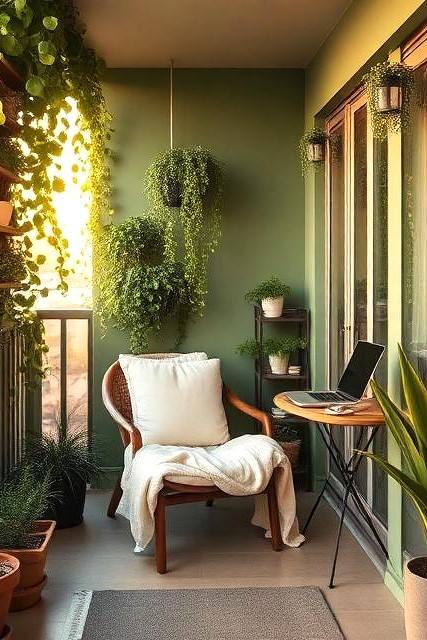
Here’s the crucial mindset shift your balcony isn’t separate from your living space. It’s part of it. An outdoor room that functions the way you actually live.
So what do you actually do? Coffee in the morning? Set it up for that. Reading? One good chair and some shade handling. Dinner under the stars? A small table and some lighting. Yoga? Clear floor space and a mirror for form checking.
The small space isn’t a limitation it’s an excuse to be intentional. You can’t clutter a 4×8 balcony. You can’t pretend to use something you’ve planted there. Every element has to earn its spot. This constraint forces better decisions than larger spaces where you can hide inefficient choices.
Create zones even in tiny spaces. A seating zone, a gardening zone, a dining or working zone these don’t need to be formally separated, but thinking in zones helps you allocate space meaningfully. A 4×8 balcony might have a chair and side table on one half, plants and a small shelf on the other. A 5×10 space could support a bistro table at one end and greenery at the other.
Morning rituals anchor your balcony use. Having coffee outside becomes a daily non-negotiable. You invest in a comfortable chair, adequate lighting for reading the news, maybe a small table for your mug. Suddenly you’re using your balcony every single day, and the space stops feeling like unused square footage.
I watched someone turn their tiny balcony into a work-from-home spot. One desk (wall-mounted), one stool, good morning light, and suddenly their home office expanded without renovating. They were working in fresh air, had a view, and felt less trapped by their apartment. Cost them under $150. The key was identifying their actual need (workspace) and serving that need specifically rather than creating a generic balcony setup.
Entertaining on a small balcony works if you’re realistic about capacity. Two people comfortably, three in a pinch. But a small bistro setup with good atmosphere hosts better conversations than a cramped larger space would. Intimacy beats size. Low string lights, a good bottle of wine, decent weather protection, and suddenly your small balcony becomes the best room in your apartment for evening hangouts.
Reading nooks require minimal space. One comfortable chair positioned for natural light (morning sun ideally), a small side table for your book or drink, and you’ve got all you need. Add a privacy screen to block neighbor views and street noise, and you’ve created a genuine retreat. Some people add a small bookshelf mounted on the wall behind their reading chair, eliminating the need for a floor-based nightstand.
Meditation or yoga benefit enormously from outdoor practice. Even 3×4 feet of clear floor space becomes a proper practice area. Morning stretches facing open sky beats doing them indoors. Add a small cushion and maybe some uplifting essential oils, and you’ve got a dedicated wellness zone that costs almost nothing but improves daily life substantially.
Dining outdoors, even on a balcony barely larger than a table, transforms how you eat. Meals taste better in fresh air. You slow down, savor the experience, and feel less rushed. A small folding table with two chairs, some ambient lighting, and you’ve got restaurant-quality experience at home.
Security matters. Ensure railing integrity (important for safety), use theft-deterrent planning for expensive plants or furniture, and consider ambient cameras if theft concerns you. Small balconies are sometimes viewed as easy access points. Proper lighting, visible security measures, and avoiding expensive-looking setups help.
The point is this: your small balcony isn’t a flaw in your living situation. It’s potential you haven’t unlocked yet. The constraint of small space forces better decisions. You’ll choose things you actually want rather than filling space.
FAQ’s
How much does it typically cost to transform a small balcony?
Budget transformations start under $200 with plants, string lights, and one chair. Mid-range upgrades (quality furniture, privacy screens) run $500–$1,500. Premium setups exceed $2,000.
What’s the best low-maintenance plant for small balcony spaces?
Succulents, pothos, and snake plants thrive on balconies with minimal watering. Herbs like basil and mint are practical, hardy, and actually useful for cooking.
Are small balcony improvements renter-friendly, or do I need landlord permission?
Hanging plants, string lights, and removable furniture require no approval. Permanent installations like awnings or shade cloth need landlord sign-off first.
How can I make a shaded small balcony work if it gets minimal sunlight?
Focus on shade-tolerant plants (pothos, hostas, ferns). Prioritize lighting and furniture for ambiance rather than sun-dependent gardening or reading spots.
What’s the smallest balcony size that can actually be functional?
Even 40–50 square feet works with vertical gardening and one seat. The key is intentional design every element needs to earn its space.
CONCLUSION
Small balcony ideas work because they respect the space you have instead of pretending you’ve got something bigger. Vertical plants, right-sized furniture, moody lighting, smart sheltering, and intentional use transform that forgotten corner into somewhere you genuinely want to be. Your tiny balcony won’t feel like a limitation once you stop thinking of it as a small version of something else. Start treating it as a complete, compact outdoor room designed for the life you actually live, and you’ll stop wasting it. The transformation happens faster than you’d expect, costs less than you’d think, and improves your daily experience more than you can imagine.