
Small kitchen
By Anna Grace | 17 April 2026
Small Kitchen Ideas That Actually Work (Because Your Space Isn’t the Enemy, Bad Planning Is)
Your kitchen is the size of a closet. I get it. You open two cabinet doors and suddenly you can’t move. The fridge blocks the path to the stove. You’ve convinced yourself that small kitchens are just something you have to tolerate until you move into a bigger place. Here’s the thing though: a small kitchen isn’t a limitation it’s an opportunity to get strategic.
I lived in a 70-square-foot kitchen for three years. Three. Years. I didn’t have a dishwasher, barely had counter space, and my pantry was essentially a shelf above the microwave. But somewhere around month six, I realized I actually cooked more in that tiny space than I ever did before. Why? Because every inch mattered, so I stopped keeping garbage I didn’t need.
Small kitchens force you to be intentional. And honestly? That’s not terrible.
The Real Problem Isn’t Square Footage
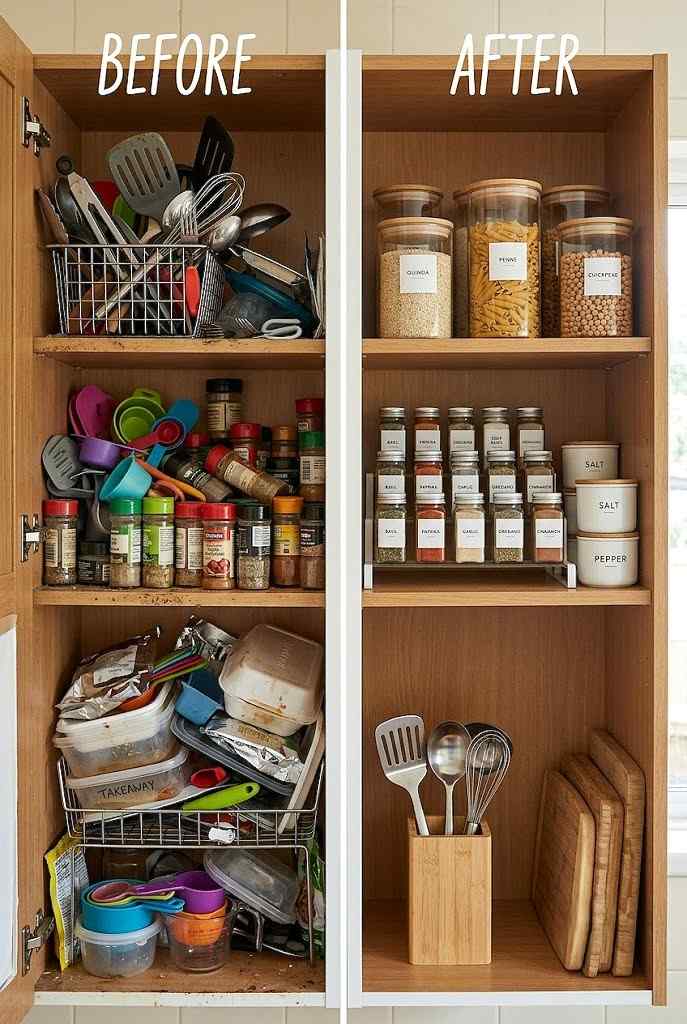
Before you blame your apartment for your kitchen struggles, consider this: most small kitchen disasters aren’t about size, they’re about waste.
People cram small kitchens with duplicate tools, expired spices, takeout containers, and gadgets they used once. A garlic press gathering dust takes up real estate. That blender in the corner? Never touched. Three mixing bowls when one would do. When your space is tiny, clutter becomes a lifestyle crisis.
The first step to making a small kitchen livable isn’t buying fancy storage solutions it’s removing everything that doesn’t earn its place. Sounds harsh, but it works. You need to look at every single item and ask: Do I use this regularly, and would I buy it again if I lost it? If the answer is no, it goes.
FYI, this usually frees up 20–30% of your available space without buying a single thing. That’s huge.
Here’s an anecdote that still makes me laugh: I once found four unopened bags of quinoa in my old kitchen. Four. I didn’t even like quinoa that much I just kept buying it because I forgot I already had some, buried behind cereal boxes I never finished. That’s the real cost of clutter in a small kitchen. It’s not just wasted space; it’s wasted money too.
Once you clear out the excess, don’t stop there. Do a mini audit every few months. Kitchens accumulate junk fast, even small ones especially small ones, actually, because you don’t always notice new clutter creeping in until you’re squeezing past it daily. Set a recurring reminder on your phone if you have to. IMO, a five-minute check-in every month saves you from a two-hour purge later.
Vertical Storage Changes Everything
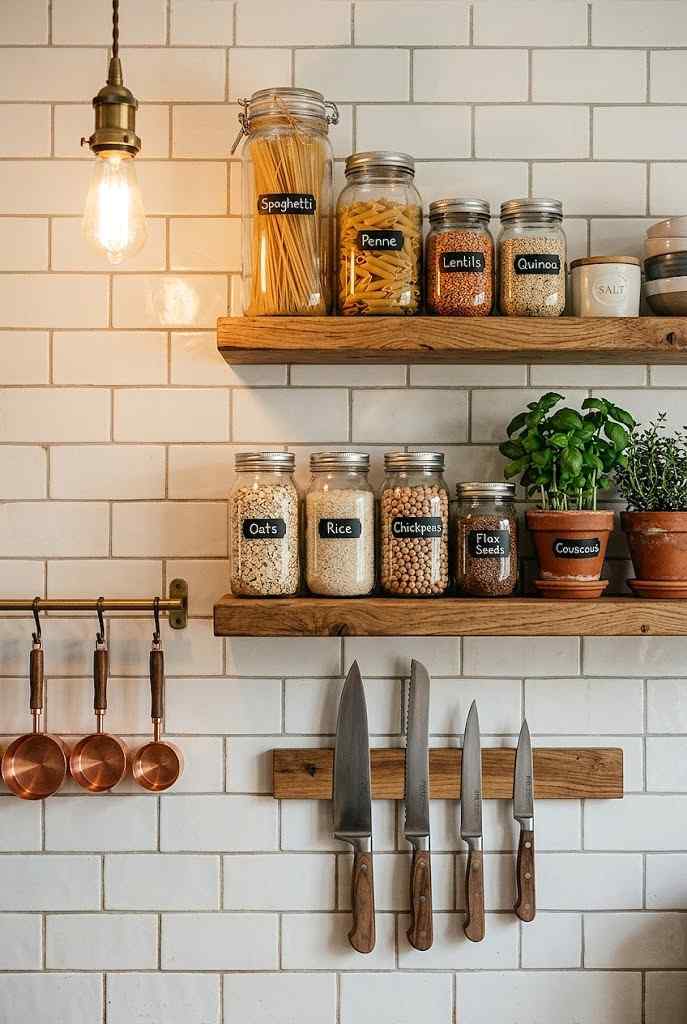
Here’s where small kitchen ideas actually get exciting. Your walls are real estate you’re probably ignoring.
Wall-mounted shelving is your best friend. Install open shelves above your counter, your stove, even near the ceiling if you’re feeling ambitious. These aren’t just storage they’re design elements. A row of matching glass jars with grains, dried pasta, and spices looks intentional and useful. Hanging a magnetic strip for knives saves drawer space. Pegboards work for utensils, measuring cups, and pots.
The psychology matters here too. When items are visible and organized, you use them more, which means they actually justify the space they take up. Hidden-away stuff just sits there gathering resentment and dust.
Corner areas are pure wasted potential in most small kitchens. Corner shelves, lazy susans in corner cabinets, or even magnetic spice racks on the inside of cabinet doors these little moves multiply your storage without expanding your footprint.
Don’t forget the back of your cabinet doors either that’s prime real estate most people completely ignore. Adhesive hooks or a small mounted rack can hold measuring spoons, small cutting boards, or cleaning supplies without eating into shelf space. It’s such an obvious spot, yet almost nobody uses it.
Ceiling-mounted pot racks work wonders too, especially if you’re short on cabinet space for bulky cookware. Hang your most-used pots and pans where you can grab them instantly instead of digging through a stacked cabinet. It looks intentional, almost professional, and it genuinely saves you from that daily cabinet Tetris game. Just make sure your ceiling height allows for it nobody wants to duck under a frying pan every time they walk through.
Your Counter Can Breathe (And So Can You)
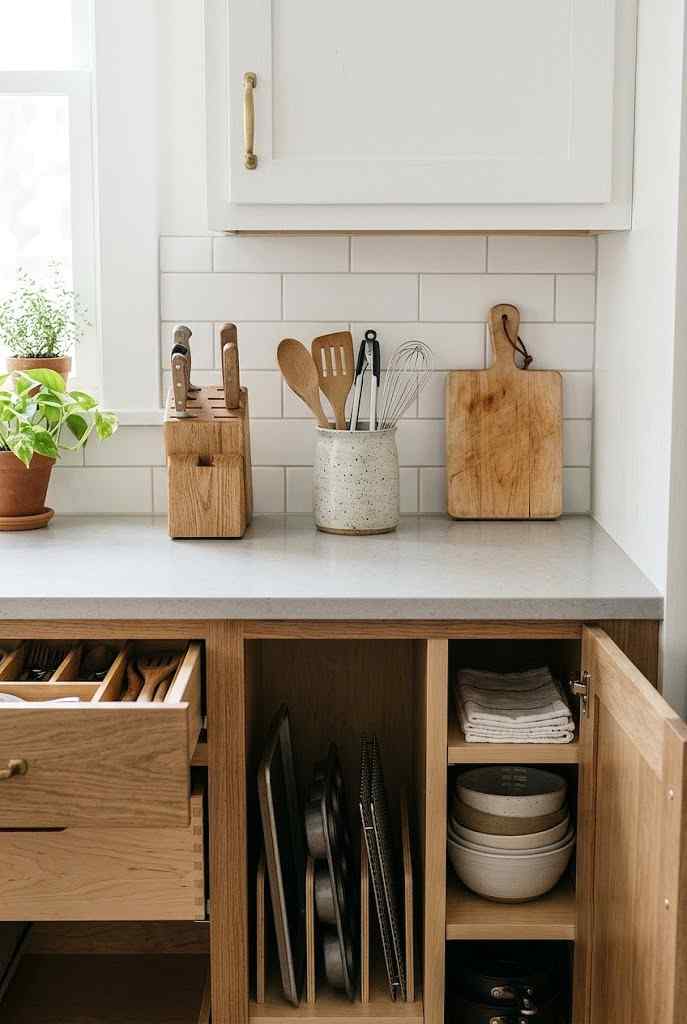
A cluttered counter makes a small kitchen feel suffocating. A clear counter makes it feel twice as big.
This doesn’t mean empty it means intentional. Keep only what you use daily: a knife block, a cutting board, maybe a utensil holder. Everything else lives somewhere. Your coffee maker can be on a small shelf. Your toaster can have a designated spot in a cabinet. Appliances you use weekly, not daily, don’t deserve counter real estate.
Here’s a strategy that actually works: use drawer dividers and vertical storage inside your cabinets. A deep drawer with dividers for baking sheets, cutting boards, and storage containers keeps things accessible without the chaos. Stackable containers, vertical pot racks inside cabinets, tiered shelf risers these tools transform dead space into functioning storage.
What would you think if someone told you your small kitchen could feel bigger just by moving where you store things? That’s basically the entire game.
Rolling carts deserve a special mention here because they’re ridiculously underrated. A slim rolling cart tucked beside your fridge or stove gives you instant extra counter space whenever you need it, then rolls away when you don’t. Some even come with built-in drawers or shelves for extra storage, doubling as a mini pantry.
Another trick? Use the space above your cabinets if there’s a gap near the ceiling. Store items you rarely use holiday dishes, large serving platters, appliances you bring out twice a year up there in matching baskets or bins. It keeps your daily-use zones clear while still giving those occasional items a proper home instead of shoving them wherever they’ll fit.
Design Choices That Expand the Space Visually
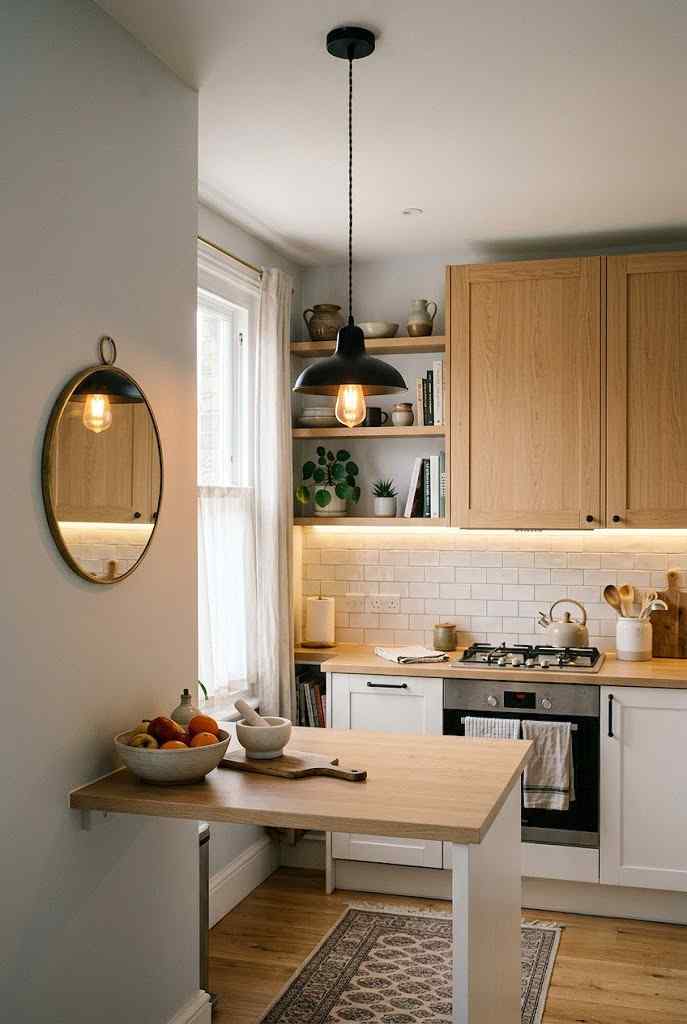
Small kitchen design isn’t just about function it’s about making the space feel less cramped than it actually is.
Light colors on walls and cabinets reflect light and make everything feel airier. This isn’t a new idea, but it works. White, soft gray, pale blue these backgrounds make a small kitchen feel open instead of cave-like. If you’re renting and can’t paint, peel-and-stick wallpaper on one accent wall creates visual interest without making the space feel smaller.
Lighting matters more than you think. One overhead light leaves corners dark and shadows heavy. Layer your lighting with under-cabinet lights, a small pendant over the counter, or even a clip-on lamp. Proper lighting makes the space feel intentional and larger. Plus, it’s way easier to cook when you can actually see.
Mirrors? Weird, but effective. A small mirror on one wall bounces light and creates the illusion of depth. It sounds gimmicky, but it’s not it’s visual architecture.
Handle choice might sound trivial, but it affects how “finished” your small kitchen feels. Modern bar pulls instead of chunky knobs make cabinets feel contemporary and less bulky. These small tweaks accumulate.
Glass cabinet fronts are another underrated move. Swapping a couple of solid cabinet doors for glass ones breaks up the visual heaviness of a wall of cabinets, making the whole kitchen feel less boxed-in. Just keep what’s inside neat and matching, because glass fronts show everything clutter included.
Open-concept layouts, where possible, also help. If your small kitchen connects to a living or dining area, removing a wall or opening a pass-through creates visual flow that makes the whole space feel bigger, even though the actual square footage hasn’t changed one bit. Not everyone can knock down walls, sure, but even a small pass-through window does wonders.
Making Small Mean Functional (Not Cramped)
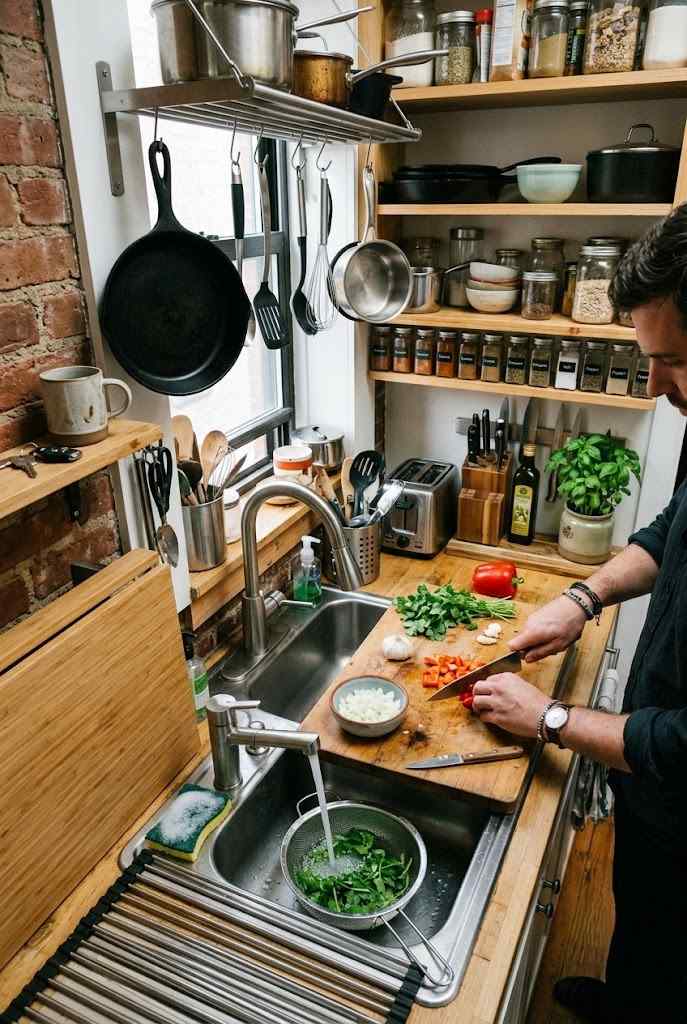
Here’s the honest truth about small kitchens: they work best when you’re deliberate about workflow.
Think about your kitchen triangle the path between your fridge, stove, and sink. In a small kitchen, this triangle is tiny, which is actually an advantage. Everything is accessible. The problem is when the triangle gets cluttered or blocked.
Keep your most-used items at eye level and arm’s length. Pots, pans, everyday dishes these should be easy to grab. Bulk baking supplies? Upper cabinets. Fancy serving dishes? Can live higher up. Frequency determines placement, and this principle transforms how functional your small kitchen feels.
And about that tiny counter space does it have to hold a full prep station? No. A narrow cutting board that fits on top of your sink becomes your prep zone when you need it. A fold-down wall counter works as your extra surface. A portable kitchen cart slides into gaps and adds surprising surface area without taking permanent space.
Multi-purpose furniture changes the game here too. A kitchen island on wheels that doubles as extra counter space, storage, and a small dining spot works incredibly hard for a tiny footprint. Look for ones with drawers or shelving built into the base you’re not just getting a surface, you’re getting a whole storage unit.
Stackable and nesting cookware also saves shockingly more space than people expect. Instead of five mismatched pots taking up an entire cabinet, nesting sets collapse into one compact stack. Same goes for mixing bowls and food storage containers buy sets designed to nest together, and watch your cabinet space practically double overnight.
The Mindset Shift That Matters Most
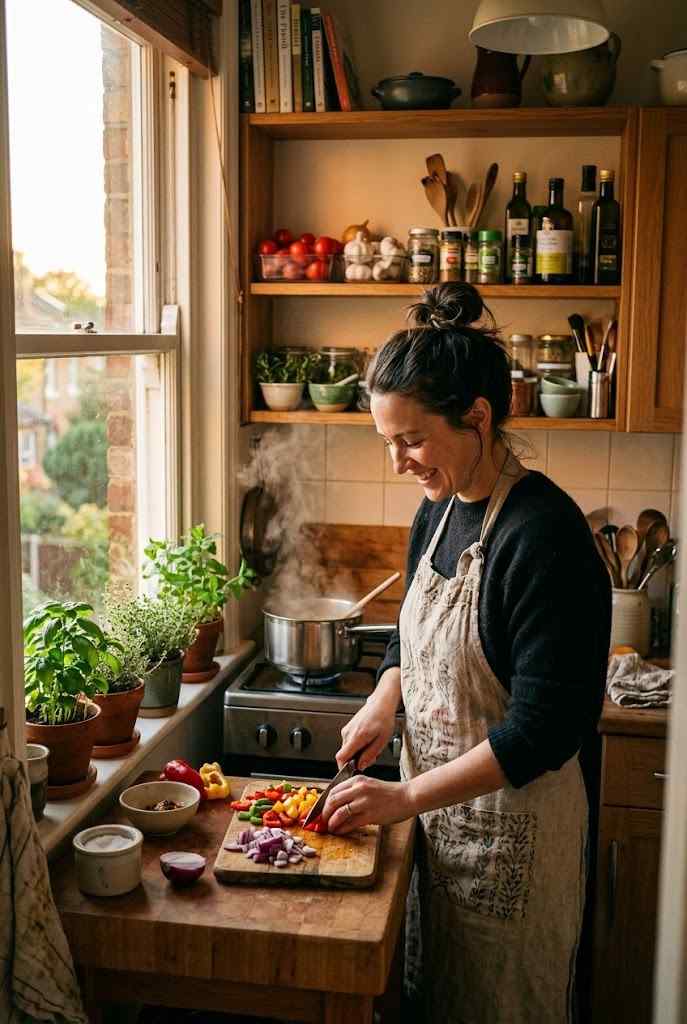
Here’s what nobody talks about small kitchens change how you think about cooking.
You can’t be wasteful. You can’t avoid decisions. You can’t collect things mindlessly. There’s something clarifying about that. You start eating the food you buy. You use everything. You cook intentionally because your kitchen demands respect.
I know this sounds weird, but people in small kitchens often eat better. Seriously. When cooking is easy and your ingredients are visible, you cook more often. When you’ve got no space for junk food stockpiles, you make different choices. Your small kitchen might actually be improving your life without you realizing it.
The constraint isn’t the enemy inefficiency is. Once you accept that, a small kitchen stops feeling like a problem and starts feeling like a challenge you can win.
There’s also a financial upside nobody mentions enough. When you cook more because your kitchen actually works for you, you spend less on takeout and impulse grocery buys. Small kitchens, weirdly enough, can make you more budget-conscious just by design.
And honestly? There’s a kind of pride that comes with mastering a small space. Anyone can cook well in a sprawling kitchen with endless counters. Doing it in 70 square feet, with everything working like a well-oiled machine that takes skill. Own it.
FAQ’s
How do I maximize storage in a small kitchen without renovating?
Use vertical shelving, cabinet door hooks, and stackable containers to add storage instantly.
What colors make a small kitchen look bigger?
Light colors like white, soft gray, or pale blue reflect light and open up space.
Is it worth buying multi-purpose furniture for a small kitchen?
Yes, rolling carts and foldable counters add function without permanently sacrificing space.
How often should I declutter a small kitchen?
Do a quick clutter check monthly to prevent small kitchens from feeling cramped again.
Can lighting really make a small kitchen feel larger?
Yes, layered lighting eliminates shadows and makes compact kitchens feel open and welcoming.
CONCLUSION
Small kitchens get a bad reputation because people treat them like big kitchens that are just… smaller. Wrong. A small kitchen is a different beast entirely, and it wins when you lean into the constraints instead of fighting them.
You don’t need a lot of space to cook really good food. You need clarity, organization, and the willingness to eliminate what doesn’t work. Every inch counts, so every inch should count. That’s not depressing that’s actually freedom. Your small kitchen isn’t holding you back. Time to prove it.