
Victorian bedroom
By Anna Grace | 2 March 2026
Victorian Bedroom Makeover: How to Build Luxury Without the Museum Vibes
I walked into my grandmother’s bedroom once and felt like I’d stepped into a different century in the best way possible. Heavy velvet curtains, an ornate carved headboard, and those impossibly soft layered bedding arrangements made me realize that Victorian bedroom design doesn’t mean the space has to feel like a museum. It’s actually about creating a sanctuary that oozes luxury and personality without making you feel like you can’t sit down.
Here’s the thing about Victorian bedrooms: most people assume they’re impractical or over-the-top. But the real magic happens when you understand what makes this style work and adapt it to your actual life.
The Foundation: Understanding Victorian Bedroom Aesthetics
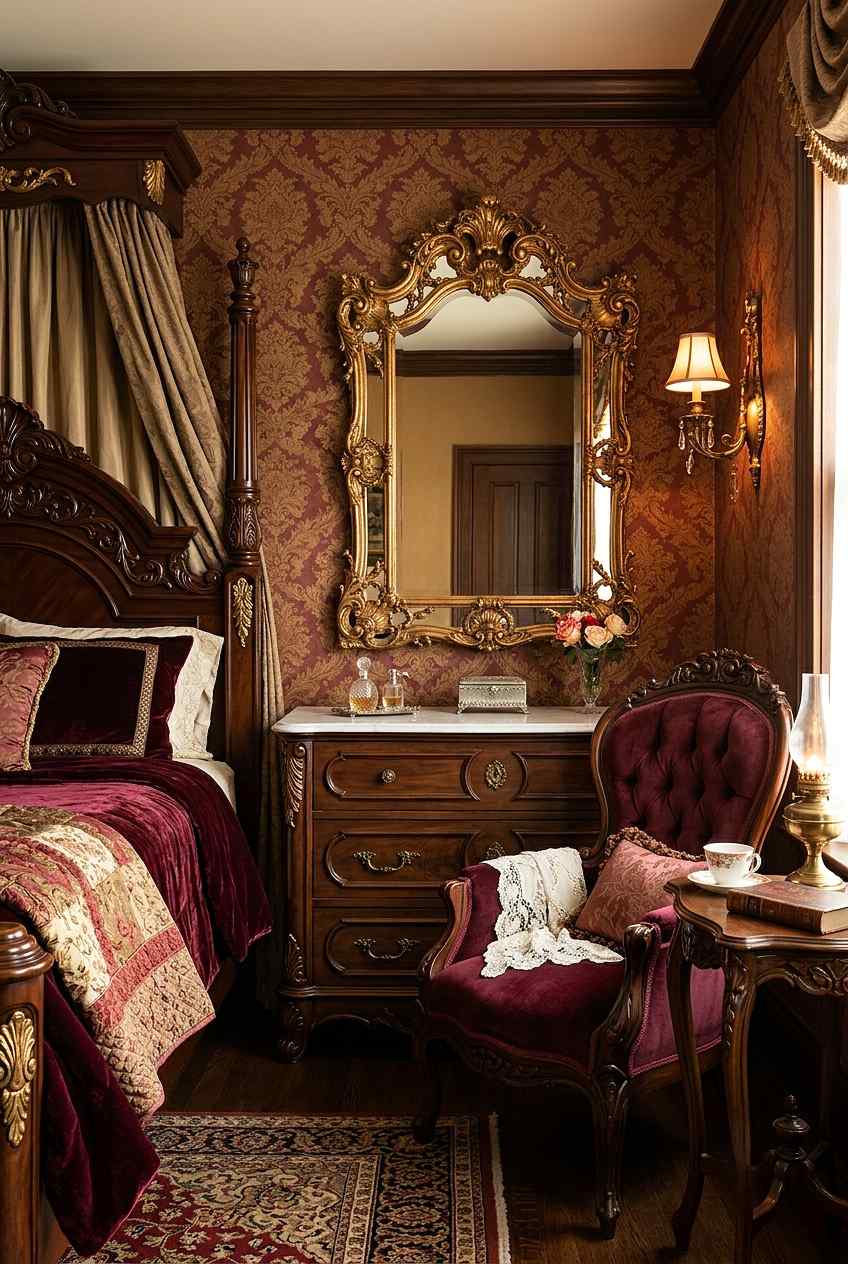
Victorian bedroom style emerged during the 19th century when homeowners wanted to flex their wealth through interior design. But beneath the grandeur sits something genuinely functional Victorians understood comfort, craftsmanship, and creating a retreat from the outside world.
A proper Victorian bedroom doesn’t follow minimalist rules. It embraces layers, textures, and a curated chaos that somehow works. Think of it as maximalism with intention, not accident. Every element from the footboard to the lampshade serves both aesthetic and practical purposes.
The beauty is that you don’t need a mansion to pull this off. What you need is an understanding of proportion, color, and the psychology of opulent spaces. A Victorian bedroom makes people feel like they’re sleeping in a castle, which honestly hits differently after a long day.
What makes Victorian design fundamentally different from everything that came before and after is its approach to abundance as comfort. Victorians weren’t minimalists because they believed that surrounding yourself with beauty, craftsmanship, and intentional objects elevated your daily existence. They were onto something real.
Think about modern anxiety around clutter. Victorians didn’t experience that because they understood curation. Each piece had provenance, quality, and purpose. A side table wasn’t just somewhere to put your phone it held a lamp, a book, maybe a decorative object your grandmother left you. Functionality and aesthetics merged completely.
This is why adapting Victorian style today feels so refreshing. We’ve been sold minimalism for decades as the path to peace, but what if peace actually comes from being surrounded by things you genuinely love? A Victorian bedroom gives permission to fill your space with objects that spark joy, tell stories, and make you feel held.
The trick is filtering everything through intentionality. Ask yourself does this belong here? Does it reflect something true about how I want to live? If the answer is yes, it earns its place. That’s not maximalism gone wrong that’s living with conviction.
Furniture: Building Your Victorian Bedroom Foundation
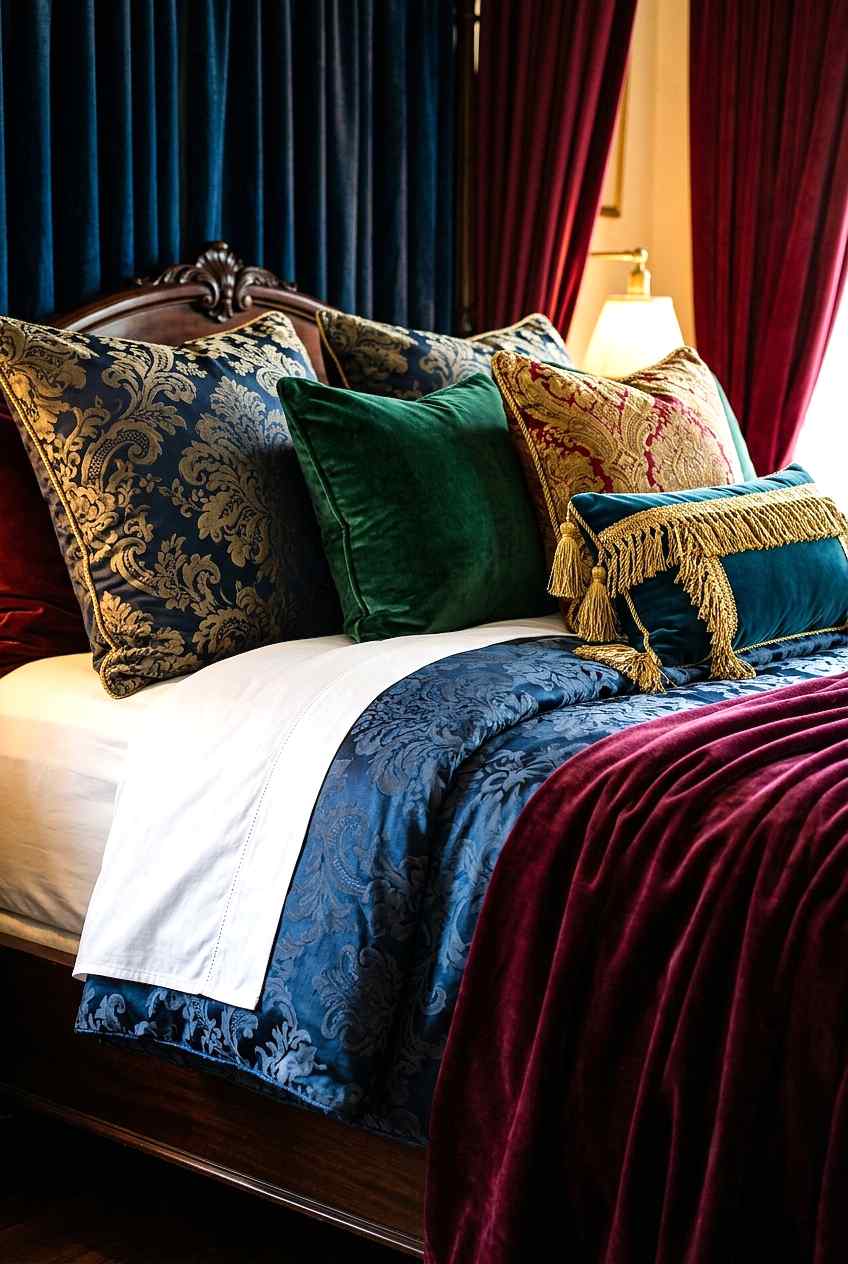
Your bed anchors everything. Skip the sleek platform frame you want something with presence. A carved wooden headboard with intricate details, or even a metal frame with ornamental flourishes, immediately signals Victorian style. The bed should feel like a statement piece, not an afterthought. 🙂
Beyond the bed, you’re looking at:
● Dressers and nightstands: Furniture with curves, detailed woodwork, and possibly marble or wood tops
● Seating: A velvet settee, wingback chair, or ottoman adds functionality and visual interest
● Wardrobes or armoires: These storage pieces anchor corners while adding architectural drama
● Side tables: Smaller pieces with ornamental legs and surfaces perfect for displaying accessories
IMO, the secret to making Victorian furniture work in modern spaces is mixing authentic pieces with reproductions. Hunt for antique or vintage items at estate sales, but supplement with quality reproductions from furniture makers who understand the style. It keeps things budget-friendly while maintaining authenticity.
Spacing matters more than you’d think. Don’t cram everything against walls. Leave room to move, and arrange furniture to create conversation areas. A Victorian bedroom should feel intentional, not claustrophobic.
Here’s where most people mess up their Victorian bedroom: they buy a matching bedroom set and call it done. That’s the opposite of authentic Victorian style. Real Victorian rooms evolved over time, mixing periods, woods, and styles in ways that felt organic to the household.
Your best move is hunting for individual pieces that speak to you rather than coordinating everything. An antique mahogany dresser pairs beautifully with a wrought-iron bed frame. A walnut nightstand doesn’t need to match your oak headboard. Mixing wood tones and styles actually creates visual interest and tells the story of a room that’s been collected, not purchased.
When sourcing furniture, estate sales and auctions are your goldmines. You’ll find pieces with actual craftsmanship hand-carved details, dovetail joints, quality hardware that new reproductions can’t fully capture. Budget matters though, so supplement with solid reproduction pieces from makers who understand the style deeply. The goal is authentic feeling, not necessarily authentic age.
Scale your furniture to your actual room. Victorians had high ceilings and generous square footage. If your bedroom is modest, commit to fewer statement pieces rather than cramming in dozens. A stunning dresser with mirror, a gorgeous bed, quality seating that’s enough. Negative space around furniture makes everything feel more luxurious, not less.
One often-overlooked piece: a dressing table or vanity. Victorians took grooming seriously and devoted space to it. A small vintage vanity with a mirror, a few drawers, and a cushioned stool creates functionality while screaming Victorian elegance. It’s practical and atmospheric simultaneously.
Textiles: The Soul of Victorian Bedroom Comfort
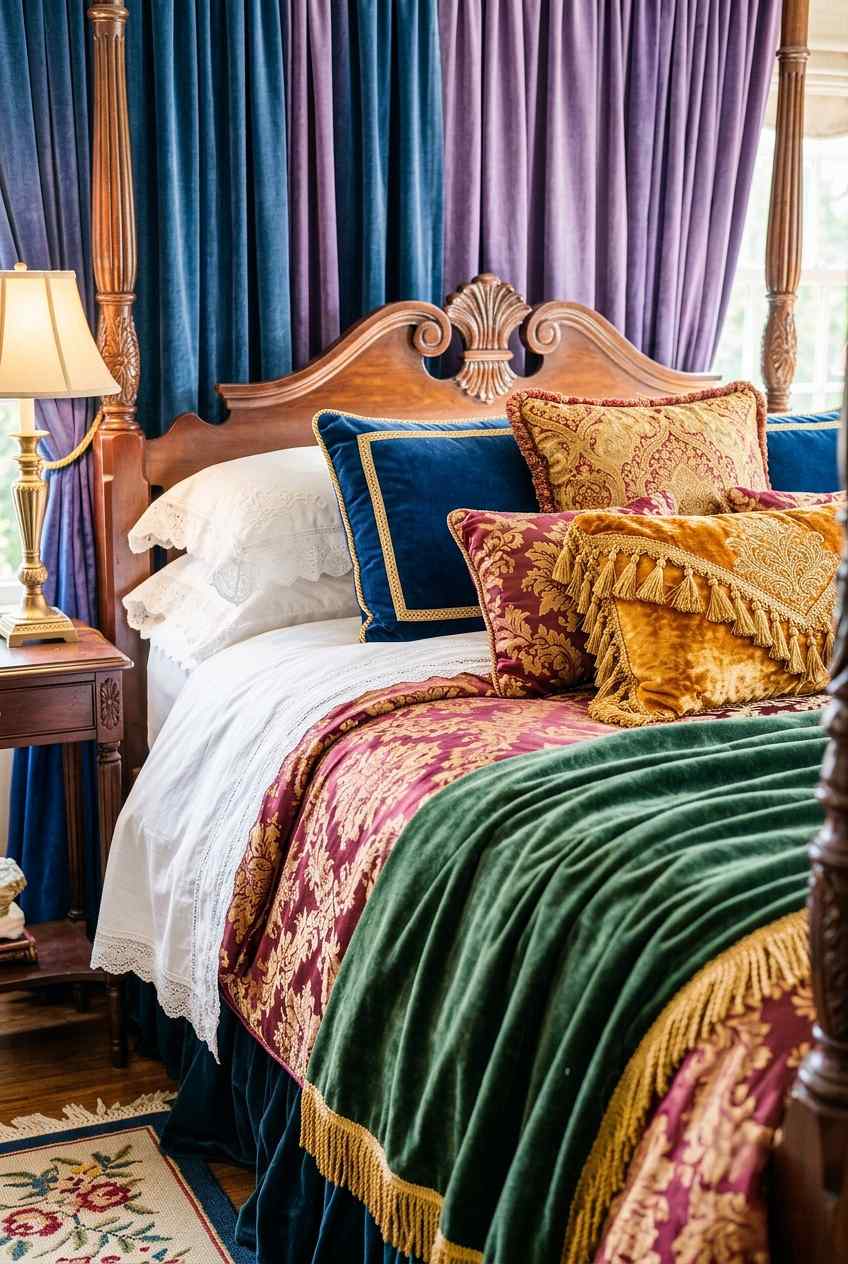
If furniture is the skeleton, textiles are the soul of your Victorian bedroom design. This is where you layer, texture, and create that sumptuous feeling people dream about.
Start with your bedding. Victorians loved multiple layers a flat sheet, a fitted sheet, a duvet or comforter, a quilt, and throw pillows. Don’t do bare-minimum bedding. Your bed should look like clouds had a baby with luxury. Consider materials like Egyptian cotton, velvet, damask, or jacquard weaves in deep colors or jewel tones.
Your curtains deserve serious attention. Floor-to-ceiling velvet drapes in burgundy, forest green, or charcoal create drama and actually function as insulation. Add sheer lace or linen underneath for layered filtering of light. Yes, they’re more expensive than basic blinds, but they transform the entire room’s energy.
Rugs ground the space. A Persian or Turkish rug with intricate patterns and rich colors anchors the Victorian aesthetic while adding warmth to hardwood floors. Layer smaller rugs if you want texture in different zones.
Don’t forget throw blankets, cushion covers, and table linens. Victorian style thrives on abundance of soft, touchable surfaces. A damask pillow here, a tasseled throw there, and suddenly your bedroom feels like a five-star hotel designed specifically for you.
Sourcing textiles for a Victorian bedroom requires shifting how you shop. Skip big-box retailers selling thin, polyester-heavy bedding. You want natural fibers cotton, linen, silk, wool that feel expensive because they are. Quality textiles age beautifully and actually improve with washing, developing softness and character.
Target fabric specialists, vintage textile dealers, and European bedding companies that understand thread count and weave structure. Damask, jacquard, velvet, and brocade aren’t trendy textures they’re Victorian staples for a reason. They catch light, create dimension, and feel luxurious under your skin.
Your curtain situation matters enormously. Measure floor to ceiling and invest in fabric weight that hangs properly. Lightweight fabrics puddle awkwardly; quality velvet or heavy linen drapes in folds that look intentional and costly. Consider lining your curtains with blackout material Victorian aesthetics don’t require sacrificing sleep quality.
Build your textile layers gradually rather than all at once. Start with quality sheets and a duvet, then add throw pillows, blankets, and eventually curtains as budget allows. This approach prevents decision fatigue and lets you see what genuinely works in your space.
Don’t overlook bed skirts. A floor-length gathered or pleated skirt hides under-bed storage while adding a finished, intentional look. Pair it with a quality mattress pad and you’ve got a bed base that looks elegant while being entirely practical.
Texture mixing creates depth. Combine matte velvet with glossy damask, rough linen with smooth silk trim. Your hands should want to touch everything in the space that tactile richness separates a beautiful Victorian room from one that just looks busy.
Color Palette and Wallcovering: Setting the Mood
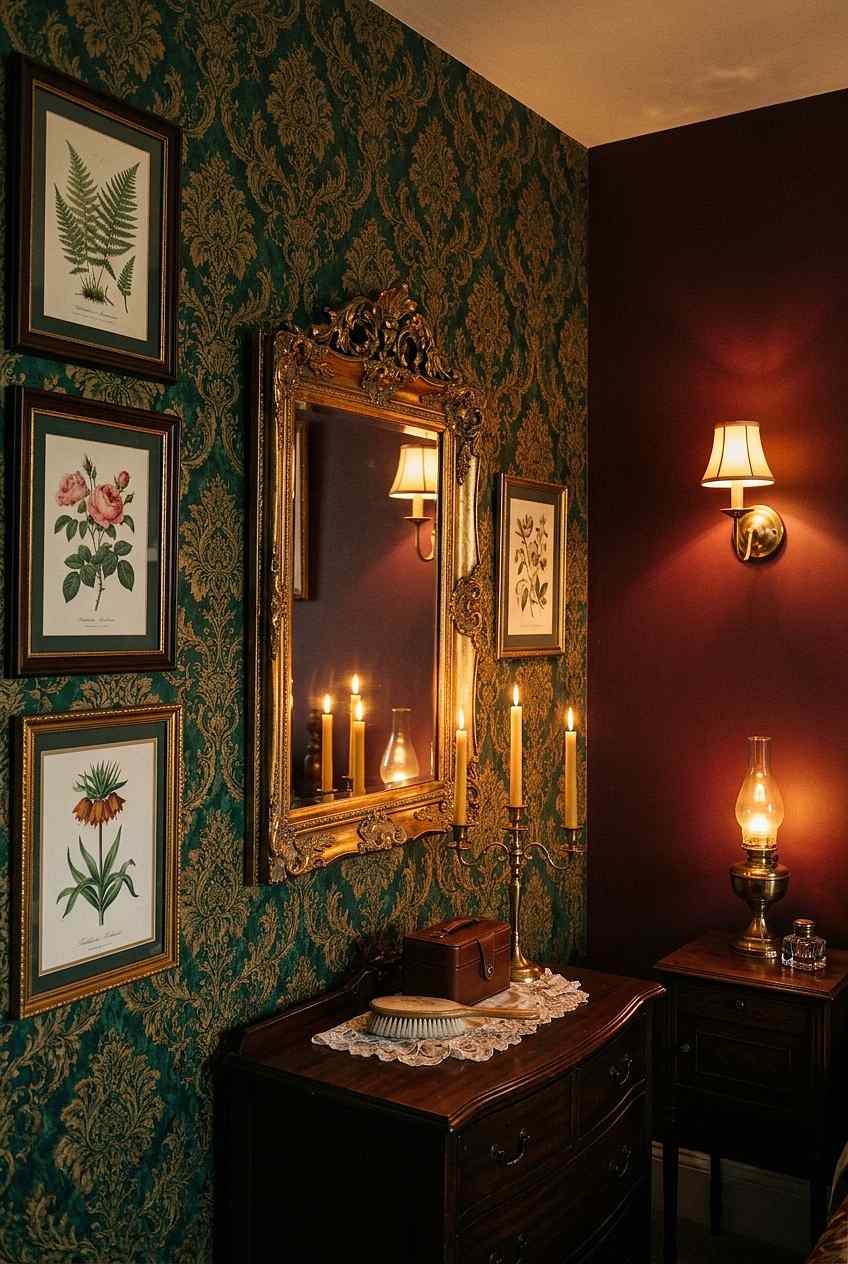
Victorian bedrooms aren’t afraid of dark, saturated colors. While modern design often defaults to pale neutrals, Victorian style embraces jewel tones emerald, sapphire, deep purple, wine red, and rich gold.
Your walls have several options. Wallpaper with ornamental patterns (damask, florals, geometric Victorian motifs) immediately anchors the style. You can go all-in with patterned walls or choose one accent wall and keep others a rich solid color. Paint-by-numbers rule: darker, more saturated colors work better than pastels.
If wallpaper feels too committed, go with quality paint in colors like deep plum, navy, charcoal, or sage. Add texture through a large framed mirror with ornate gilding, or hang vintage botanical prints in antique frames across one wall.
Lighting color matters too. Warm-toned bulbs (around 2700K) make the space feel cozy and authentic. Victorian homes didn’t have bright overhead lights they relied on table lamps, wall sconces, and candlelight. Replicate that warmth with strategic lighting fixtures. Avoid harsh LED whites that kill the ambiance you’re building.
Here’s a hot take: a Victorian bedroom doesn’t need to look frozen in time. Incorporating a modern neutral here, a contemporary art piece there, actually prevents the space from feeling like a history lesson. Balance is everything.
Color psychology matters more than most people realize, especially in a bedroom where you spend vulnerable hours sleeping. Deep jewel tones emerald, sapphire, plum, burgundy create a sense of enclosure and security. They’re not depressing; they’re enveloping. Your brain registers these colors as protection.
When choosing your primary wall color, test it at different times of day. Morning light hits differently than evening light, and your perception shifts throughout the day. Paint large swatches on multiple walls and live with them for a week. Lighting in a showroom bears zero resemblance to lighting in your actual bedroom.
Wallpaper deserves serious consideration. Victorian patterns damask, floral, geometric motifs, paisley immediately anchor the style. Quality wallpaper lasts decades and develops a patina that paint never achieves. Yes, installation costs more than painting, but you’re making a long-term investment in atmosphere.
If you’re hesitant about full-wall patterns, go with patterned wallpaper on one accent wall and solid color elsewhere. This approach gives you that Victorian richness without overwhelming smaller spaces. Alternatively, wallpaper just the upper third of walls (above chair rail height), leaving lower portions a complementary solid color a technique Victorians used constantly.
Ceiling color gets overlooked. Painting your ceiling a slightly lighter version of your wall color or even keeping it white makes the space feel larger. A deep ceiling can feel cave-like if your room’s square footage is modest.
Lighting fixtures should complement your color story. Warm brass or bronze finishes work beautifully with jewel tones. Avoid chrome or nickel unless you’re deliberately mixing periods. Your light sources should feel like they belong in the space, not like afterthoughts bolted onto walls.
Finishing Touches: Details That Complete the Vision
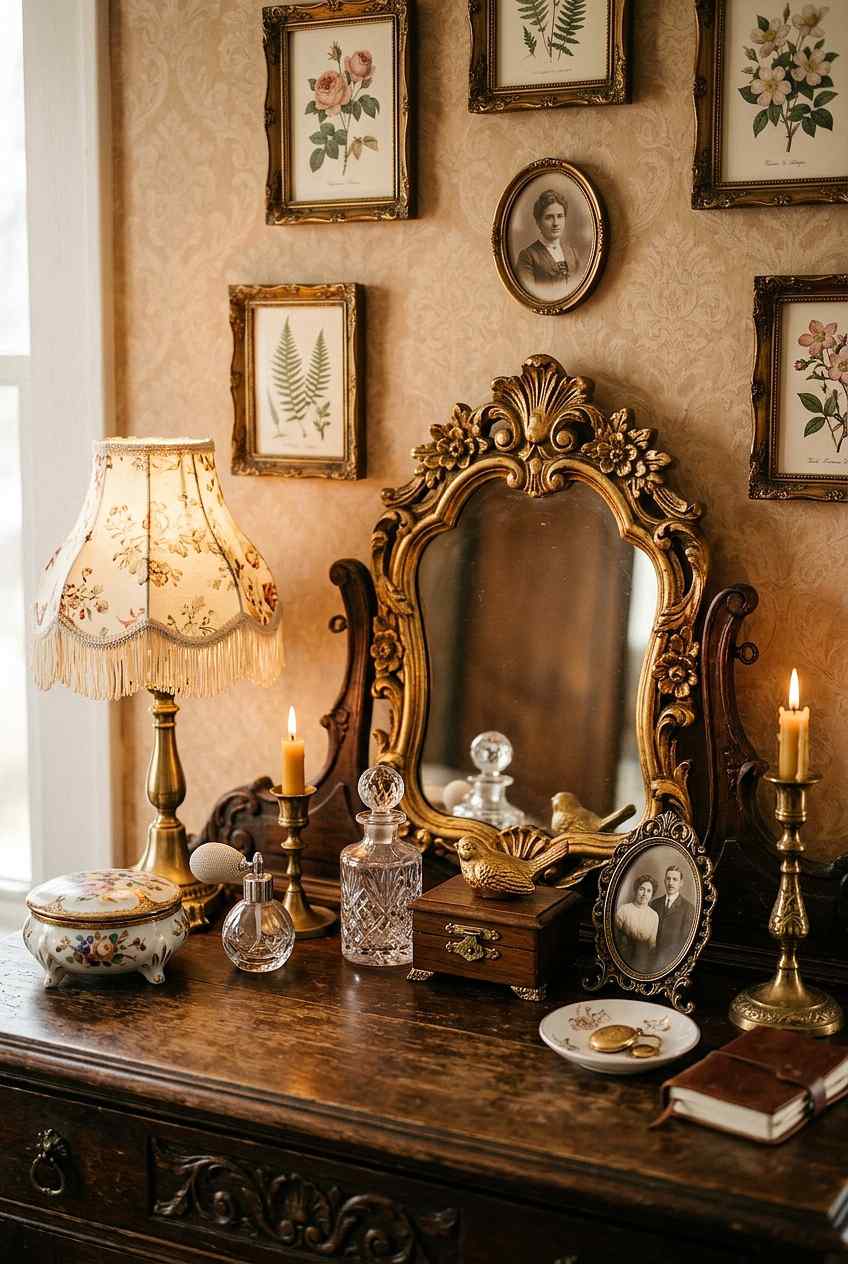
The difference between a nice bedroom and a stunning Victorian bedroom lives in the details.
Mirrors with ornate gold or silver frames reflect light and add dimension. Antique mirrors are ideal, but ornamental frame reproductions work beautifully. Hang them opposite windows to amplify natural light throughout the space.
Artwork matters. Victorian bedrooms looked inward for decoration botanical prints, family portraits, architectural drawings, or classical paintings in gilded frames create visual richness. Skip trendy minimalist prints and commit to pieces that feel collected over time.
Decorative objects on dressers and shelves trinket boxes, candlesticks, small sculptures, framed photographs signal that someone with taste lives here. The key is curation, not collection. Each object should earn its space through beauty or meaning.
Lighting fixtures deserve their own moment. Wall sconces flanking the bed, a chandelier (yes, in a bedroom, why not?), ornamental table lamps with fabric shades, or wall-mounted reading lights all contribute to authentic Victorian style while actually functioning as your light sources.
Don’t overlook practical Victorian touches a decorative fireplace mantel (real or faux), a vanity mirror for getting ready, or a small writing desk create functionality wrapped in aesthetic appeal.
The difference between a finished Victorian bedroom and an almost-there one lives entirely in finishing details. These are the elements that transform a nicely decorated room into one that makes people catch their breath when they walk in.
Start with mirrors. Beyond their practical function, ornate mirrors multiply light and create visual depth. A large gilded mirror opposite a window bounces natural light around the room, making everything feel airier. Smaller mirrors on dressers or hanging in clusters on walls add architectural interest and break up solid wall space.
Artwork creates narrative. Instead of one large contemporary piece, Victorian rooms thrive on collections grouped botanical prints, framed architectural drawings, antique portraits, or classical paintings. Hang them salon-style in ornate frames of varying sizes. This approach feels curated, intentional, and deeply personal.
Decorative objects deserve individual consideration. A trinket box on the dresser, candlesticks flanking a mirror, a small sculpture, vintage glass bottles, or framed photographs each should earn its spot through beauty or meaning. Avoid generic home decor; seek pieces with history, character, or personal significance.
Lighting fixtures function as sculpture. A brass chandelier, ornate wall sconces, table lamps with pleated fabric shades, or vintage reading lights all contribute to authentic style while actually working. Position lighting to create pools of warmth, not harsh overhead illumination that erases the room’s moodiness.
Plants and fresh flowers add life without compromising the aesthetic. Victorian rooms featured flowering plants, ferns, and fresh blooms constantly. A vase of garden roses on a side table or trailing ivy in a corner softens formality while maintaining elegance.
The final touch: intentional imperfection. One slightly worn Persian rug, a mirror with age spots, a slightly faded damask cushion these imperfections signal authenticity. A room that’s too pristine feels sterile. A room with character flaws feels collected and lived-in, which paradoxically makes it feel more luxurious.
FAQ’s
Can You Create an Authentic Victorian Bedroom Look Without Buying Antique Furniture?
Absolutely! Quality reproductions mixed with one or two authentic pieces create genuine Victorian bedroom style effectively and affordably.
What’s the Most Budget-Friendly Way to Start Decorating a Victorian Bedroom?
Begin with paint and textiles,deep wall color and layered bedding transform a space fastest and most inexpensively.
How Do You Mix Victorian Bedroom Style With Modern Elements Without Clashing?
Limit modern pieces to one or two subtle items; keep primary elements, furniture, colors, textiles,rooted firmly in Victorian aesthetics throughout.
How Often Should You Clean Velvet Curtains and Delicate Victorian Bedroom Textiles?
Vacuum velvet monthly, dry-clean curtains annually, and spot-clean bedding as needed. Gentle care preserves Victorian textiles for decades.
Can You Achieve Victorian Bedroom Design in a Small Space Without Overcrowding?
Yes. Choose fewer statement furniture pieces, prioritize vertical wall space with mirrors and artwork, and maintain breathing room strategically.
CONCLUSION
Building a Victorian bedroom doesn’t require a massive budget or a historic home. It requires understanding that luxury is about intention, quality, and comfort wrapped together. Victorian design fundamentals rich colors, layered textiles, statement furniture, ornamental details create a space that feels both romantic and restful.
Start with one key investment piece like a beautiful bed frame or quality bedding. Add layers gradually. Hunt for vintage and antique finds that add character. Paint your walls a color that actually moves you instead of playing it safe with beige. Your bedroom should feel like the best-kept secret in your home a place where the outside world can’t touch you, and everything reflects your commitment to living beautifully.
That’s not indulgence. That’s self-respect.