
wardrobe design
By Anna Grace | 9 March 2026
Smart Wardrobe Design Ideas That Turn Wasted Space Into a Room You’ll Actually Use
Your clothes deserve better than a pile on the chair. You know the chair. Every bedroom has one it’s basically a second wardrobe at this point, and not the good kind.
Here’s the thing: most people treat wardrobe design as an afterthought. You move into a new place, you shove a flat-pack closet into the corner, and you call it done. But a well-designed wardrobe can genuinely change how your mornings feel. No more hunting for the left shoe or discovering a shirt you forgot you owned. Just clarity, access, and everything where it should be.
So let’s talk about how to actually design a wardrobe that works not one that looks good in a catalogue and then falls apart under the weight of real life.
Start With What You Own, Not What You Wish You Owned
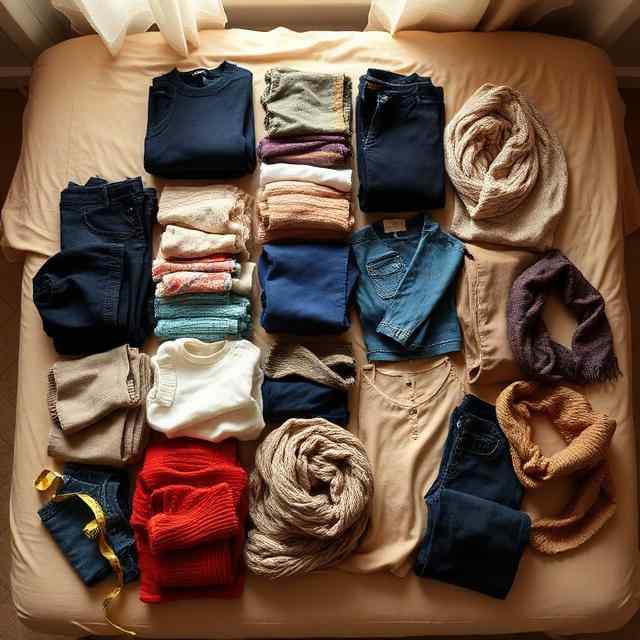
This sounds obvious, but it catches so many people out. They design storage for a capsule wardrobe they aspire to have, then get frustrated when their actual wardrobe with the three puffer jackets, fourteen scarves, and a wedding outfit they’ve worn once doesn’t fit.
Before you measure a single wall or browse a single shelf unit, audit your clothes. Lay everything out. Count how many hanging items you have, how many folded pieces, how many shoes, how many bags. Measure a rough total height of your folded stacks. This is the data your wardrobe design needs to be built on.
Once you do this, you’ll likely notice something: you own way more than you think. IMO, most people could cut their wardrobe by 30% and never miss what they got rid of. But that’s a separate conversation the wardrobe design should accommodate what you actually have, not a fantasy version.
One thing worth doing during your audit is categorising by frequency, not just type. Pull out anything you haven’t worn in twelve months and put it in a separate pile. Don’t throw it away yet just separate it. What you’ll find is that a surprising amount of your wardrobe is taking up prime space despite being almost never touched. Seasonal pieces, sentimental items, things that almost fit they all have a habit of crowding out the everyday stuff you actually need fast access to. Once you’re clear on what belongs in active storage versus long-term storage, your wardrobe design brief basically writes itself.
The Layout Question: Built-In vs. Freestanding
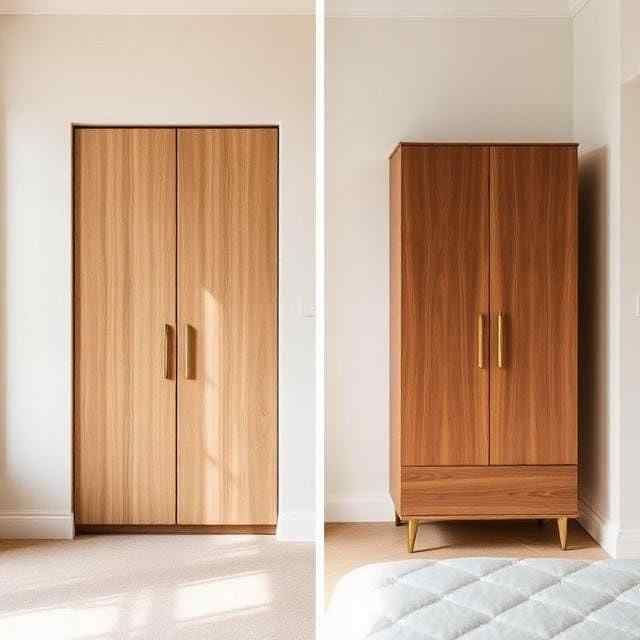
This is where wardrobe design really starts to branch. The choice between a built-in fitted wardrobe and a freestanding unit isn’t just aesthetic it affects how much space you gain or lose, how permanent your commitment is, and your budget by a significant margin.
Built-in wardrobes use every millimetre of a recess or wall. They look clean, feel intentional, and add value to a home. The downside? They move with the house, not with you. If you’re renting or likely to relocate, you’re essentially designing storage for the next tenant.
Freestanding wardrobes offer flexibility. You can take them with you, rearrange the room, or swap them out as your needs change. The trade-off is that they rarely use corner space well, and they often leave awkward gaps at the top that collect dust and forgotten boxes.
There’s a middle-ground worth considering modular wardrobe systems. Brands like IKEA’s PAX or similar flat-pack systems give you the look of built-in with the flexibility of freestanding. They’re not perfect, but for most renters and first-time homeowners, they’re the sweet spot.
Budget-wise, the gap between built-in and freestanding is bigger than most people expect before they start getting quotes. A basic freestanding wardrobe can cost a few hundred pounds or dollars a custom fitted wardrobe in the same footprint can run anywhere from three to ten times that once you factor in installation, internal fittings, and finishes. That doesn’t mean built-in isn’t worth it if you own the home and plan to stay, the return on both usability and resale value is real. But going in with a clear sense of your budget before you fall in love with a floor-to-ceiling bespoke design saves a lot of disappointment. Modular systems land in a useful middle range usually £500–£1500 fully fitted depending on size, and you can add sections over time rather than committing to the whole thing upfront.
Zones: The Secret Behind Every Good Wardrobe Design
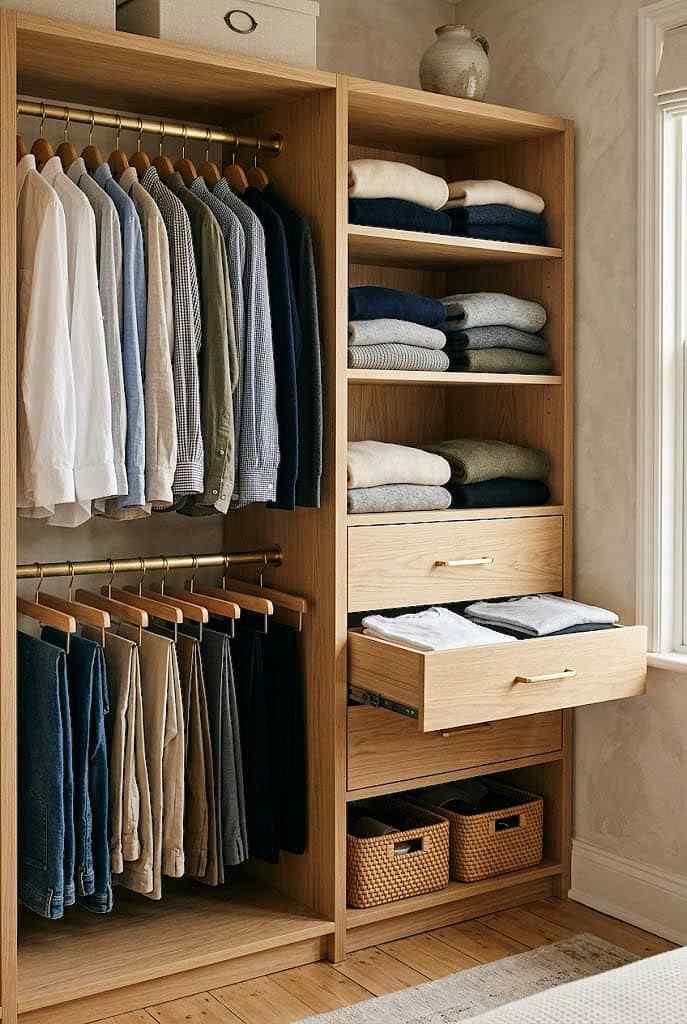
Ask any interior designer what separates a good wardrobe from a great one, and they’ll tell you the same thing zoning. The idea is simple: group your storage by how you actually use your clothes, not by category alone.
Everyday Zone
This is prime real estate. The middle section of your wardrobe, at eye level and easy reach, should hold what you wear most. Your go-to work outfits, your everyday jeans, your most-reached-for shoes. Don’t let this space get hijacked by seasonal items or formal wear you pull out twice a year.
Long Hang vs. Short Hang
Most people don’t think about this, but splitting your hanging rail into two sections one tall, one half-height instantly doubles your hanging space. Long hang is for dresses, coats, and jumpsuits. Short hang is for shirts, jackets, and blazers. Add a second rail underneath the short hang section and you’ve created stacking hanging storage that a standard wardrobe completely wastes.
The Shelf-Drawer-Basket Balance
Shelves are for things you fold neatly and actually see jumpers, jeans, bags. Drawers are for things that don’t fold well or that you’d rather not display underwear, socks, gym gear. Baskets or bins are for the messy middle ground: scarves, accessories, chargers, or whatever your wardrobe tends to swallow.
Getting this ratio right for your lifestyle is genuinely worth spending time on. There’s no universal formula. Someone with a large sneaker collection needs floor space and shelving. Someone who wears mostly formal clothes needs maximum hanging. Your wardrobe design should be shaped around your actual habits. 🙂
One zone most people forget to plan for is the “in-between” category clothes that aren’t dirty enough to wash but not quite fresh enough to hang back in the main section. A small hook rail or a single dedicated shelf near the wardrobe entrance handles this perfectly. It sounds minor, but without a designated spot for these pieces they end up on the chair. Yes, that chair again. A well-zoned wardrobe accounts for how clothes actually move through your week, not just where they live when everything’s freshly laundered. Building that into your design from the start stops the whole system from slowly collapsing under normal daily use.
Storage Details That Make a Bigger Difference Than You’d Expect
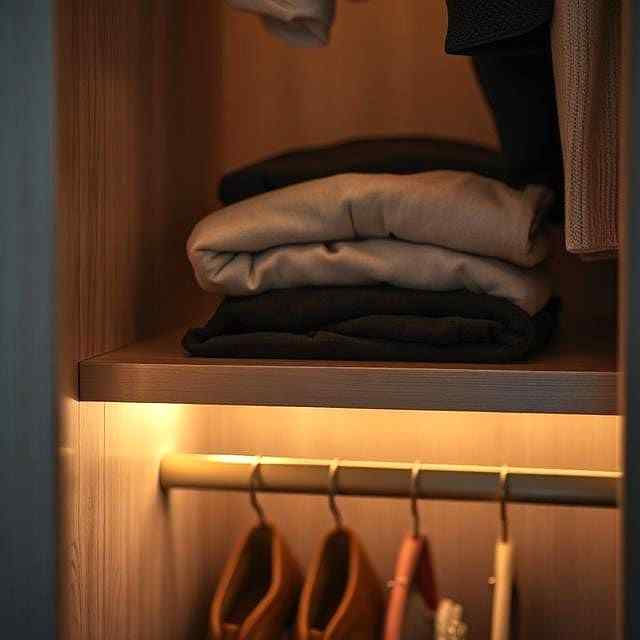
Small decisions have outsized impact in wardrobe design. A few things worth knowing:
● Drawer depth matters more than drawer count. Deep drawers that you can’t see the bottom of become black holes. Aim for shallower drawers or add internal dividers so things don’t pile up invisibly.
● Pull-out rails for trousers and ties are surprisingly useful if you own a lot of them they keep items visible without folding.
● Internal lighting turns a dark wardrobe into something genuinely pleasant to use. LED strip lights are cheap to add and make a noticeable difference, especially in walk-in designs or deep alcoves.
● Adjustable shelving is worth the slight extra cost. Your storage needs will change a system that can’t adapt gets annoying fast.
● Door choice affects how the whole room feels. Sliding doors suit tight bedrooms where a hinged door would intrude on the space. Hinged doors give better access to the full wardrobe at once. Mirrored doors pull double duty and make small rooms feel larger.
FYI! if you’re working with a narrow bedroom and every centimetre counts, sliding doors can save you up to 60cm of clearance compared to a standard hinged pair. That’s enough to add a small bench or a bedside table. It adds up.
Hardware is another detail that gets overlooked until you’re living with it every day. Soft-close drawer runners sound like a minor luxury until you’ve had a drawer slam at 6am and woken the entire house. Pull handles versus push-to-open mechanisms affect how quickly you can access things half-awake. Velvet-lined jewellery drawers protect pieces you actually care about without needing a separate box taking up dresser space. None of these details are expensive individually, but they compound a wardrobe fitted with thoughtful hardware just feels more premium than the same unit with cheap fittings, even if the carcass is identical.
Walk-In Wardrobe Design: Worth the Hype?
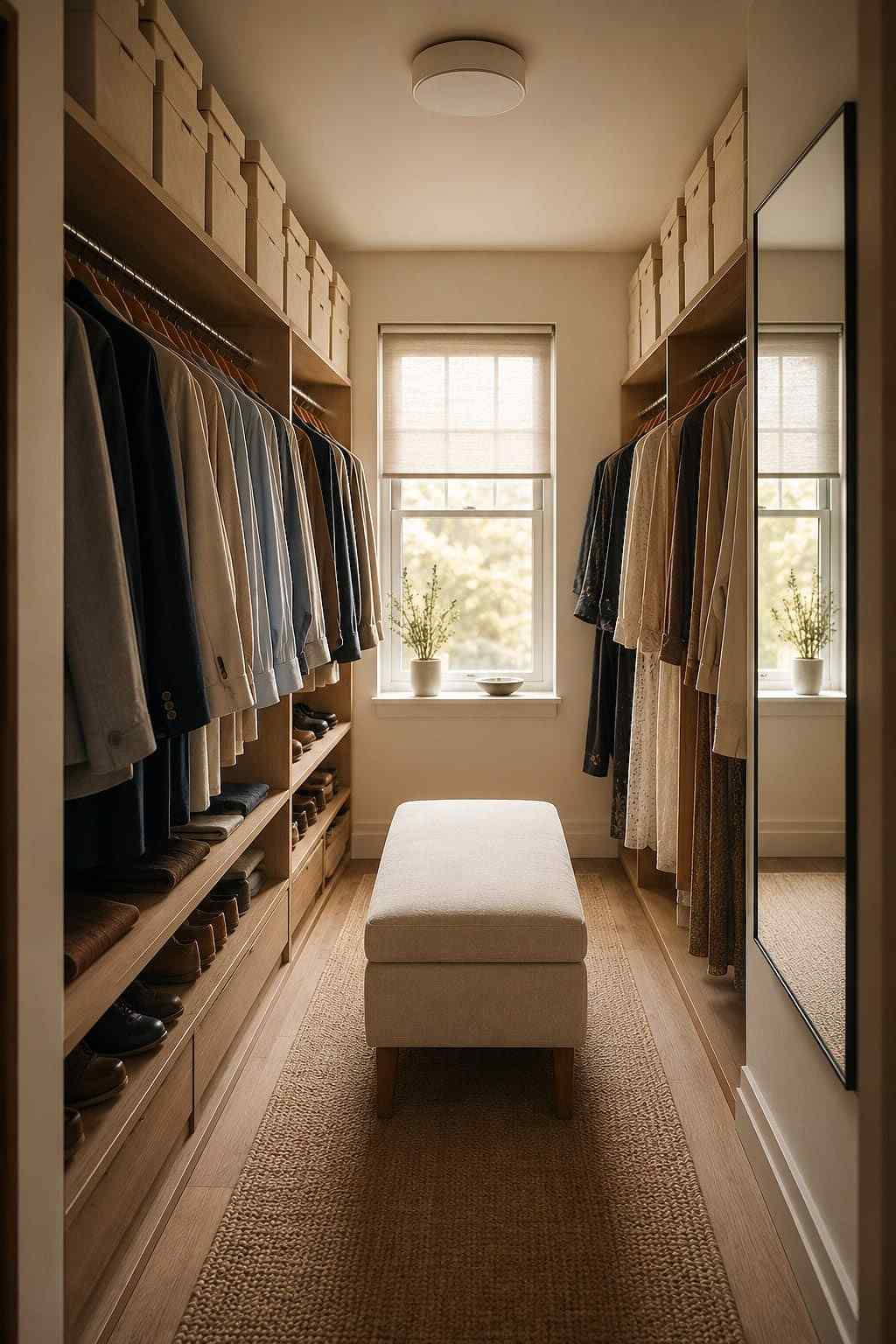
Walk-in wardrobes have a reputation for being a luxury reserved for people with enormous houses or very specific lifestyles. But honestly, a well-designed walk-in can work in spaces smaller than you’d expect sometimes as small as 1.5m x 1.8m.
What a walk-in gives you is context. You’re inside your wardrobe, surrounded by your clothes, with room to turn around and make decisions. For people who find getting dressed stressful or chaotic, this shift in experience is real.
The key to a walk-in wardrobe design that doesn’t turn into a cluttered cave is leaving enough floor and central space clear. It’s tempting to fill every wall, but a walk-in where you can’t comfortably stand and see everything becomes frustrating fast. Keep the centre open. Put a small ottoman or bench in the middle if you have room you’ll use it more than you think.
What makes a walk-in feel genuinely luxurious isn’t square footage it’s organisation, lighting, and a consistent visual system. Matching hangers, uniform storage boxes, and good lighting cost a fraction of renovation work and create 80% of the feel.
If you’re planning a walk-in wardrobe from scratch, the single most useful thing you can do before finalising the layout is to tape out the footprint on your floor and stand in it. Actually stand there. Turn around. Pretend to pick something off a rail. People consistently underestimate how much space they need to move comfortably, and they overestimate how much wall they actually have available once doors, returns, and corners are accounted for. A layout that looks generous on a plan can feel cramped in person. Tape first, commit second it takes ten minutes and saves a very expensive mistake.
Wardrobe Design for Small Bedrooms
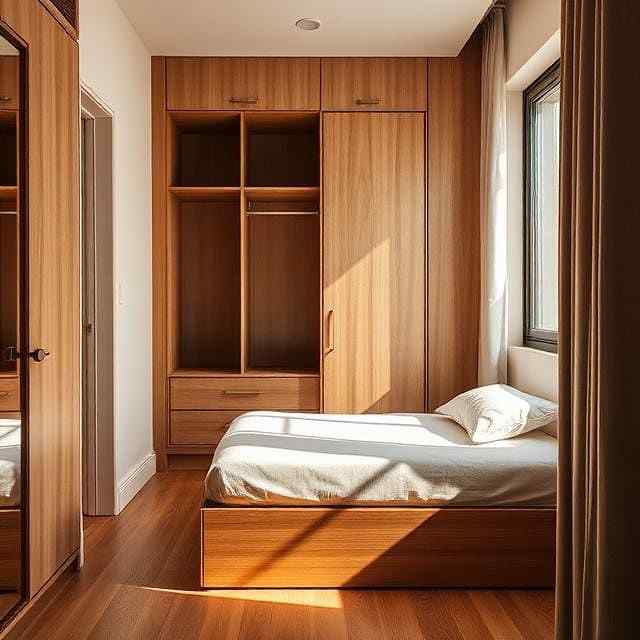
Not everyone has a spare room or a generous alcove to work with. But small spaces can still have smart wardrobe design it just requires a different mindset.
Vertical space is the biggest opportunity most people ignore. Standard wardrobes are designed to human height, but your ceiling probably goes higher. Use that top section for seasonal storage vacuum bags of winter duvets, suitcases, things you need twice a year. It keeps prime zones clear without losing anything.
Corner wardrobes and L-shaped configurations work well in oddly-shaped rooms, especially if a corner is otherwise wasted space. They look more intentional than shoving two separate units next to each other, and they usually offer better storage per square metre.
And if you’re truly short on space? An open wardrobe rail, shelf, and all visible can work beautifully if your clothes are edited and your storage is consistent. It forces you to keep things tidy, which is either a feature or a bug depending on how you live :/
Colour plays a bigger role in small wardrobe spaces than people give it credit for. Dark interiors make shallow wardrobes feel like they’re swallowing your clothes. Painting the inside of a wardrobe white or a warm light tone even if the exterior is darker bounces light around and makes the contents easier to see and access. It’s a five-pound fix that makes a genuine visual difference. Pair that with consistent hanger colours and uniform storage boxes and a small wardrobe stops looking cramped and starts looking intentional. Small doesn’t have to mean chaotic it just means every decision carries more weight.
The Part Nobody Talks About: Designing for Maintenance
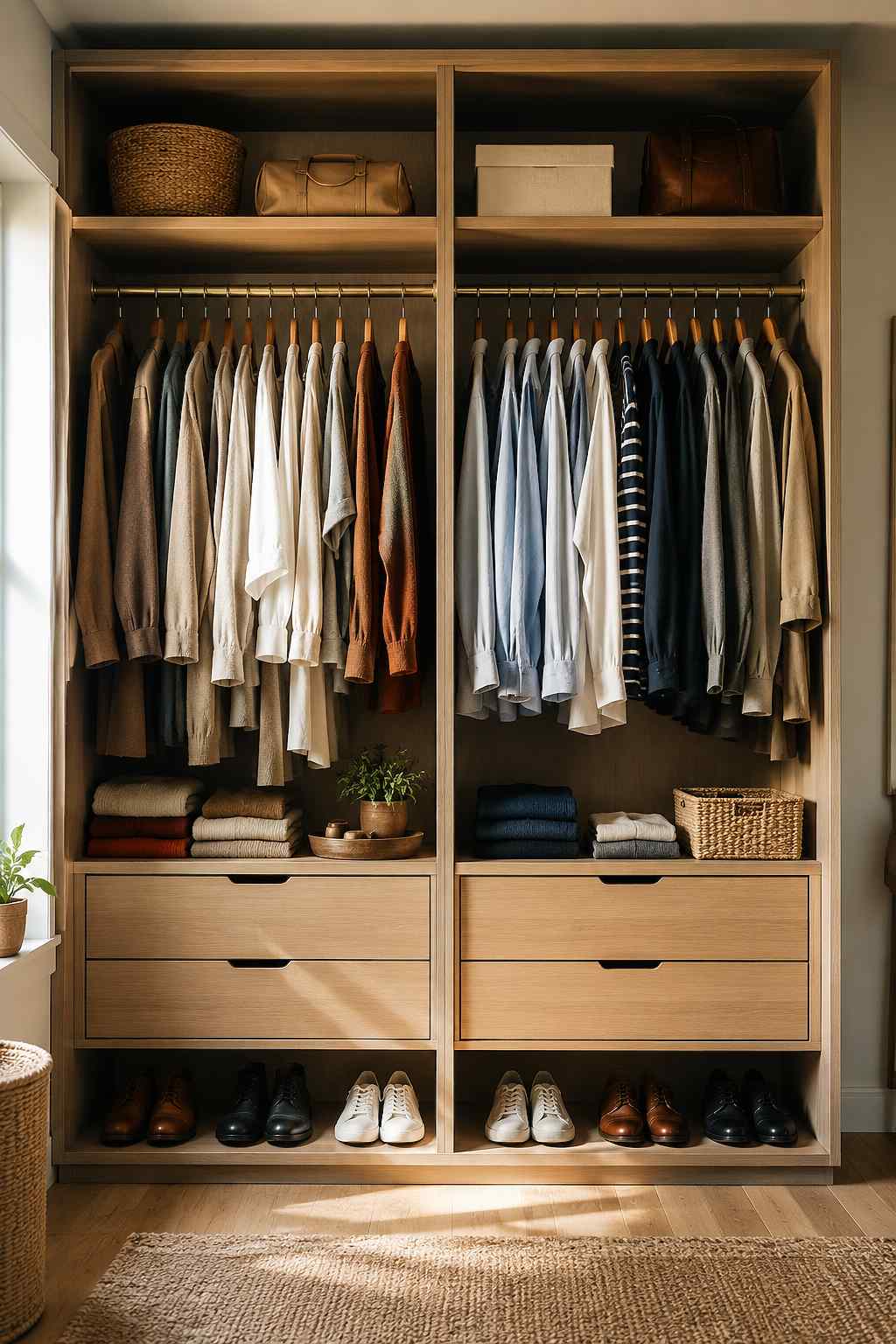
A wardrobe that takes 45 minutes to reorganise every Sunday is a wardrobe design failure, even if it looked brilliant on paper.
Good wardrobe design should be self-maintaining. That means nothing hidden behind other things unnecessarily. A logical “return” spot for every item. Easy access to everyday things and slightly less easy access to seasonal things this creates a natural hierarchy your brain learns quickly.
If you share a wardrobe with a partner, design it with two clear halves. Shared space with no clear ownership turns into contested space. Split it, respect it, and nobody has to have a conversation about why there are seventeen belts on the floor.
Seasonal rotation is the maintenance habit that keeps a wardrobe functioning long-term. Every spring and autumn, swap what’s front-and-centre based on what’s actually wearable right now. Heavy coats and knitwear go to high shelves or vacuum bags in summer; linen and lightweight layers move to the back in winter. This isn’t just about space it’s about removing visual noise. When you open your wardrobe and see only clothes relevant to the current season, getting dressed becomes faster and less mentally taxing. A wardrobe designed with this rotation in mind with accessible top shelves and clear zones for off-season storage makes the habit easy to stick to rather than something you put off until the rails are genuinely collapsing under the weight of a full year’s wardrobe at once.
FAQ’s
Should I use matching hangers in my wardrobe?
Yes ! uniform hangers reduce visual clutter and make any wardrobe design feel instantly more organised.
How do I stop my wardrobe from becoming messy again after organising?
Build a “return spot” for every item good wardrobe design makes tidying automatic, not effortful.
Is an open wardrobe a practical choice or just a trend?
Practical if your clothes are edited and consistent open wardrobe design rewards a curated collection.
How much does a custom wardrobe design typically cost?
Costs range widely, modular systems start around £500, bespoke fitted wardrobes can reach £5,000+.
What’s the minimum space needed for a walk-in wardrobe?
A functional walk-in wardrobe design works in spaces as small as 1.5m x 1.8m.
CONCLUSION
Wardrobe design sits at an unusual intersection part practical problem-solving, part personal expression. The version that works for you is specific to your clothes, your habits, your space, and honestly your personality. What I’d push you to resist is the urge to copy something beautiful you saw online without asking whether it actually fits the life you lead.
The best wardrobe design isn’t the most elaborate one. It’s the one that makes Tuesday morning feel just a little bit easier.