
white oak kitchen
By Anna Grace | 25 March 2026
Every Designer Chooses White Oak for Modern Kitchen Designs
Your kitchen probably whispers a lot about who you are. And lately, it’s whispering something specific white oak. Walk into any designer showroom, scroll through Instagram kitchen pics, or flip through a home magazine, and you’ll spot white oak cabinets everywhere. But here’s what surprises most people this isn’t a trend that’s peaking. It’s a trend that’s actually earned its place.
I spent three weeks helping my sister choose cabinet wood for her kitchen renovation last year, and I watched her get genuinely torn between white oak and everything else. What started as a simple Tuesday afternoon turned into a rabbit hole of wood grain research, finish samples, and way too many Pinterest boards. By the end, she chose white oak. And honestly? She hasn’t looked back once.
What Makes White Oak the Kitchen Darling
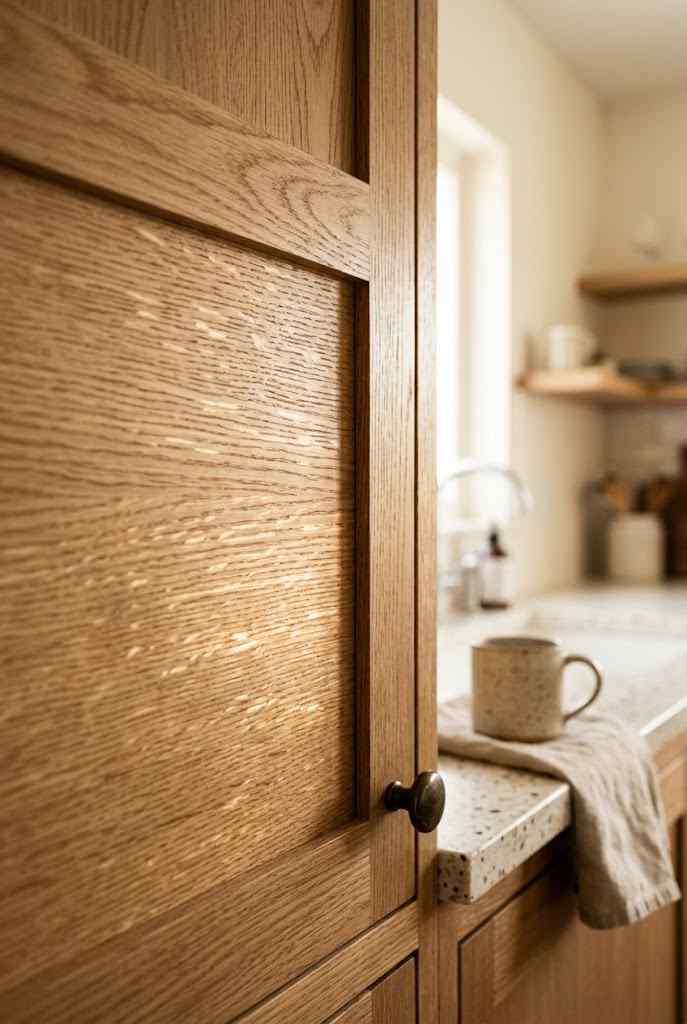
White oak isn’t just another pretty wood grain. It’s genuinely strong we’re talking hardness ratings that put it near the top for cabinet materials. But strength alone doesn’t explain the obsession. What really sets white oak apart is the character. The wood flaunts natural grain patterns that are bold enough to make a statement but neutral enough to work with almost any design direction.
The medial rays on white oak create this distinctive figure those little fleck patterns that catch the light differently depending on the angle. It sounds technical (because it is), but visually? It’s just interesting. Your eyes don’t get bored looking at white oak cabinetry the way they might with something more uniform or flat.
Here’s the thing that kitchen designers know: white oak works because it bridges styles. Put it in a Scandinavian space with minimal hardware, and it feels clean and modern. Drop it into a farmhouseinspired kitchen with vintage fixtures, and it feels authentic and warm. That versatility is gold when you’re making a big investment.
The grain pattern you see isn’t random it tells a story about how the tree grew. Those medial rays developed as the tree transported water and nutrients, and now they become your cabinet’s personality. Every plank is genuinely unique, which means your kitchen becomes a one-of-a-kind space rather than something that looks like five thousand others online.
Installation matters too. A skilled cabinet maker understands how white oak moves with humidity changes throughout seasons. They’ll build with grain direction in mind and use proper joinery techniques that have held cabinets together for generations. This is why choosing a quality builder matters as much as choosing the wood itself. You’re not just paying for material you’re paying for expertise that ensures those cabinets stay beautiful for decades.
The tactile experience is real. Run your hand across white oak cabinets and you’ll feel a subtle warmth that laminate can’t replicate. It’s something your guests might not consciously notice, but they’ll feel the difference when they lean against your counters or open a cabinet door. That subtle luxury is what keeps white oak looking expensive and thoughtful.
The Color Story-Light, Warm, and Honest
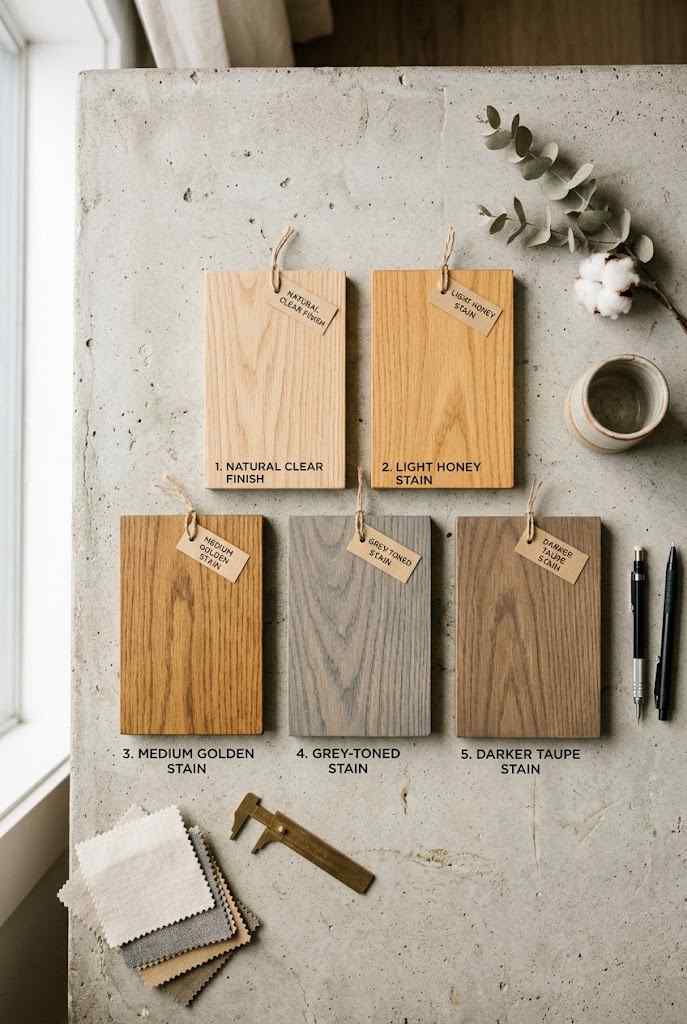
White oak lives somewhere between honey and ash. It’s not white (the name is honestly misleading), and it’s not dark. It’s this warm, light-to-medium tone that photographs beautifully and doesn’t demand to dominate your entire kitchen aesthetic. 🙂
Stains transform white oak in meaningful ways. A clear matte finish shows off the natural color think pale wheat fields at sunset. Honey stains deepen things while keeping that approachable warmth. Darker finishes (grays, taupes) bring sophistication without the heaviness of something like walnut. The wood accepts stain evenly because of its tight grain structure, which means your cabinets actually look intentional, not patchy.
One reality check though white oak can shift slightly in color over time when exposed to sunlight. It gets richer and deeper. Some people call this aging gracefully. Some people call it “my kitchen isn’t what it was five years ago.” Both perspectives are valid. IMO, the shift is subtle enough that it adds character rather than creating a problem.
The way light interacts with white oak changes throughout the day. Morning sun hits the cabinet differently than afternoon light, and evening ambient lighting reveals yet another dimension. This dynamic quality means your kitchen never looks static it evolves with natural rhythms. That’s why designers always recommend seeing finish samples in your actual space, not just under showroom lights.
Matte finishes hide dust and fingerprints better than glossy ones, which makes them practical for active kitchens where people actually cook. Satin finishes offer a middle ground slightly reflective but not shiny. The right finish choice depends on your lifestyle and how much maintenance you want to embrace. Glossy finishes look more formal and show imperfections faster, but they deliver that luxe, high-end appearance some people love.
Temperature plays a subtle role too. White oak naturally looks warmer in cool kitchens and cooler in warm kitchens. This adaptability means it works whether your space gets northern light or blazing southern sun. If your kitchen is particularly cold-toned, a honey stain amplifies warmth. If it runs naturally warm, a lighter finish or grey tone balances things out. This isn’t science it’s more about knowing what your space needs.
White Oak vs. Red Oak and Other Competitors
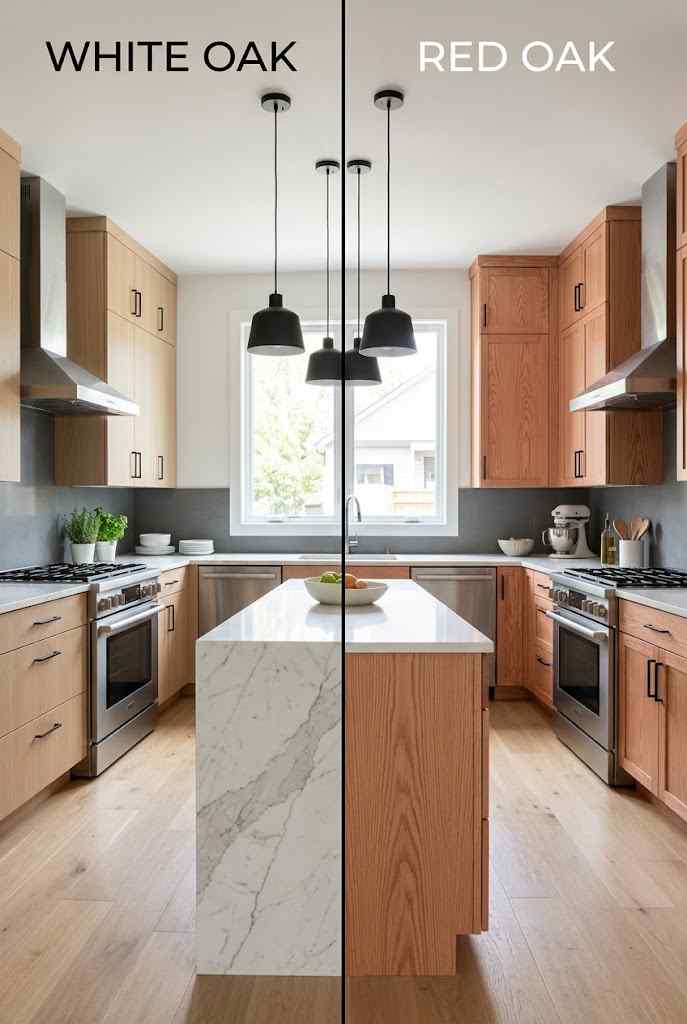
Okay, real talk: red oak exists, and it costs less. But red oak has this orangey undertone that makes it harder to work with in contemporary kitchens. White oak’s neutral base just plays nicer with modern color schemes and hardware finishes.
How does white oak stack against other popular cabinet woods? Here’s what matters:
White oak vs. maple: Maple is harder (slightly) but looks plastic without the right finish. White oak feels more organic.
White oak vs. hickory: Hickory has more color variation and movement, which some people love and others find chaotic. White oak is more predictable.
White oak vs. walnut: Walnut is darker and richer but can make kitchens feel smaller. White oak brightens without feeling cheap.
White oak vs. cherry: Cherry develops a beautiful patina over time, but it’s pricier and redder. White oak offers similar longevity at a better price point.
The honest answer? White oak sits in the sweet spot between budget-conscious and looking legitimately good.
Price differences matter when you’re making this investment. Red oak typically runs 15-20% cheaper than white oak, but that savings often shows in how the cabinets look and feel over time. The trade-off isn’t always worth it. Maple offers durability similar to white oak but feels more corporate or sterile unless you commit to staining it creatively.
Sustainability is something people ask about increasingly. White oak grows throughout North America and regenerates relatively quickly compared to some hardwoods. If this matters to you, verify that your cabinet maker sources responsibly. Some builders partner with certified sustainable forests, which means your beautiful kitchen supports good forestry practices. It’s not a dealbreaker if they don’t, but it’s worth asking.
Engineered options (veneer over plywood) cost less than solid wood but don’t develop character over time. They’re practical if budget is tight, but white oak solid wood is genuinely worth the upgrade if you can swing it. You’ll appreciate the investment when your cabinets still look substantial and beautiful in fifteen years while veneered cabinets might feel thin or show wear.
Durability and Real-World Performance
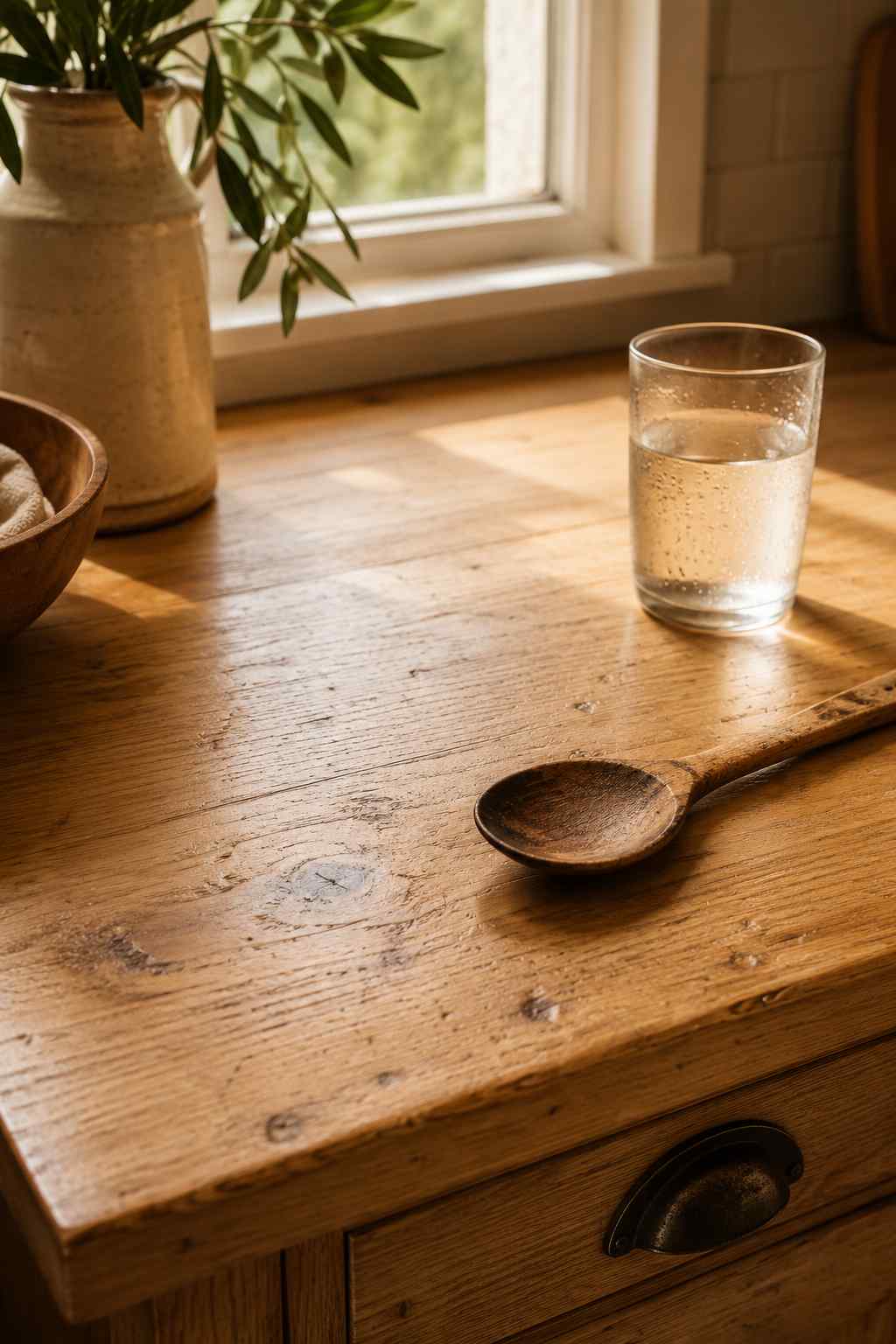
White oak doesn’t mess around when it comes to longevity. The wood is naturally rot-resistant and hardwearing, which is why it’s been used for boat building and outdoor structures for centuries. Your kitchen won’t exactly be sailing the high seas, but you get the point this wood is built for the long haul.
Moisture resistance matters in kitchens more than anywhere else in your home. White oak’s tightly bound structure means it doesn’t absorb water as aggressively as softer woods. That said, no wood is immune to kitchen humidity. Proper sealing with a quality finish is non-negotiable. When you invest in white oak cabinets, you’re also investing in the finish that protects them.
The real test comes over a decade of use. White oak cabinets in active kitchens develop a patina small dings, minor scratches, the subtle evidence of actual living. Some people spend money to “restore” them. Others appreciate that a kitchen that looks like it’s been used is a kitchen that’s been loved. There’s no wrong answer here.
White oak naturally resists rot and insect damage better than softer woods like pine or oak’s weaker cousin, red oak. This inherent resistance means your cabinets don’t need chemical treatments to hold up in a humid kitchen environment. The wood itself does the protecting. That’s an underrated advantage when you’re thinking about long-term health and safety in your home.
Scratches and dings happen accepting this upfront saves you stress later. White oak’s color variation means light scratches often disappear visually because the wood beneath is similar in tone. Deeper gouges become part of the patina story rather than disasters. Some people buy scratch repair markers in matching stain colors just to have them on hand. Most people eventually stop bothering because the character adds rather than detracts.
Cabinet doors endure the most stress. They open and close thousands of times. White oak’s hardness means hinges stay secure longer and doors don’t sag or warp like they might with softer woods. Full-extension drawers on white oak bases handle heavy loads without flex. This durability translates to cabinets that feel solid and respond the same way at year one and year twenty.
The Cost Reality and Finding Your Price Point
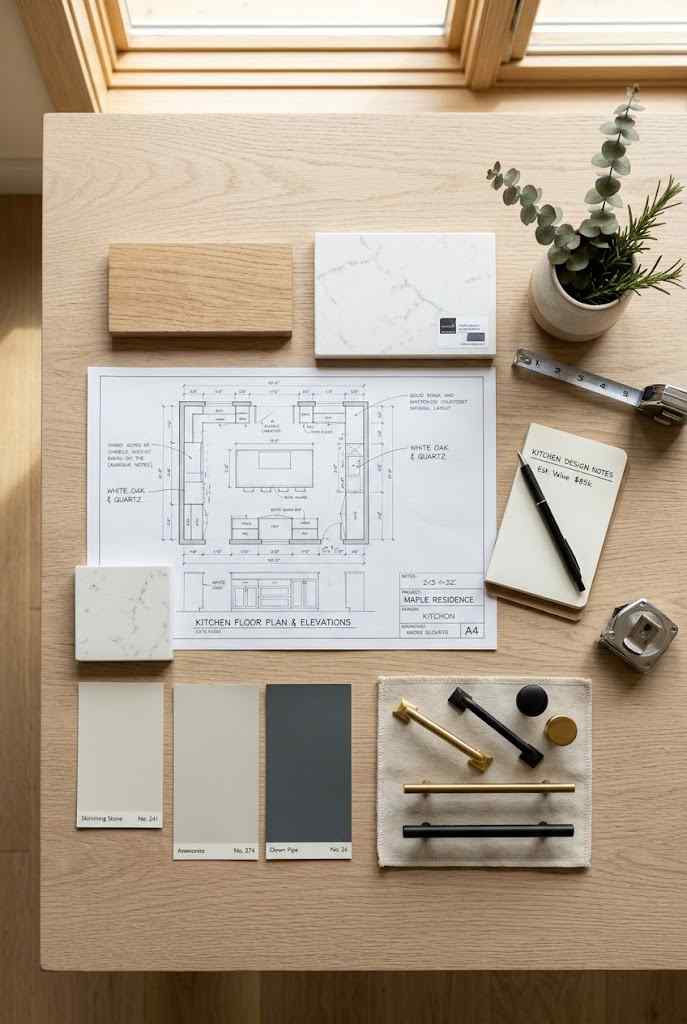
White oak cabinets aren’t cheap, but they’re not luxury-level pricing either. You’re looking at somewhere between semi-custom and full custom territory depending on the builder and complexity. A typical kitchen might run $8,000 to $20,000 for cabinets alone, which sounds like a lot until you realize that’s not per cabinet it’s your entire cabinet package.
Custom white oak costs more than stock options (obviously), but here’s where it makes sense: you’re building exactly what your kitchen needs instead of forcing your space into a pre-made box. Semi-custom gives you flexibility without the full custom price tag, and honestly, that’s where most people land.
Want to stretch your budget? Mixing white oak with other materials works brilliantly. Use white oak for upper cabinets and a different wood (or painted panels) for the base. Do white oak islands with painted perimeter cabinets. These hybrid approaches cut costs while keeping that high-end aesthetic.
Labor costs influence pricing significantly. A talented cabinet maker charges more because they deliver better construction, flawless joinery, and superior finishing. That higher price reflects skill and attention to detail that protects your investment. Budget cabinets with white oak veneer cost less but sacrifice the longevity you’re paying for. The middle ground semi-custom solid white oak delivers value that most homeowners find worth the spend.
Financing options matter for large kitchen projects. Many cabinet makers partner with lending services that break payments into manageable installments. Some homeowners roll cabinet costs into larger renovation loans. Understanding your full cost picture before committing prevents financial stress and allows you to invest with confidence. Get multiple quotes, compare apples-to-apples, and remember that cheapest isn’t the same as best value.
Resale value is worth mentioning. White oak kitchens consistently rank high in kitchen renovation ROI studies. They signal quality to future buyers and make homes feel immediately more desirable. If you ever sell, those white oak cabinets will be a selling feature, not something buyers overlook. That intangible benefit makes the upfront investment feel smarter long-term.
Design Directions That Click With White Oak
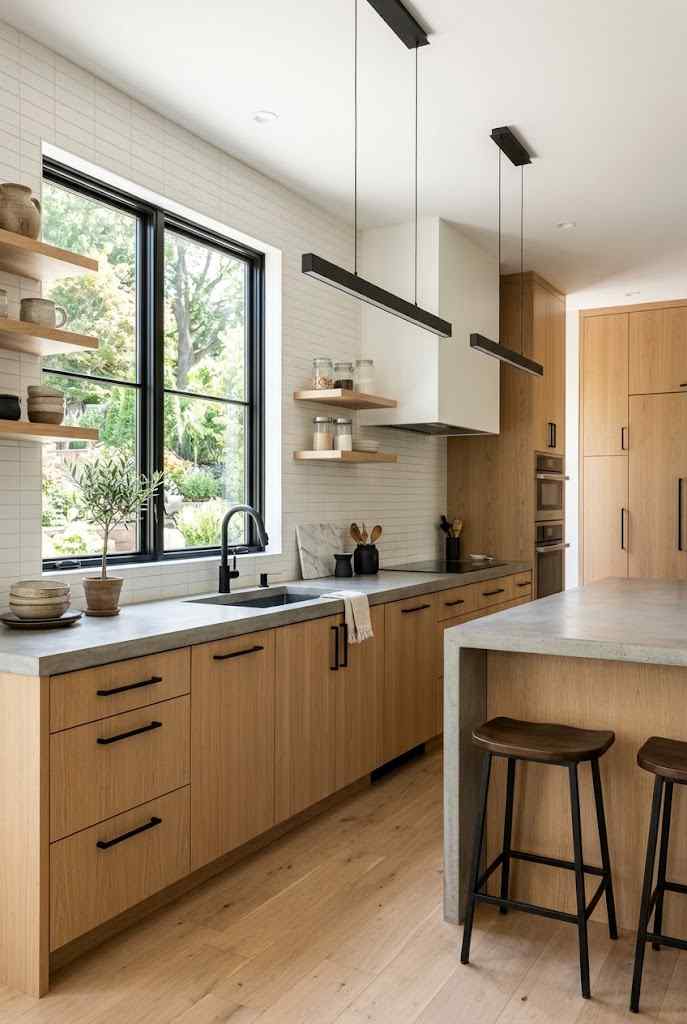
White oak doesn’t restrict you creatively it actually opens doors. Pair it with matte black hardware and concrete countertops for industrial-modern vibes. Add brass fixtures and marble for something more elevated and traditional. Go minimal with handle hidden construction and light counters for Scandinavian energy.
White oak also plays well with nearly any countertop choice: quartz, granite, marble, butcher block, or concrete all complement rather than compete. Backsplash options are equally flexible subway tile, small mosaics, or bold patterns all work because white oak’s grain provides enough interest without overdoing it.
The biggest mistake people make is overthinking it. White oak is forgiving enough that you can trust your instincts about what makes your space feel right.
Hardware finishes amplify white oak’s versatility. Matte black creates sharp contrast and contemporary edge. Brushed brass adds warmth and vintage sophistication. Stainless steel keeps things clean and modern. Chrome feels crisp. There’s genuinely no “wrong” choice because white oak works with everything. The hardware direction you choose becomes your kitchen’s personality marker.
Lighting design interacts with white oak more than people realize. Under-cabinet lighting emphasizes grain and texture beautifully. Pendant lights over an island create focal points that draw attention to cabinet quality. Recessed overhead lighting keeps things neutral and flexible. Designers often recommend layered lighting that includes at least one option to showcase the wood itself because, honestly, white oak deserves to be seen.
Open shelving mixed with closed cabinets creates visual interest. Some kitchens feature white oak upper cabinets with painted lower cabinets, or vice versa. A white oak island surrounded by painted perimeter cabinets delivers that high-end collected look. These combinations feel intentional and sophisticated without requiring an all-white-oak commitment.
Maintenance and Long-Term Care
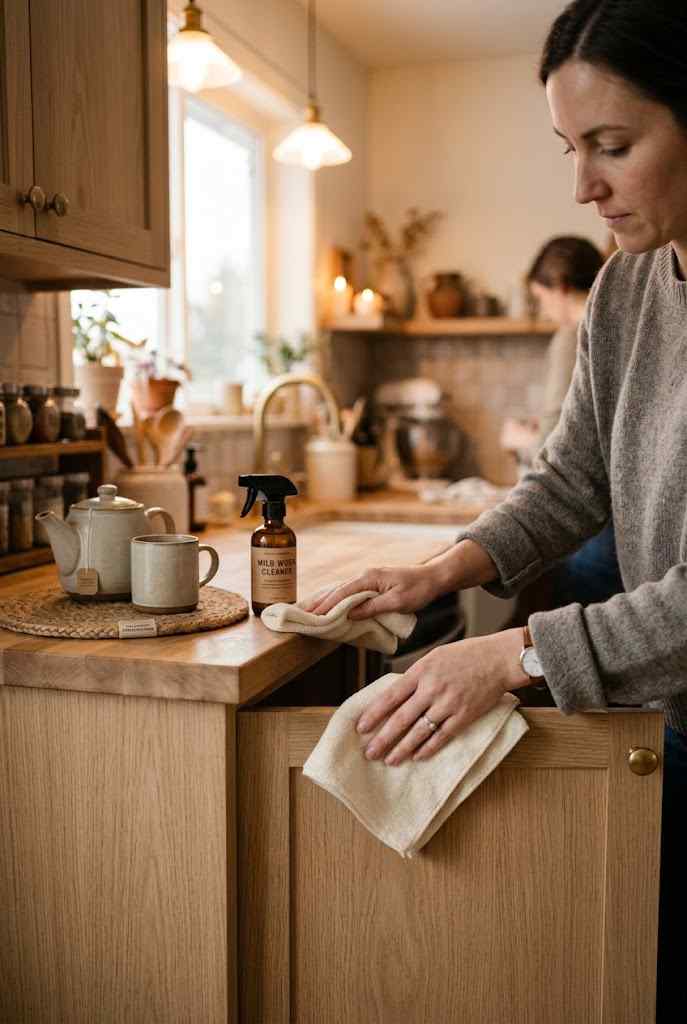
White oak cabinets actually want you to care for them, but not in an obsessive way. Regular dusting and the occasional wipe with a barely damp cloth keeps them looking fresh. Avoid putting standing water directly on the wood (obviously), and use trivets under hot dishes even though the surface can handle heat better than softer woods.
The finish matters more than the wood itself for maintenance. A matte finish hides fingerprints better than gloss. A lacquer finish is more durable than water-based options, though water-based finishes are getting better every year. FYI, good cabinet makers won’t skimp on finish that’s where they invest when everything else is decided.
Years down the line, if you want to refresh white oak cabinets without replacing them, refinishing is absolutely possible. Sand, restain, and reseal. It costs a fraction of new cabinets and brings them back to like-new condition. That’s the advantage of real wood you don’t get with laminate or veneer.
Humidity control preserves white oak better than anything else you can do. Kitchens with 30-50% relative humidity keep wood stable and happy. Extreme humidity swings cause wood movement and potential gaps or warping. A good range hood reduces steam, which helps tremendously. In naturally humid climates, some people run dehumidifiers in summer. It sounds extreme but actually extends cabinet life meaningfully.
Refinishing white oak is simpler than refinishing other woods because the grain and character stay beautiful even after sanding. Professional refinishers can handle this in 3-5 days typically, and the cost runs a fraction of new cabinet installation. Many people refinish once after ten years and then enjoy another decade without needing anything major. That’s genuinely cost-effective maintenance compared to replacing cabinets entirely.
Avoiding certain mistakes protects your investment easily. Never use harsh chemical cleaners stick to mild soap and water or wood-specific cleaning products. Don’t place hot pots directly on wood (trivets aren’t optional). Keep the area under the sink well-sealed to prevent water infiltration. Handle spills immediately. These simple habits keep white oak cabinets looking intentional and beautiful indefinitely.
FAQ’s
Can white oak kitchen cabinets handle moisture and humidity better than other wood options?
Yes. White oak’s tight grain structure resists moisture absorption better than red oak, hickory, or maple, making it ideal for humid kitchen environments.
How often do white oak kitchen cabinets need refinishing or maintenance?
Routine dusting and occasional mild cleaning is enough. Professional refinishing recommended every 10-15 years depending on kitchen usage and wear patterns.
Does white oak kitchen wood grain look the same on every cabinet door?
No. Each white oak plank has unique grain patterns and medial ray flecks, creating genuinely one-of-a-kind cabinets with natural character variation throughout.
What stain colors work best for white oak kitchen cabinets in small spaces?
Lighter stains (clear, honey, blonde) make small kitchens feel more open. Darker stains work but risk making compact spaces feel cramped or closed-in.
Is white oak kitchen cabinetry worth the investment compared to engineered options?
Yes. Solid white oak develops character, refinishes beautifully, and appreciates home value. Engineered alternatives show wear faster and lack refinishing options long-term.
CONCLUSION
Choosing white oak for your kitchen isn’t following a trend it’s making a choice that’ll probably feel right in five years, ten years, and beyond. The wood is honest about its character, strong enough to handle actual cooking life, and flexible enough to work with whatever design direction calls to you. Your kitchen deserves to whisper something worth hearing, and white oak says exactly the right things.
Ready to explore white oak cabinets for your space? Start by pulling finishes samples into your actual kitchen lighting and living with them for a few days. Your future self will thank you for not rushing the decision.